24.2 Data Collection and Analysis Techniques

🗺️World Geography Unit 24 Review
24.2 Data Collection and Analysis Techniques
🗺️ World Geography
Geographic Data Collection
Data collection and analysis techniques form the backbone of geographic research. Whether you're studying urban sprawl, tracking deforestation, or mapping population shifts, the quality of your conclusions depends entirely on how you gather and interpret your data. This section covers the major methods geographers use to collect data, analyze it, and communicate findings.

Top images from around the web for Field Observations and Surveys
HESS - Interaction of soil water and groundwater during the freezing–thawing cycle: field ... View original
Is this image relevant?
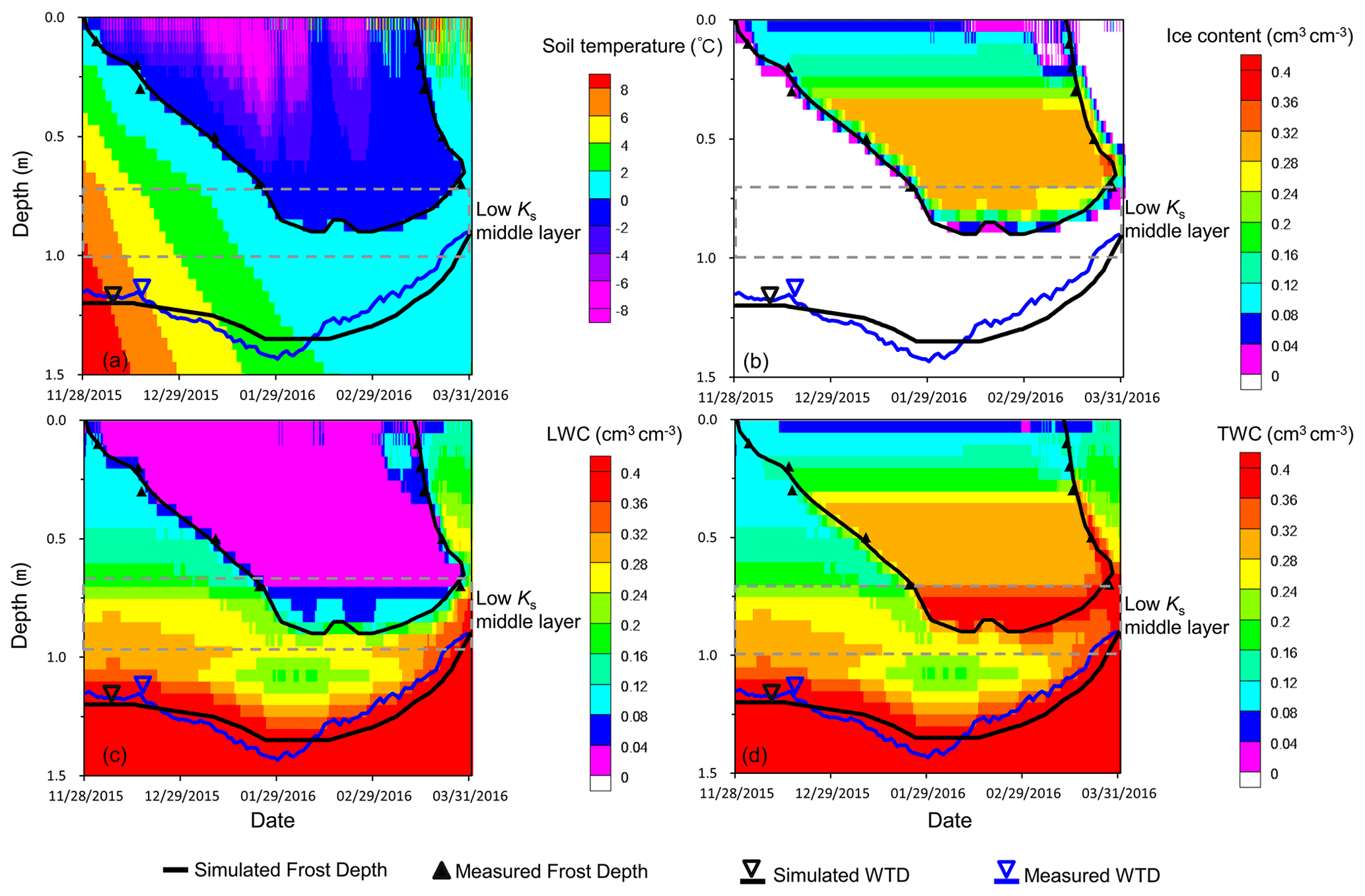
HESS - Interaction of soil water and groundwater during the freezing–thawing cycle: field ... View original
Is this image relevant?
ESurf - Dynamics of salt intrusion in the Mekong Delta: results of field observations and ... View original
Is this image relevant?
HESS - Interaction of soil water and groundwater during the freezing–thawing cycle: field ... View original
Is this image relevant?
HESS - Interaction of soil water and groundwater during the freezing–thawing cycle: field ... View original
Is this image relevant?
Field Observations and Surveys
Field observations mean going out and collecting data in person. This includes techniques like ground truthing (verifying what remote sensing data shows by checking conditions on the ground), transect sampling (collecting data along a defined path or line), and participant observation (immersing yourself in a community or environment to understand it firsthand).
Surveys gather data from a targeted sample of people. They can take several forms:
- In-person interviews
- Telephone surveys
- Mail-in questionnaires
- Online forms
Each method has trade-offs in cost, response rate, and the type of data you get. An in-person interview yields richer qualitative detail, while an online survey can reach a much larger sample quickly.
Once you've collected data, organize it in a structured format like a spreadsheet or database so it's easy to store, retrieve, and analyze. You should also record metadata, which is information about the data itself: where it came from, how it was collected, and what its limitations are. Without metadata, someone looking at your data later has no way to judge its quality or context.
Remote Sensing Techniques
Remote sensing collects data about Earth's surface and atmosphere without direct physical contact, using satellites, aircraft, and other platforms. There are two main types:
- Passive remote sensing detects natural energy reflected or emitted by Earth's surface. Multispectral and hyperspectral sensors fall into this category. Landsat and MODIS are widely used passive systems that capture data across multiple wavelengths of light.
- Active remote sensing sends out its own energy signal and measures what bounces back. Radar and LiDAR are the main examples. Synthetic Aperture Radar (SAR) can image the surface through clouds, while LiDAR uses laser pulses to create highly detailed elevation models.
Remote sensing is powerful for monitoring change over large areas and long time periods: tracking land use change, measuring vegetation health (using indices like NDVI), and mapping urban growth.
Raw remotely sensed data usually requires preprocessing before analysis. Common steps include atmospheric correction (removing distortion caused by the atmosphere), geometric correction (aligning the image to real-world coordinates), and image enhancement (adjusting contrast or combining bands to highlight features).
Data Analysis and Interpretation
Quantitative and Qualitative Methods
Quantitative methods use statistical techniques on numerical data. These range from descriptive statistics (mean, median, mode, standard deviation) to inferential statistics (correlation, regression, hypothesis testing). Descriptive statistics summarize what your data looks like; inferential statistics let you draw broader conclusions or test whether patterns are statistically significant.
Qualitative methods work with non-numerical data like text, images, and observations. Techniques such as content analysis and grounded theory help you identify themes, categories, and relationships that numbers alone can't capture. For example, interviewing residents about flood risk might reveal perceptions and behaviors that survey data would miss.
Two additional approaches are worth knowing:
- Exploratory data analysis (EDA) uses visualizations like histograms and scatterplots, along with summary statistics, to spot initial patterns, outliers, and potential relationships before you run formal tests.
- Data mining applies algorithms like k-means clustering and decision tree classification to find hidden patterns in large, complex datasets.

Spatial and Temporal Analysis
Spatial autocorrelation examines whether values of a variable are related to values of the same variable in nearby locations. In other words, it tests whether geographic clustering exists. Two common measures are Moran's I (which gives a single summary statistic for the whole study area) and Getis-Ord (which identifies specific hot spots and cold spots).
Time series analysis studies geographic phenomena that change over time, such as population growth, land use shifts, or climate variables. The goal is to identify trends, seasonality, and irregular fluctuations.
- Decomposition methods break a time series into three components: trend (long-term direction), seasonal (repeating cycles), and irregular (random variation).
- ARIMA models (Autoregressive Integrated Moving Average) forecast future values based on patterns in past observations.
Spatial Analysis Techniques
Geographic Information Systems (GIS)
A Geographic Information System (GIS) integrates hardware, software, and data to capture, manage, analyze, and display geographically referenced information. GIS uses two main data models:
- Vector data represents features as points (e.g., a city), lines (e.g., a river), and polygons (e.g., a country's border).
- Raster data uses a grid of cells to represent continuous surfaces, like elevation or temperature.
GIS enables several key operations:
- Creating thematic maps that show the spatial distribution of a specific variable, such as population density, land cover, or climate zones.
- Performing spatial overlay analysis, which combines multiple data layers to generate new insights. For example, you could overlay soil type, slope, and proximity to infrastructure to identify areas suitable for development.
Cartography and Geovisualization
Cartography is the design and creation of maps to communicate geographic information effectively. Every map requires careful decisions about core elements:
- Scale determines how much area the map covers and at what level of detail.
- Legend explains the symbols and colors used.
- Projection transforms Earth's curved surface onto a flat map, and every projection introduces some distortion.
- Symbolization is how data values are visually represented.
Two common thematic map types you should know:
- Choropleth maps use color or shading to show the intensity of a variable within defined boundaries (countries, states, census tracts). They're great for showing rates or densities but can be misleading if the geographic units vary widely in size.
- Proportional symbol maps use scaled symbols (circles, squares) to represent the magnitude of a variable at specific locations. These work well for showing totals, like city populations.
Geovisualization goes beyond static maps. Techniques include 3D modeling, animation, and interactive web maps. Platforms like Google Earth, ArcGIS Online, and Mapbox let users explore geographic data interactively. Story maps combine maps with text, images, and multimedia to build narratives around geographic themes, making complex spatial information accessible to broader audiences.

Data Reliability and Limitations
Reliability and Validity
Reliability is about consistency: if you repeated the same data collection or analysis, would you get the same results? It can be assessed through test-retest reliability (same method, different times), inter-rater reliability (different people, same method), and internal consistency (do related measures agree with each other?).
Validity is about accuracy: does your data actually measure what you think it measures? Types include face validity (does it seem reasonable on its surface?), construct validity (does it capture the concept you're targeting?), and criterion validity (does it correlate with an established measure?).
Data quality issues like missing values, outliers, and inconsistencies should be identified and addressed through data cleaning and preprocessing before analysis begins.
Biases and Errors
Several types of bias can distort geographic research:
- Sampling bias occurs when your sample doesn't accurately represent the target population. Two common forms are selection bias (the sampling method systematically favors or excludes certain subgroups) and non-response bias (a significant portion of the sample doesn't respond, and those who don't respond may differ systematically from those who do).
- Measurement errors come from faulty instruments, human mistakes, or inconsistent collection procedures.
Two concepts are especially important in spatial analysis:
- The Modifiable Areal Unit Problem (MAUP) means that statistical results can change depending on which geographic boundaries or aggregation levels you use. For example, analyzing income data by county versus by zip code can produce different patterns from the same underlying data.
- The ecological fallacy happens when you draw conclusions about individuals based on aggregate data. If a county has high average income and high rates of a disease, you can't assume that wealthy individuals in that county are the ones getting sick.
Limitations and Considerations
- Always state the limitations of your data and methods clearly. This prevents overgeneralization or misinterpretation of results.
- Scale matters. Different processes and patterns emerge at different spatial and temporal scales. A trend visible at the national level may disappear or reverse at the local level.
- Data privacy and ethics must be addressed when collecting, storing, and using geographic data, especially when it involves sensitive or personally identifiable information.
- Uncertainty and error propagation should be acknowledged and, when possible, quantified using techniques like sensitivity analysis and Monte Carlo simulation. Errors in one data layer can compound when combined with others in GIS analysis.
See Fiveable more often in Google
Mark Fiveable as a preferred source and Google is more likely to show you our guides in Top Stories, with a "preferred" badge in AI Mode and AI Overviews.