4.1 Introduction to Political Geography

🚜AP Human Geography Unit 4 Review
4.1 Introduction to Political Geography
🚜 AP Human Geography
4.1
Introduction to Political Geography
4.2
Political Processes
4.3
Political Power and Territoriality
4.4
Defining Political Boundaries
4.5
The Function of Political Boundaries
4.6
Internal Boundaries
4.7
Forms of Governance
4.8
Defining Devolutionary Factors
4.9
Challenges to Sovereignty
4.10
Consequences of Centrifugal and Centripetal Forces
Political geography starts with the building blocks of the world political map: independent states and the different kinds of political entities built around people and identity. You need to define and tell apart nations, nation states, stateless nations, multinational states, multistate nations, and autonomous or semiautonomous regions, and give a real example of each.
What Is Political Geography in AP Human Geography?
Political geography is the study of how political power, territory, borders, and identity are organized across space. In AP Human Geography Topic 4.1, the key task is defining and identifying political entities such as states, nations, nation-states, stateless nations, multinational states, multistate nations, and autonomous regions.
Why This Matters for the AP Human Geography Exam
Unit 4 makes up about 12 to 17 percent of the AP Human Geography exam, and this topic is the vocabulary foundation for everything after it. If you mix up a nation and a state here, the later topics on boundaries, governance, devolution, and sovereignty get much harder.
This topic builds two specific skills you will use on the exam:
- Reading visual sources like political maps and identifying the type of information they show.
- Defining a geographic concept in context and backing it up with a correct contemporary example.
Multiple-choice questions often show you a map or describe a group of people and ask you to name the correct political entity. Free-response prompts may ask you to define a term and then identify or explain a real-world example, so practice pairing each definition with a specific case.
Key Takeaways
- A state is the basic building block of the world political map: a defined territory with a permanent population, a government, and recognized sovereignty.
- A nation is a group of people bound by shared culture, language, history, and identity. It is about people, not borders.
- A nation-state lines up one nation with one state, so the political border and the cultural group mostly match.
- A multinational state holds more than one nation inside its borders, while a multistate nation is one cultural group spread across more than one state.
- A stateless nation is a people with a strong shared identity but no sovereign state of their own.
- Autonomous and semiautonomous regions, such as American Indian reservations, have some self-rule while staying inside a larger state.
Core Political Entities
State
A state (also called a country or independent state) is a political unit with a defined territory, a permanent population, a working government, and sovereignty, meaning it controls its own internal and external affairs and is recognized by other states. Independent states are the primary building blocks of the world political map.
Examples: the United States, Japan, Brazil, and Nigeria are all independent states.
Watch out for the everyday meaning of "state." In AP Human Geography, a state is a sovereign country, not a unit like Texas or California.
Nation
A nation is a large group of people who share a common culture, language, history, and identity. The key idea is that a nation is about people and shared identity, not about official borders. A nation can have its own state, be spread across several states, or have no state at all.
Examples: the Japanese, the French, and the Kurds are often described as nations. The Kurds share a culture and identity but are spread across several countries.
Nation-State
A nation-state is a state whose borders closely match a single nation, so most of the population shares one culture and identity. Few places are perfect nation-states, but some come close.
Examples often used: Japan and Iceland, where the population is largely one cultural group inside one state.
Multinational State
A multinational state contains two or more nations inside one set of borders. Governing these states can be tricky because different groups may want different things.
Examples: the United Kingdom (England, Scotland, Wales, and Northern Ireland), India, and Russia all contain multiple nations.
Multistate Nation
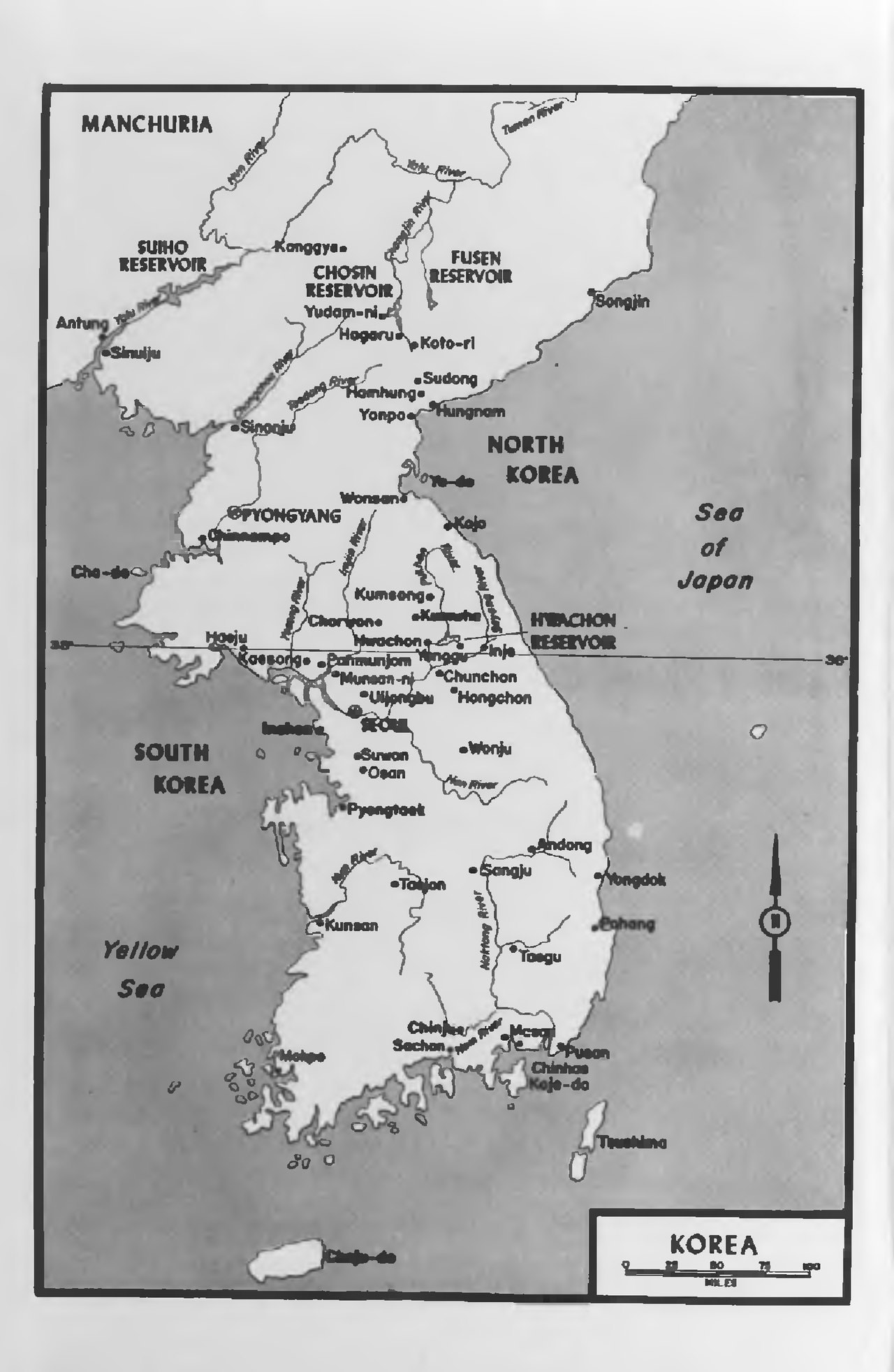
A multistate nation is a single nation whose people live across the borders of more than one state. The cultural group stays connected even though a political border splits them.
Example: Koreans form one nation that lives across both North and South Korea.
Stateless Nation
A stateless nation is a people with a shared culture and identity but no sovereign state of their own. Many seek self-determination, meaning the ability to govern themselves.
Examples: the Kurds and the Palestinians are commonly cited stateless nations.
Autonomous and Semiautonomous Regions
An autonomous region has a high level of self-government while still belonging to a larger state. A semiautonomous region has some self-rule but less independence. American Indian reservations, such as the Navajo Nation, are the example named for this topic, because they govern many of their own affairs while remaining inside the United States.
Other commonly used examples include Greenland (an autonomous territory of Denmark) and Hong Kong as a special administrative region of China.
Quick Comparison Chart
| Entity | Core idea | Example |
|---|---|---|
| State | Sovereign territory with a government | Japan, Brazil |
| Nation | A people with shared identity | The Kurds, the French |
| Nation-state | One nation matched to one state | Japan, Iceland |
| Multinational state | Many nations inside one state | United Kingdom, Russia |
| Multistate nation | One nation across many states | Koreans |
| Stateless nation | A nation with no state | Kurds, Palestinians |
| Autonomous region | Self-rule inside a larger state | Navajo Nation, Greenland |
How to Use This on the AP Human Geography Exam
MCQ
Expect questions that give you a description or a map and ask for the matching term. Use these quick tests:
- Is it about a sovereign country with borders and a government? That points to a state.
- Is it about a group of people and shared identity? That points to a nation.
- Does the group cross multiple countries? Think multistate nation.
- Does one country hold multiple groups? Think multinational state.
- Does the group have a strong identity but no country? Think stateless nation.
Free Response
If a prompt asks you to define a term and give an example, do both clearly. Write the definition in one sentence, then name a specific real-world case. A correct example like "the Kurds as a stateless nation" earns more than a vague answer.
Common Trap
The biggest trap is treating "nation" and "state" as the same thing. Keep them separate: a state is a country, a nation is a people. Once you hold that line, the combined terms (nation-state, multinational state, multistate nation) are easy to build.
Common Misconceptions
- Misconception: State means a place like Florida.Actually: In this course a state is a sovereign country. Subnational units like U.S. states are not states in this sense.
- Misconception: Nation and country are the same.Actually: A nation is a cultural group of people. A country (state) is a political unit. They sometimes overlap, but not always.
- Misconception: A nation-state is any large country.Actually: It specifically means the borders of a state line up with one main nation, which is actually rare.
- Misconception: Stateless nation means the people have no government at all.Actually: It means they have no sovereign state of their own, not that they lack any leadership or organization.
- Misconception: Multinational state and multistate nation are interchangeable.Actually: They are opposites in structure. One state with many nations is different from one nation across many states.
- Misconception: Autonomous regions are fully independent.Actually: They have self-rule but still belong to a larger sovereign state.
Related AP Human Geography Guides
Practice Questions for 4.1
1 of 10
The United States recognizes 574 federally acknowledged American Indian nations. At the national scale they are subject to federal law. At the reservation scale many nations govern education, law enforcement, and resources. At the community scale tribes maintain distinct cultural practices and governance traditions. Which statement best explains what this scalar hierarchy reveals about autonomous and semiautonomous regions?
A.
Community-scale cultural practices determine federal law at the national scale.
B.
Semiautonomous regions hold local authority yet remain subject to federal law.
C.
Reservation-scale governance operates independently of any national-scale authority.
D.
National-scale federal law replaces the need for reservation-scale governance.
E.
Federally acknowledged nations exercise the same sovereignty as fully independent states.
Vocabulary
The following words are mentioned explicitly in the AP® course framework for this topic.Term | Definition |
|---|---|
autonomous region | Territories within a state that have some degree of self-governance and control over local affairs while remaining part of the larger political entity. |
independent states | Sovereign political entities that exercise self-governance and are recognized as the primary units on the world political map. |
multinational states | Political entities containing multiple distinct nations or ethnic groups within their borders. |
multistate nations | A single nation or ethnic group whose population is divided across multiple independent states. |
nation-states | Political entities in which the boundaries of the state align with the territory of a nation, creating a close match between political and cultural identity. |
nations | Groups of people united by common cultural, ethnic, linguistic, or historical identity, which may or may not have their own independent state. |
political entities | Distinct territorial units with defined boundaries and political organization, including states, nations, and autonomous regions. |
semiautonomous regions | Territories with limited self-governance that retain significant control by the central state government. |
stateless nation | Groups of people with a shared national identity who do not have their own independent state and are dispersed across multiple countries. |
Frequently Asked Questions
What is political geography in AP Human Geography?
Political geography studies how political power, territory, boundaries, sovereignty, and identity are organized across space. Topic 4.1 starts with the types of political entities on the world political map.
What is a state in political geography?
A state is a sovereign political unit with defined territory, a permanent population, and a government. In AP Human Geography, state usually means an independent country, not a U.S. state like Texas.
What is the difference between a nation and a state?
A nation is a group of people with shared culture, history, and identity. A state is a sovereign political territory. They can overlap, but they are not the same concept.
What is a nation-state?
A nation-state is a state whose borders closely match one main nation. Japan and Iceland are common examples because the political territory and dominant national identity mostly align.
What is a stateless nation?
A stateless nation is a people with a shared identity but no sovereign state of their own. The Kurds and Palestinians are commonly used AP Human Geography examples.
What are autonomous and semiautonomous regions?
Autonomous and semiautonomous regions have some self-rule while remaining inside a larger sovereign state. American Indian reservations are a key AP Human Geography example.
See Fiveable more often in Google
Mark Fiveable as a preferred source and Google is more likely to show you our guides in Top Stories, with a "preferred" badge in AI Mode and AI Overviews.