2.3 Atmospheric chemistry and air pollution

🌡️Intro to Climate Science Unit 2 Review
2.3 Atmospheric chemistry and air pollution
🌡️ Intro to Climate Science
Atmospheric Chemistry and Air Pollution
Air pollution forms through chemical reactions in the atmosphere, producing substances that harm human health, ecosystems, and infrastructure. Understanding how these pollutants form and interact is central to climate science because many of the same compounds (like , , and particulate matter) also influence Earth's energy balance and climate.

Top images from around the web for Formation and effects of air pollutants
File:Health effects of pollution.png - Wikipedia View original
Is this image relevant?
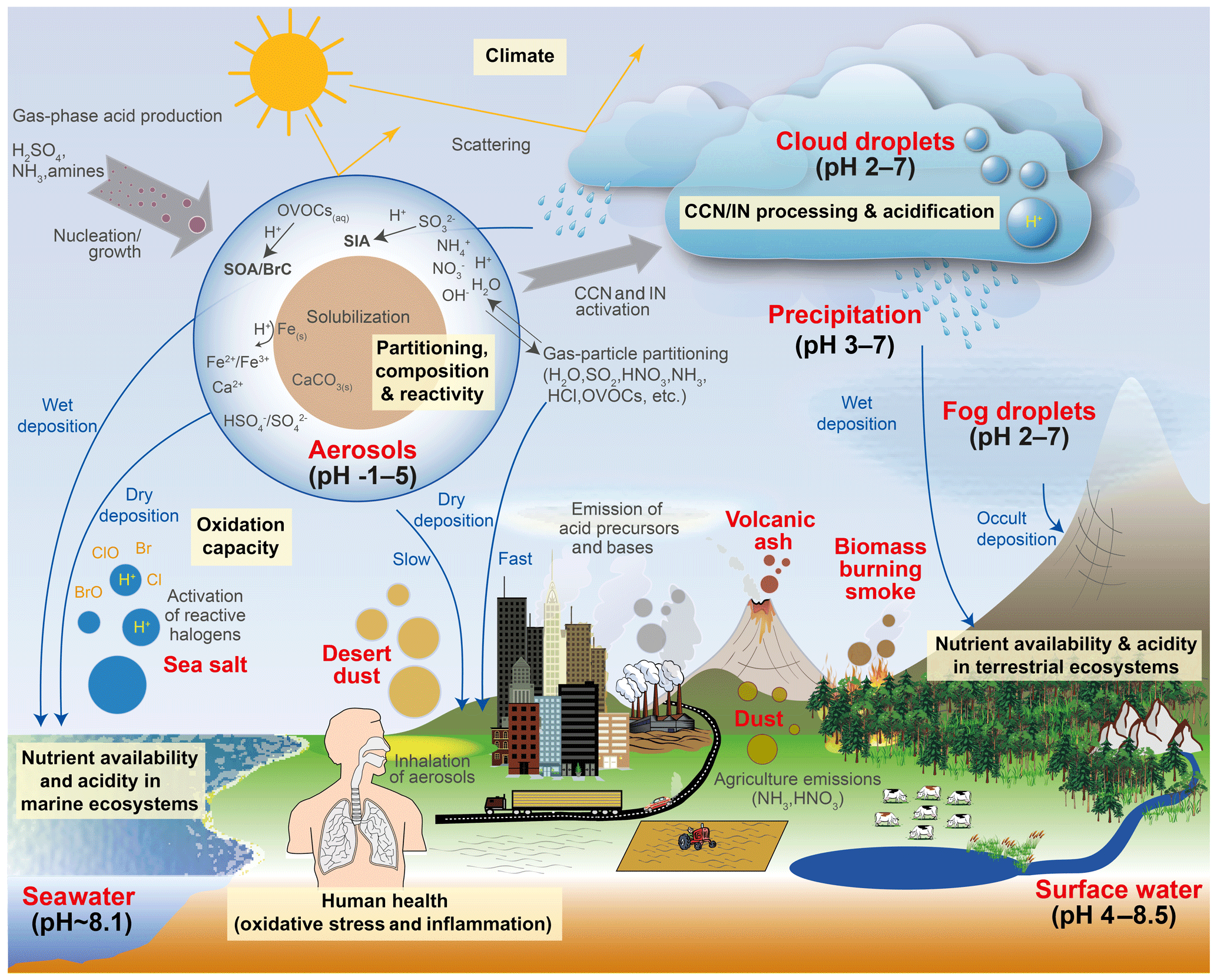
ACP - The acidity of atmospheric particles and clouds View original
Is this image relevant?
ESS Topic 6.3: Photochemical Smog - AMAZING WORLD OF SCIENCE WITH MR. GREEN View original
Is this image relevant?
File:Health effects of pollution.png - Wikipedia View original
Is this image relevant?
ACP - The acidity of atmospheric particles and clouds View original
Is this image relevant?
Formation and Effects of Air Pollutants
There are two main types of smog, and they form in different ways.
Photochemical smog develops when sunlight drives reactions between nitrogen oxides () and volatile organic compounds (VOCs). These reactions produce ground-level ozone and other oxidants. This type of smog is most common in sunny, warm cities with heavy traffic (think Los Angeles).
Industrial smog comes from burning coal and other fossil fuels. It contains sulfur dioxide (), , and particulate matter like soot and ash. This was the dominant form of smog during early industrialization and is still common in regions that rely heavily on coal.
Acid rain forms when and react with water vapor in the atmosphere, producing sulfuric acid () and nitric acid (). These acids then fall back to Earth's surface as rain, snow, or fog.
The effects of these pollutants are wide-ranging:
- Smog causes respiratory problems (asthma, lung irritation), reduces visibility, and damages plants and crops through leaf injury and stunted growth
- Acid rain acidifies lakes and streams, killing fish and amphibians. It strips nutrients from forest soils, causing leaf loss and weakened trees. It also corrodes buildings made of limestone and marble

Role of Photochemical Reactions in Ozone
Photochemical reactions happen when molecules absorb sunlight and undergo chemical changes. In the troposphere (the lowest layer of the atmosphere), these reactions are responsible for producing ground-level ozone, which is a harmful pollutant rather than the protective ozone found in the stratosphere.
Tropospheric ozone forms through a three-step cycle:
-
Nitrogen dioxide () absorbs sunlight and breaks apart into nitric oxide () and a free oxygen atom ():
-
That free oxygen atom combines with molecular oxygen () to form ozone (). A third molecule () absorbs the excess energy released during the reaction:
-
Ozone can then react with to regenerate , completing the cycle:
On its own, this cycle would reach a steady state without much ozone buildup. The problem is that VOCs in the atmosphere react with before it can destroy ozone in step 3, allowing ozone to accumulate. That's why cities with both high and high VOC emissions have the worst ozone problems.
Other factors that increase ozone formation include strong sunlight, high temperatures, and atmospheric stability (such as temperature inversions that trap pollutants near the surface).

Sources and Impacts of Particulate Matter
Particulate matter (PM) refers to tiny solid particles and liquid droplets suspended in the air. It's classified by size: (particles under 10 micrometers) and (under 2.5 micrometers). The smaller the particle, the deeper it can penetrate into your lungs.
Primary PM is emitted directly into the atmosphere from sources like:
- Vehicle exhaust and power plant combustion
- Dust from construction sites and unpaved roads
- Agricultural activities such as tilling and harvesting
Secondary PM forms in the atmosphere through chemical reactions, particularly the oxidation of and into sulfate and nitrate particles.
Health impacts are serious. PM exposure is linked to asthma, bronchitis, lung cancer, cardiovascular problems (heart attacks, strokes), and premature death, especially in people with pre-existing heart or lung conditions. is particularly dangerous because it can pass through the lungs into the bloodstream.
Environmental impacts include:
- Reduced visibility from haze
- Altered nutrient balance in ecosystems through nitrogen deposition
- Climate effects: some particles scatter sunlight and cool the surface, while others (like black carbon) absorb sunlight and contribute to warming
Strategies for Reducing Air Pollution
Reducing air pollution requires tackling emissions at their source through technology, energy choices, and policy.
Emission control technologies target pollutants before they reach the atmosphere:
- Catalytic converters in vehicles chemically convert and VOCs into less harmful gases
- Scrubbers in industrial smokestacks remove and particulate matter from exhaust
Clean energy transitions reduce the fossil fuel combustion that produces most air pollutants. This includes shifting to renewable sources like solar and wind, as well as improving energy efficiency through measures like better insulation and LED lighting.
Transportation improvements lower emissions from one of the largest pollution sources:
- Expanding public transit, carpooling, and active transportation (walking, cycling)
- Setting stricter vehicle fuel efficiency and emissions standards
Policy and regulation provide the framework that drives all of the above:
- Setting and enforcing air quality standards (such as limits on concentrations)
- Using market-based tools like cap-and-trade programs or carbon taxes to make pollution costly
- Promoting urban planning strategies that reduce emissions, such as green spaces and compact development that shortens commutes
See Fiveable more often in Google
Mark Fiveable as a preferred source and Google is more likely to show you our guides in Top Stories, with a "preferred" badge in AI Mode and AI Overviews.