1.2 Earth's energy balance and climate drivers

🌡️Intro to Climate Science Unit 1 Review
1.2 Earth's energy balance and climate drivers
🌡️ Intro to Climate Science
Earth's Energy Balance and Climate Drivers
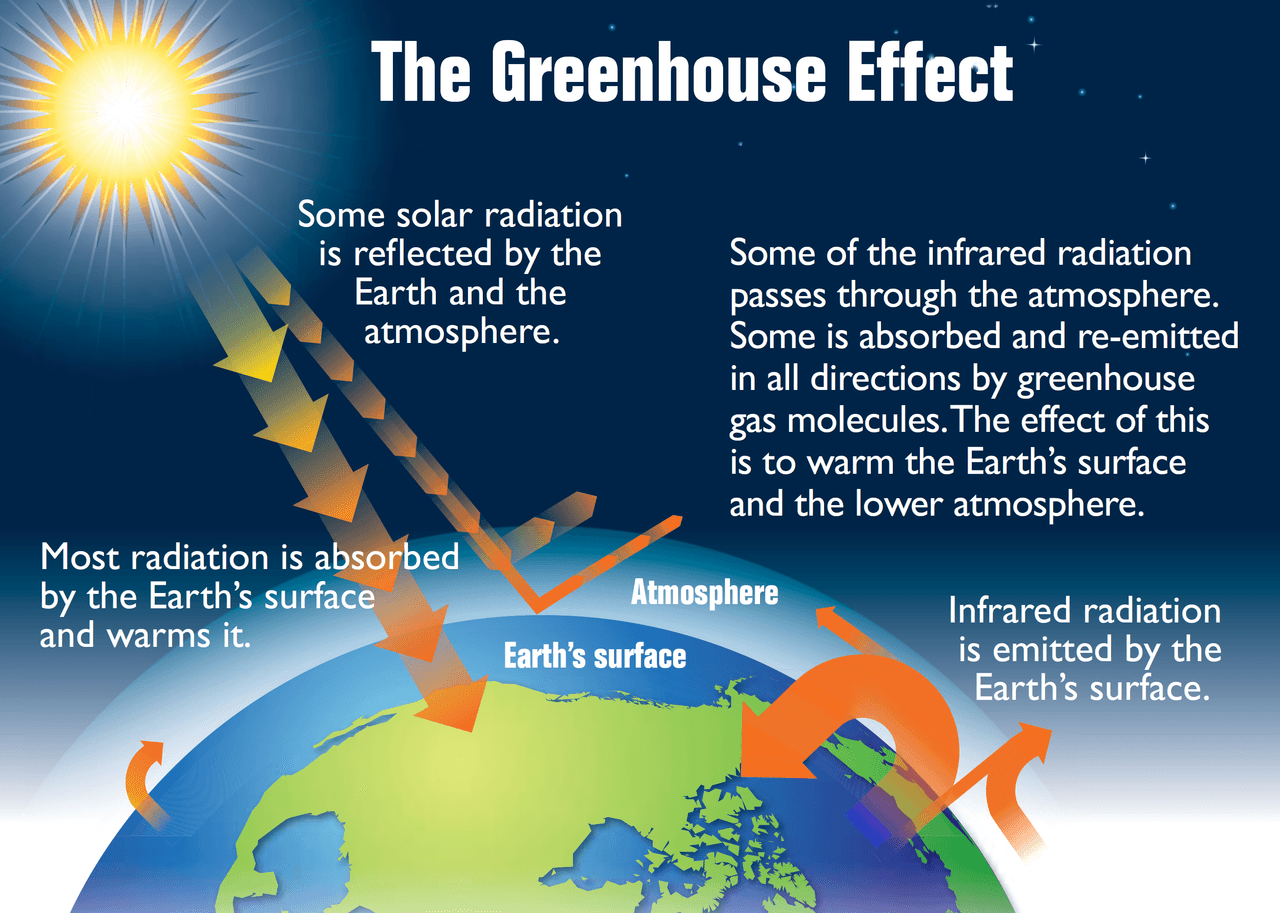
Earth's energy balance describes the relationship between the energy our planet receives from the Sun and the energy it sends back to space. When these two are equal, Earth's temperature stays stable. When they're not, the planet warms or cools. Understanding this balance is the foundation for understanding why climate changes.

Top images from around the web for Earth's energy balance concept
Greenhouse effect - Wikipedia View original
Is this image relevant?
Heat Transfer in the Atmosphere | Physical Geography View original
Is this image relevant?
Earth's energy budget - Wikipedia View original
Is this image relevant?
Greenhouse effect - Wikipedia View original
Is this image relevant?
Heat Transfer in the Atmosphere | Physical Geography View original
Is this image relevant?
Earth's Energy Balance Concept
Think of Earth's energy balance like a bank account: energy comes in, energy goes out, and the "balance" determines the planet's temperature.
- Incoming energy arrives as shortwave radiation from the Sun (visible light and ultraviolet)
- Outgoing energy leaves as longwave radiation (infrared heat) emitted by Earth's surface and atmosphere
- If incoming energy exceeds outgoing energy, Earth warms
- If outgoing energy exceeds incoming energy, Earth cools
Several factors influence this balance:
- Atmospheric composition — greenhouse gases trap outgoing heat
- Surface albedo — how reflective Earth's surface is (ice and snow reflect more; forests and oceans absorb more)
- Cloud cover — clouds both reflect incoming sunlight and trap outgoing heat
- Ocean circulation — oceans move enormous amounts of heat around the globe

Energy Sources in the Climate System
The Sun is by far the dominant energy input. Earth receives an average of about 342 watts per square meter () at the top of the atmosphere. Of that, roughly 30% gets reflected straight back to space by clouds, aerosols, and reflective surfaces like ice. The remaining 70% is absorbed by the atmosphere and Earth's surface.
The energy Earth absorbs doesn't just disappear. The surface and atmosphere radiate it back out as longwave (infrared) radiation, following the Stefan-Boltzmann law:
where is the energy emitted, is the Stefan-Boltzmann constant, and is the object's temperature in Kelvin. Hotter objects radiate more energy.
A few other energy sources exist but are tiny compared to solar input:
- Geothermal energy from Earth's interior
- Tidal energy from gravitational interactions with the Moon and Sun
- Anthropogenic heat released directly by human activities (burning fuel, industrial processes)
These contribute so little to the overall energy budget that they're generally not significant climate drivers.

Greenhouse Gases and Temperature Regulation
Greenhouse gases are what make Earth livable. Without them, Earth's average surface temperature would be about 33°C colder than it is today, well below freezing.
Here's how the greenhouse effect works:
- Shortwave solar radiation passes through the atmosphere relatively freely — greenhouse gases are mostly transparent to it.
- Earth's surface absorbs this energy and warms up.
- The warm surface emits longwave (infrared) radiation back upward.
- Greenhouse gases in the atmosphere absorb much of this outgoing longwave radiation.
- These gases then re-emit energy in all directions, including back down toward the surface.
- This "return" of energy warms the surface and lower atmosphere beyond what sunlight alone would achieve.
The key greenhouse gases are water vapor (the most abundant), carbon dioxide (), methane (), and nitrous oxide (). Each absorbs longwave radiation at different wavelengths.
The natural greenhouse effect is not the problem. The problem is that human activities, primarily burning fossil fuels and deforestation, are increasing greenhouse gas concentrations. Higher concentrations mean more outgoing energy gets trapped, creating an energy imbalance. That imbalance is what drives global warming and the broader changes in climate we observe today.
External Drivers of Climate Change
Not all climate drivers come from within Earth's atmosphere. Two major external forces also shape climate: solar variability and volcanic eruptions.
Solar variability refers to changes in the Sun's energy output. The Sun follows an approximately 11-year sunspot cycle, with slightly more radiation during solar maxima and less during solar minima. Longer-term solar variations also occur. However, the total change in solar output across these cycles is small (around 0.1%), and solar variability alone cannot explain the warming observed over the past century. Its influence is real but modest compared to rising greenhouse gas concentrations.
Volcanic eruptions can cause noticeable short-term cooling. When a large eruption injects sulfur dioxide () and ash high into the stratosphere, two things happen:
- Ash particles block some incoming solar radiation
- reacts with water to form sulfate aerosols, which reflect sunlight back to space
The cooling effect depends on the eruption's size and location. A major eruption like Mount Pinatubo in 1991 injected about 20 million tons of into the stratosphere and cooled global temperatures by roughly 0.5°C for one to two years. Smaller eruptions have proportionally smaller effects. The key distinction is that volcanic cooling is temporary, typically lasting a few years at most, while greenhouse gas warming accumulates over decades.
See Fiveable more often in Google
Mark Fiveable as a preferred source and Google is more likely to show you our guides in Top Stories, with a "preferred" badge in AI Mode and AI Overviews.