16.3 Climate-resilient infrastructure and urban adaptation

🌡️Intro to Climate Science Unit 16 Review
16.3 Climate-resilient infrastructure and urban adaptation
🌡️ Intro to Climate Science
Urban areas face unique climate challenges, from flooding to heat waves. Cities are developing innovative strategies to adapt and build resilience. These include green infrastructure, flood-resistant buildings, and community engagement in planning.
Climate-resilient infrastructure combines physical, nature-based, and social components. Cities are implementing early warning systems, restoring wetlands, and upgrading transportation networks. Case studies show how cities worldwide are tackling climate risks through creative, integrated approaches.
Climate-Resilient Infrastructure and Urban Adaptation

Top images from around the web for Components of climate-resilient infrastructure
Climate resilience - Wikipedia View original
Is this image relevant?
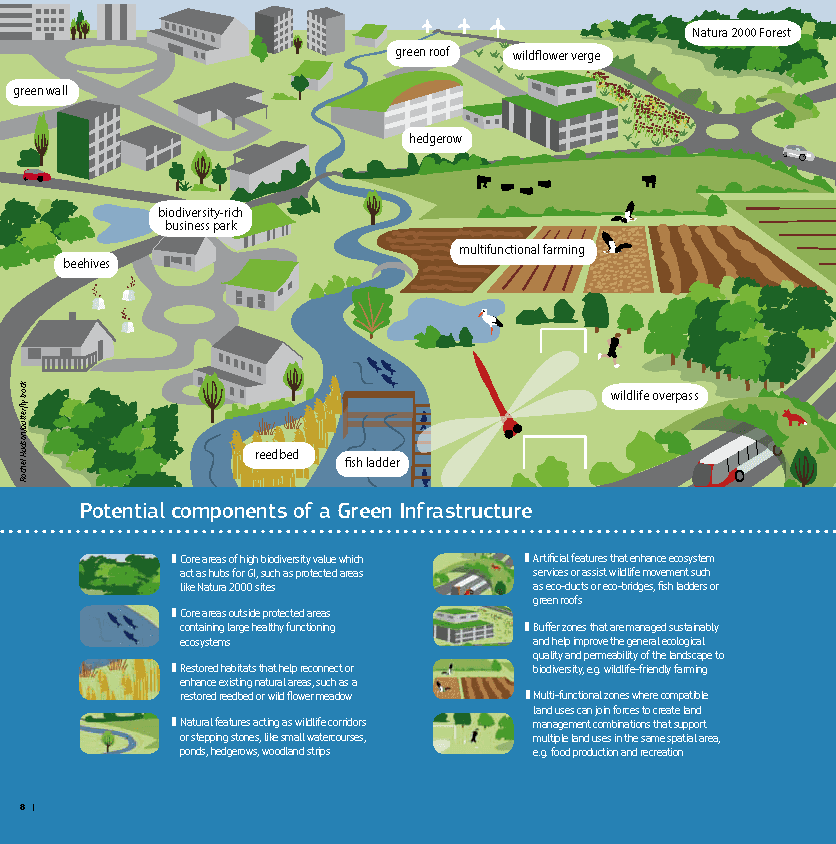
Potential components of a Green Infrastructure View original
Is this image relevant?
NHESS - Review article: Towards resilient vital infrastructure systems – challenges ... View original
Is this image relevant?
Climate resilience - Wikipedia View original
Is this image relevant?
Potential components of a Green Infrastructure View original
Is this image relevant?
Components of climate-resilient infrastructure
- Physical infrastructure
- Buildings
- Utilize resilient design principles and construction materials to withstand climate impacts
- Implement green roofs and walls to provide insulation and manage stormwater runoff (green roofs on Chicago City Hall)
- Transportation systems
- Construct elevated roads and bridges to withstand flooding events (raised roads in Miami)
- Install permeable pavements to improve drainage and reduce urban flooding (porous asphalt in Portland)
- Energy systems
- Develop distributed renewable energy sources to enhance energy security during climate disruptions (solar microgrids in Puerto Rico)
- Place power lines underground to minimize damage from storms and extreme weather events (undergrounding in San Diego)
- Water and wastewater systems
- Build flood-resistant water treatment plants to ensure continuous operation during flooding (floodproof plant in Rotterdam)
- Incorporate stormwater retention and infiltration features to manage excess runoff (bioswales in Seattle)
- Buildings
- Nature-based solutions
- Establish urban green spaces and parks to provide cooling effects and control flooding (Cheonggyecheon Stream restoration in Seoul)
- Protect and restore wetlands and coastal buffers to absorb storm surges and reduce coastal erosion (mangrove restoration in Vietnam)
- Plant urban forests to sequester carbon, improve air quality, and mitigate urban heat island effect (Million Trees NYC initiative)
- Social and institutional components
- Implement early warning systems and develop emergency response plans to prepare for climate-related disasters (Tokyo's earthquake early warning system)
- Engage communities through education programs to raise awareness and build capacity for climate adaptation (Climate Ready Boston community engagement)
- Foster collaborative governance and partnerships among stakeholders to coordinate adaptation efforts (C40 Cities Climate Leadership Group)

Climate risks for urban systems
- Exposure to climate hazards
- Experience sea-level rise and coastal flooding, threatening low-lying urban areas and infrastructure (Jakarta, Indonesia)
- Encounter extreme precipitation events, leading to urban flooding and overwhelmed drainage systems (Houston, Texas during Hurricane Harvey)
- Face heat waves and exacerbated urban heat island effect, impacting public health and energy demand (2003 European heat wave)
- Confront droughts and water scarcity, straining water resources and supply systems (Cape Town, South Africa's "Day Zero" crisis)
- Sensitivity of urban systems
- Possess aging and deteriorating infrastructure, increasing vulnerability to climate stresses (New York City's subway system during Hurricane Sandy)
- Exhibit high population density and uneven distribution, concentrating risks in certain areas (informal settlements in Mumbai, India)
- Experience socioeconomic disparities and have vulnerable communities with limited adaptive capacity (New Orleans' Lower Ninth Ward during Hurricane Katrina)
- Rely heavily on critical infrastructure and services, creating cascading failures when disrupted (power outages during California wildfires)
- Adaptive capacity
- Have varying financial resources available for adaptation investments, with some cities facing budget constraints (Detroit's municipal bankruptcy)
- Possess different levels of technical expertise and knowledge to plan and implement adaptation measures (Singapore's advanced flood management systems)
- Operate under diverse institutional arrangements and governance structures, influencing the effectiveness of adaptation efforts (Amsterdam's water governance model)
- Exhibit different degrees of social capital and community resilience, shaping the ability to cope with and recover from climate impacts (community-based adaptation in Dhaka, Bangladesh)

Case studies in urban adaptation
- Green infrastructure projects
- China's Sponge City Program integrates nature-based solutions like permeable pavements, green roofs, and constructed wetlands to manage urban water and mitigate flooding (Wuhan, China)
- Chicago's Green Alleys program converts impervious alleys into permeable, green spaces that absorb stormwater, reduce urban heat, and provide community amenities (Chicago, Illinois)
- Resilient transportation systems
- Jakarta, Indonesia is constructing raised roads and elevated metro lines to maintain transportation functionality during flooding events and adapt to sea-level rise
- Rotterdam, Netherlands has implemented climate-proofing measures for its transportation infrastructure, including flood-resistant designs and materials, to ensure mobility during extreme weather (Maeslantkering storm surge barrier)
- Inclusive and participatory adaptation planning
- Durban, South Africa engages local communities in vulnerability assessments and adaptation planning through the Community-Based Adaptation program, empowering residents to identify and prioritize adaptation actions (Palmiet River Rehabilitation Project)
- New York City utilizes participatory budgeting processes to involve citizens in allocating funds for climate adaptation projects, promoting transparency and community ownership (East Side Coastal Resiliency Project)
- Integrated, multi-sectoral adaptation strategies
- Copenhagen Climate Adaptation Plan addresses flooding, sea-level rise, and urban heat through a combination of infrastructure upgrades (stormwater management systems), nature-based solutions (green corridors), and social initiatives (public awareness campaigns)
- Singapore's "City in a Garden" vision integrates green infrastructure and urban planning to enhance climate resilience, including the establishment of a network of parks, green roofs, and vertical gardens (Gardens by the Bay)
Development of city adaptation plans
-
Conduct a vulnerability assessment
- Identify climate hazards like sea-level rise, extreme precipitation, heat waves, and droughts, and project future climate scenarios using downscaled climate models
- Assess the exposure, sensitivity, and adaptive capacity of urban systems (infrastructure, ecosystems) and communities (population, socioeconomic factors) to climate risks
- Prioritize risks and vulnerabilities based on the likelihood of occurrence and the magnitude of potential consequences (risk matrix approach)
-
Engage stakeholders and communities
- Identify key stakeholders from government agencies, private sector entities, academic institutions, and civil society organizations that have a role in urban adaptation
- Conduct participatory workshops, focus group discussions, and public consultations to gather input, build consensus, and co-create adaptation solutions (Rockefeller Foundation's 100 Resilient Cities program)
- Establish partnerships and collaborative governance mechanisms to foster coordination, knowledge sharing, and resource mobilization among stakeholders (Miami-Dade County's Sea Level Rise Task Force)
-
Develop adaptation strategies and actions
- Identify a range of adaptation options for different urban sectors, such as climate-resilient infrastructure design, land-use planning, ecosystem-based adaptation, and public health interventions (green infrastructure, building codes, early warning systems)
- Prioritize adaptation actions based on criteria like technical feasibility, cost-effectiveness, social acceptability, and potential co-benefits (multi-criteria analysis)
- Integrate adaptation measures into existing urban plans, policies, and development processes to mainstream climate resilience (New York City's OneNYC strategy)
-
Implement and monitor the adaptation plan
- Secure funding and resources for implementation through municipal budgets, national adaptation funds, international climate finance, and public-private partnerships (Green Climate Fund)
- Assign clear roles and responsibilities for implementation among government departments, private sector partners, and community organizations (Rotterdam's Climate Proof program)
- Establish monitoring and evaluation frameworks with measurable indicators to track progress, assess effectiveness, and enable adaptive management of the plan (resilience scorecards)
- Promote continuous learning, knowledge management, and capacity building among stakeholders to iteratively improve adaptation practices (C40 Cities Climate Leadership Group's knowledge hub)
See Fiveable more often in Google
Mark Fiveable as a preferred source and Google is more likely to show you our guides in Top Stories, with a "preferred" badge in AI Mode and AI Overviews.