1.1 Definition and components of the climate system

🌡️Intro to Climate Science Unit 1 Review
1.1 Definition and components of the climate system
🌡️ Intro to Climate Science
Climate System Definition and Components
Earth's climate system is the set of interconnected physical, chemical, and biological processes that determine the planet's long-term weather patterns. It consists of five major components: the atmosphere, hydrosphere, cryosphere, lithosphere, and biosphere. These spheres constantly exchange energy, matter, and momentum with each other, and it's those interactions that ultimately shape climate.
Key variables like temperature, precipitation, and atmospheric composition drive climate patterns. Understanding how these components and variables work together gives you the foundation for everything else in climate science.

Top images from around the web for Components of the climate system
LABORATORY 6: CLIMATE CHANGE – PART 1 – Physical Geography Lab Manual: The Atmosphere and Biosphere View original
Is this image relevant?
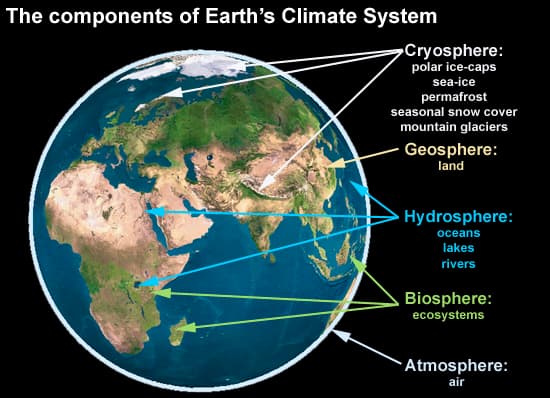
A rough guide to the components of Earth's Climate System View original
Is this image relevant?
File:Atmosphere-Biosphere-Hydrosphere-Lithosphere.png - Wikimedia Commons View original
Is this image relevant?
LABORATORY 6: CLIMATE CHANGE – PART 1 – Physical Geography Lab Manual: The Atmosphere and Biosphere View original
Is this image relevant?
A rough guide to the components of Earth's Climate System View original
Is this image relevant?
Components of the Climate System
Each component covers a different part of Earth's physical environment:
- Atmosphere — the gaseous layer enveloping Earth, composed mainly of nitrogen (~78%) and oxygen (~21%), plus trace greenhouse gases like carbon dioxide and methane. This is where weather happens and where the greenhouse effect regulates temperature.
- Hydrosphere — all liquid water on Earth's surface (oceans, lakes, rivers) and underground (groundwater). Oceans make up about 97% of this water and play a huge role in storing and moving heat.
- Cryosphere — all frozen water, including sea ice, glaciers, ice caps, ice sheets, snow cover, and permafrost. These frozen surfaces strongly influence how much sunlight Earth reflects back to space.
- Lithosphere — the solid, rocky outer layer of Earth, including continents and ocean floors. Its topography (mountain ranges, valleys, plains) steers atmospheric circulation and ocean currents.
- Biosphere — all living organisms on Earth, from microorganisms to forests to humans. Living things actively cycle carbon, water, and other materials between the other spheres.

Interactions Between Earth's Spheres
Climate isn't shaped by any single component acting alone. It emerges from constant two-way exchanges between spheres. Here are the major pairings:
- Atmosphere ↔ Hydrosphere: Water cycles between them through evaporation, transpiration, and precipitation. Winds also drive ocean surface currents.
- Atmosphere ↔ Cryosphere: Snowfall and ice formation pull water out of the atmosphere; melting releases it back. Ice and snow also raise Earth's albedo (reflectivity), sending more solar energy back to space.
- Atmosphere ↔ Lithosphere: Rocks weather and erode under atmospheric conditions. Volcanic eruptions inject gases (like ) and particulates into the atmosphere, which can temporarily cool the climate.
- Atmosphere ↔ Biosphere: Plants absorb through photosynthesis and release it through respiration. Vegetation also affects evapotranspiration rates and how rough the land surface is to wind flow.
- Hydrosphere ↔ Cryosphere: Ocean water freezes into sea ice; melting glaciers and ice sheets add freshwater to the ocean and raise sea level.
- Hydrosphere ↔ Lithosphere: Rivers erode rock and transport sediment. Groundwater flows through and is stored in rock and soil layers.
- Hydrosphere ↔ Biosphere: Water bodies provide habitats and nutrients for aquatic life. Land runoff carries nutrients (and pollutants) into rivers, lakes, and oceans.
- Cryosphere ↔ Lithosphere: Glaciers carve valleys and deposit sediments, reshaping landscapes over time. Permafrost affects soil stability and erosion patterns.
- Cryosphere ↔ Biosphere: Snow cover and permafrost limit where plants can grow. Sea ice provides specialized habitats for organisms like polar algae and Arctic mammals.
- Lithosphere ↔ Biosphere: Biological activity breaks down rock into soil. Plant roots stabilize soil and reduce erosion.

Role of Components in Climate
Each sphere contributes to climate regulation in distinct ways:
- Atmosphere regulates temperature through the greenhouse effect and redistributes heat and moisture through global circulation patterns (winds, jet streams).
- Hydrosphere absorbs and stores enormous amounts of heat in the oceans, moderating temperature swings. Ocean currents like the Gulf Stream redistribute heat from the equator toward the poles.
- Cryosphere cools Earth because ice and snow have high albedo, reflecting a large fraction of incoming solar radiation. Changes in ice cover create feedback loops that amplify warming or cooling.
- Lithosphere influences atmospheric circulation through topography (e.g., the Himalayas deflect air masses). Volcanic eruptions can inject aerosols into the stratosphere, producing short-term cooling effects.
- Biosphere affects albedo (forests are darker than bare ground, absorbing more heat) and surface roughness. Biological processes drive major parts of the carbon cycle, directly influencing greenhouse gas concentrations.
Key Variables of Climate
These are the measurable quantities scientists track to monitor and model the climate system:
- Temperature — air temperature, sea surface temperature (SST), and land surface temperature
- Precipitation — rainfall and snowfall amounts and patterns
- Atmospheric composition — greenhouse gas concentrations (, , water vapor) and aerosol levels
- Ocean properties — salinity, density, and circulation patterns (these drive the global ocean "conveyor belt" that moves heat around the planet)
- Cryospheric variables — sea ice extent and thickness, glacier and ice sheet mass balance, snow cover extent and depth
- Biospheric variables — vegetation type and distribution, leaf area index (a measure of canopy density), and primary productivity (how much carbon plants fix through photosynthesis)
See Fiveable more often in Google
Mark Fiveable as a preferred source and Google is more likely to show you our guides in Top Stories, with a "preferred" badge in AI Mode and AI Overviews.