14.1 Continuation of Roman traditions in the East

🏺Early World Civilizations Unit 14 Review
14.1 Continuation of Roman traditions in the East
🏺 Early World Civilizations
Eastern Roman Empire's Survival
When the Western Roman Empire collapsed in 476 CE, the eastern half didn't just survive; it thrived for nearly another thousand years. Several reinforcing factors explain why the East endured while the West crumbled.

Top images from around the web for Political Stability and Centralization
Byzantine Empire - Wikipedia View original
Is this image relevant?
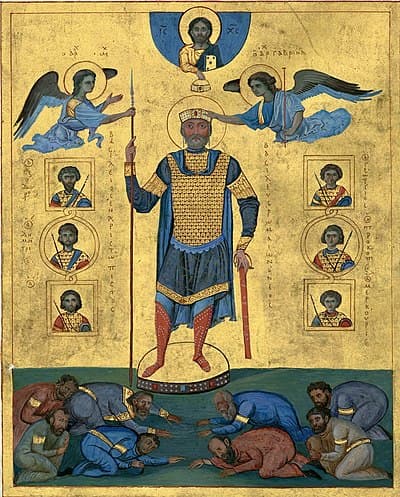
Byzantine bureaucracy and aristocracy - Wikipedia View original
Is this image relevant?
Byzantine Empire - Wikipedia View original
Is this image relevant?
Byzantine bureaucracy and aristocracy - Wikipedia View original
Is this image relevant?
Political Stability and Centralization
The Eastern Roman Empire (which we call the Byzantine Empire) kept a far more centralized political structure than its western counterpart. A strong emperor sat at the top, supported by a well-organized bureaucracy that could collect taxes, enforce laws, and coordinate defense across vast territory. This centralized decision-making meant the empire could respond quickly to crises, whether those were foreign invasions or internal revolts, rather than relying on distant provincial leaders who might have their own agendas.
Economic Prosperity and Diversity
The eastern economy rested on multiple pillars, making it resilient in ways the West was not:
- Trade routes like the Silk Road funneled goods (silk, spices, precious stones) through Byzantine territory, and the empire taxed that flow heavily
- Agriculture in fertile regions like Anatolia and the Levant provided a stable food supply for the empire's population
- A sophisticated tax system generated steady state revenue, funding infrastructure, military defense, and cultural projects
This economic diversity meant that if one sector weakened, others could compensate.
Strategic Location Advantages
Constantinople sat on the Bosphorus Strait, the narrow waterway connecting the Black Sea to the Mediterranean. This gave the empire control over maritime trade between two major bodies of water. The city also sat near major overland routes linking Europe, Asia, and Africa. That positioning allowed the Byzantines to tax commerce flowing in every direction, project military power across multiple regions, and engage in diplomacy with neighbors on all sides.
Social Cohesion and Cultural Identity
While the Western Empire fractured along linguistic and cultural lines, the East held together around a shared Greek-speaking identity. Greek served as the common language of government, commerce, and scholarship. A well-educated elite, trained in Greek literature, philosophy, and science, staffed the bureaucracy and kept intellectual life vibrant. This shared cultural foundation fostered loyalty to the imperial government and helped maintain social stability across diverse provinces.
Military Strength and Effectiveness
The Byzantine military was professional, specialized, and well-funded. The army organized soldiers into distinct units (infantry, cavalry, archers), each trained for specific battlefield roles. A powerful navy based in Constantinople controlled the surrounding seas and protected vital trade routes. Together, these forces successfully defended the empire against major threats from Persians, Arabs, and others for centuries.
Constantinople: Center of the Byzantine Empire
Political and Economic Importance
Emperor Constantine founded Constantinople in 330 CE on the site of the ancient Greek city of Byzantium. For over a thousand years, it served as the political, economic, and cultural heart of the Byzantine Empire.
The emperor governed from the Great Palace, overseeing a vast bureaucracy. The city's economy ran on trade, manufacturing (especially textiles and luxury goods), and taxation. Constantinople's location on the Bosphorus made it a natural commercial crossroads between Europe and Asia, and at its height, it was one of the wealthiest cities in the medieval world. Monumental buildings like the Hagia Sophia and the Hippodrome (a massive chariot-racing arena) displayed that wealth for all to see.
Intellectual and Cultural Significance
Constantinople was the intellectual capital of the medieval Mediterranean. The Imperial University of Constantinople, founded in 425 CE, attracted students and scholars from across the empire. Libraries, including the Imperial Library, preserved vast collections of Greek and Roman texts, keeping classical knowledge alive while much of it was being lost in the West.
Philosophers, historians, mathematicians, and physicians all worked in the city, advancing knowledge in their fields. A rich cultural life of festivals, artistic patronage, and public performances made Constantinople one of the most cosmopolitan cities of its era.

Religious Authority and Influence
Constantinople was also the seat of the Patriarch of Constantinople, the head of the Eastern Orthodox Church and second in rank only to the Pope in the broader Christian hierarchy. The Hagia Sophia, the imperial cathedral, was the largest church in Christendom for nearly a thousand years and symbolized the tight bond between imperial power and religious authority.
Religious ceremonies and processions, such as the annual Feast of Orthodoxy, reinforced this church-state connection publicly. From Constantinople, Orthodox Christianity spread outward to neighboring regions, most notably to Russia and the Balkans, shaping the religious landscape of Eastern Europe for centuries to come.
Byzantine vs. Western Roman Empire
Both empires grew from the same Roman roots, sharing legal traditions, administrative structures, and cultural heritage. But they diverged sharply over time.
Political and Administrative Differences
Byzantine emperors held near-absolute power. Justinian I (r. 527–565), for example, issued the Corpus Juris Civilis, a comprehensive legal code that organized centuries of Roman law, and launched ambitious building projects across the empire. The centralized bureaucracy in Constantinople efficiently collected taxes, maintained records, and implemented policy.
Western emperors, especially in the empire's final decades, struggled to control distant provinces. Regional military leaders increasingly acted independently, and central authority eroded steadily until it collapsed entirely.
Economic and Social Contrasts
- The Byzantine economy stayed strong thanks to active trade networks, productive agriculture, and manufacturing, all supported by the empire's strategic location and naval power
- The Western economy declined as political instability, invasions, and the loss of key ports (Carthage, Alexandria) disrupted trade
- Byzantine cities, especially Constantinople, remained vibrant centers of commerce and culture, while many Western cities shrank or were abandoned
- Byzantine society was more diverse and cosmopolitan, blending Greek, Roman, and other cultural influences, whereas the West remained more homogeneous and Latin-based
Military Capabilities and Challenges
The Byzantine military adapted and professionalized over time. The army eventually organized into themata (regional armies tied to specific territories) and tagmata (elite professional units stationed near the capital), emphasizing mobility and flexibility. The navy controlled the eastern Mediterranean and protected trade.
The Western army, weakened by funding shortages and political chaos, couldn't hold off waves of Germanic invaders (Visigoths, Vandals, Ostrogoths). The Western navy similarly declined, leaving coastlines vulnerable to seaborne attack. Byzantine diplomacy, which combined military deterrence with strategic marriages and alliances, proved far more effective at maintaining regional stability than Western efforts.
Byzantine Empire's Strategic Location
Trade and Economic Benefits
Geography was one of the empire's greatest assets. Sitting at the junction of Europe, Asia, and Africa, the Byzantines controlled or influenced nearly every major trade route in the region:
- The Silk Road passed through Byzantine territory, carrying silk, spices, and precious stones from China toward the Mediterranean
- Mediterranean maritime trade brought textiles, ceramics, and glassware from ports across the region
- Control of key straits, ports, and overland routes let the empire generate enormous revenue through taxes and tariffs
This trade wealth fueled the growth of Byzantine cities and funded the empire's military and cultural achievements.
Diplomatic Advantages and Challenges
The same location that brought trade also brought threats. The Persians pressed from the east, the Arabs from the south, and various Slavic and nomadic peoples from the north. Byzantine diplomacy had to be sophisticated, balancing military strength with strategic marriages, tribute payments, and cultural exchange.
Justinian I's reign illustrates this balancing act well: he fought wars on multiple fronts while also cultivating alliances and projecting cultural influence. Constant vigilance was the price of the empire's position, but skilled diplomacy helped prevent any single rival from overwhelming it.
Cultural Exchange and Influence
The empire's crossroads position made it a melting pot of ideas. Greek language and culture, preserved and promoted by the Byzantines, spread throughout the eastern Mediterranean and influenced Slavic and Arabic civilizations. Byzantine art and architecture, especially the distinctive domed style of Orthodox churches, left a lasting mark across the region.
This exchange flowed both ways. Byzantine scholars absorbed advances in science, medicine, and philosophy from Persian, Arab, and other traditions, enriching their own intellectual culture. Constantinople's reputation as a center of learning drew scholars, artists, and writers from across the known world, making it a hub where knowledge circulated and grew.
See Fiveable more often in Google
Mark Fiveable as a preferred source and Google is more likely to show you our guides in Top Stories, with a "preferred" badge in AI Mode and AI Overviews.