11.5 Bose-Einstein condensation

🎲Statistical Mechanics Unit 11 Review
11.5 Bose-Einstein condensation
🎲 Statistical Mechanics
Bose-Einstein condensation fundamentals
Bose-Einstein condensation (BEC) is a phase transition where, below a critical temperature, a macroscopic number of bosons collapse into the single lowest-energy quantum state. This creates a new state of matter with quantum properties visible at macroscopic scales.
BEC matters for statistical mechanics because it's the clearest example of how particle indistinguishability and quantum statistics produce dramatic, observable consequences. Effects like superfluidity and coherent matter waves emerge directly from the statistics of identical bosons.
Bosons vs fermions
The distinction between bosons and fermions is what makes BEC possible in the first place.
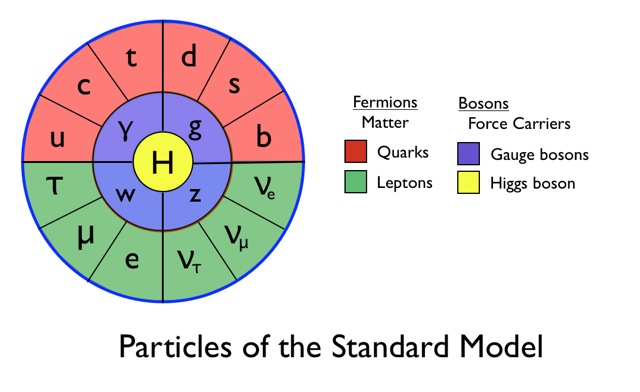
- Bosons obey Bose-Einstein statistics: any number of them can occupy the same quantum state. They have integer spin. Examples include photons, atoms, and gluons.
- Fermions obey Fermi-Dirac statistics: the Pauli exclusion principle limits each quantum state to at most one fermion. They have half-integer spin. Examples include electrons, protons, and neutrons.
- Composite particles (like alkali atoms) behave as bosons when their total spin is integer. For instance, has 87 nucleons and 37 electrons, giving an even total particle number and integer total spin, so it acts as a boson.
Bose-Einstein distribution function
The average occupation number for a single-particle state in thermal equilibrium is:
where:
- is the energy of state
- is the chemical potential
- is Boltzmann's constant
- is the temperature
Notice the minus sign in the denominator (contrast this with the plus sign in the Fermi-Dirac distribution). This minus sign is exactly what allows occupation numbers to grow without bound. As drops and approaches the ground state energy from below, diverges, signaling condensation into the ground state.
Critical temperature
The critical temperature marks the onset of condensation. For a non-interacting Bose gas in three dimensions:
- is the particle number density
- is the boson mass
- is the Riemann zeta function evaluated at 3/2
Below , the fraction of particles in the ground state grows as . For a typical dilute alkali gas experiment ( at densities around cm), falls in the range of hundreds of nanokelvin.
Quantum statistical properties
The unique behavior of BECs arises when quantum statistics can no longer be ignored. This happens when particles' wave nature dominates over their classical point-particle character.
Quantum degeneracy
A gas becomes quantum degenerate when the thermal de Broglie wavelength becomes comparable to the average interparticle spacing. Quantitatively, this condition is:
where . At this point, the wavefunctions of neighboring particles overlap significantly, and you can no longer treat the particles as distinguishable classical objects. Quantum statistics take over.
Coherent matter waves
Once a BEC forms, all the condensed atoms share a single macroscopic wavefunction:
Here is the local condensate density and is the phase. The key point is that this phase is well-defined across the entire condensate, giving long-range phase coherence. This coherence has been directly demonstrated by splitting a BEC in two and recombining the halves: the resulting interference fringes confirm that the condensate behaves as a single coherent matter wave.
Macroscopic quantum phenomena
BECs make quantum mechanics visible at scales you can image with a camera. Observable effects include:
- Superfluidity: flow without friction below a critical velocity
- Quantized vortices: rotation only in discrete units of circulation
- Josephson oscillations: coherent tunneling of atoms between weakly coupled condensates
These phenomena occur in systems containing millions of atoms, providing a direct laboratory window into quantum mechanics.
Experimental realization
Creating a BEC requires cooling a dilute gas to nanokelvin temperatures while maintaining sufficient density. No single technique can do this alone, so experiments chain together multiple cooling stages.
Laser cooling techniques
Laser cooling exploits the momentum kick atoms receive when absorbing photons.
- Doppler cooling: Six counter-propagating laser beams, tuned slightly below an atomic resonance, preferentially scatter photons from atoms moving toward each beam. This slows atoms to velocities of a few cm/s, reaching temperatures around 100 μK.
- Sub-Doppler (Sisyphus) cooling: Polarization gradients in the laser field create spatially varying energy levels. Atoms repeatedly climb potential hills and get optically pumped back to the bottom, losing kinetic energy each cycle. This pushes temperatures down to a few μK.
- Optical molasses: The combination of counter-propagating beams creates a viscous environment that damps atomic motion in all three dimensions.
Laser cooling alone can't reach BEC. It gets the phase-space density up by many orders of magnitude, but the final push requires evaporative cooling.
Magnetic trapping
After laser cooling, atoms are loaded into a magnetic trap that confines them without the heating associated with resonant light.
- Traps exploit the force on atomic magnetic dipole moments in an inhomogeneous field: atoms in low-field-seeking states are drawn toward the field minimum.
- Quadrupole traps use a linear field gradient but have a zero-field point at the center where atoms can undergo spin-flip losses (Majorana losses).
- Ioffe-Pritchard traps solve this by maintaining a non-zero field minimum, providing stable 3D confinement.
Evaporative cooling
This is the final cooling stage that actually reaches BEC:
- Radio-frequency (RF) radiation selectively flips the spin of the most energetic atoms, ejecting them from the trap.
- The remaining atoms rethermalize through elastic collisions, reaching a lower equilibrium temperature.
- The RF frequency is gradually ramped down, progressively lowering the effective trap depth.
- Each cycle removes energy faster than it removes atoms, increasing phase-space density.
This process achieves temperatures in the nanokelvin range. The trade-off is that you lose most of your atoms; a typical experiment starts with billions of atoms after laser cooling and ends with a condensate of to atoms.

Theoretical description
Several theoretical frameworks describe BEC behavior at different levels of approximation. All start from the fact that most atoms occupy a single quantum state.
Gross-Pitaevskii equation
For a dilute condensate at zero temperature, the dynamics are governed by the Gross-Pitaevskii equation (GPE):
This is a nonlinear Schrödinger equation. The three terms inside the parentheses represent:
- Kinetic energy:
- External trapping potential:
- Mean-field interaction: , where and is the s-wave scattering length
The nonlinear term captures atom-atom interactions in a mean-field sense. For (repulsive interactions, as in ), the condensate spreads out; for (attractive), it tends to collapse.
Mean-field approximation
The GPE rests on the mean-field approximation, which assumes:
- All condensed atoms occupy the same single-particle state
- The many-body wavefunction factorizes as a product of identical single-particle wavefunctions
- Quantum fluctuations and correlations beyond the mean field are negligible
This works well for weakly interacting systems where (the diluteness condition). For strongly interacting systems or near phase transitions, you need to go beyond mean field.
Bogoliubov theory
To understand excitations above the condensate ground state, Bogoliubov theory linearizes the GPE around the mean-field solution. The resulting excitation spectrum is:
This spectrum has two important limits:
- Low (long wavelength): , where is the speed of sound. These are phonon-like collective excitations.
- High (short wavelength): , recovering free-particle behavior with a mean-field energy shift.
The crossover between these regimes occurs at the inverse healing length . The phonon-like behavior at low is what enables superfluidity.
Physical characteristics
Superfluidity
A BEC can flow without dissipation as long as its velocity stays below a critical value. The Landau criterion sets this critical velocity:
For the Bogoliubov spectrum, equals the speed of sound . Below this velocity, the condensate cannot create excitations (there are no available states that conserve both energy and momentum), so it flows without friction. This manifests as persistent currents that can circulate indefinitely in a ring-shaped trap.
Quantized vortices
A BEC's wavefunction must be single-valued, which forces the circulation to be quantized:
Each vortex has a core where the density drops to zero. The core size is set by the healing length:
This is the shortest length scale over which the condensate density can vary. In rapidly rotating condensates, vortices arrange into triangular (Abrikosov) lattices, analogous to flux vortices in type-II superconductors. These vortex lattices provide a platform for studying quantum turbulence.
Collective excitations
The condensate supports coherent oscillation modes that depend on the trap geometry and interaction strength:
- Dipole mode: center-of-mass oscillation at the trap frequency (this is exact due to Kohn's theorem)
- Breathing mode: radial expansion and contraction of the condensate
- Quadrupole mode: shape oscillation where the condensate elongates along one axis while contracting along another
These modes can be excited by modulating the trapping potential, and their measured frequencies provide a sensitive test of the theoretical description.
Applications and implications
Atom lasers
An atom laser is a coherent beam of atoms extracted from a trapped BEC, analogous to how an optical laser emits coherent photons. Outcoupling is typically done using RF pulses that transfer atoms to an untrapped spin state, allowing them to fall under gravity.
Atom lasers have high spectral brightness and low divergence. They can be manipulated with atom-optics elements (magnetic mirrors, diffraction gratings made from standing light waves) and have potential applications in atom interferometry and precision measurements.
Quantum simulation
BECs loaded into optical lattices can simulate condensed matter Hamiltonians that are computationally intractable. The basic idea:
- Interfering laser beams create a periodic potential that mimics a crystal lattice
- Tuning laser intensity controls the tunneling rate between sites
- Tuning via Feshbach resonances controls the on-site interaction strength
- This directly implements the Bose-Hubbard model
The superfluid-to-Mott-insulator transition was observed this way by Greiner et al. (2002). Current research targets quantum magnetism, topological phases, and models relevant to high-temperature superconductivity.
Precision measurements
BECs' sensitivity to external perturbations makes them powerful measurement tools:
- Atom interferometry: splitting and recombining a BEC measures accelerations, rotations, and gravitational gradients with extreme precision
- Atomic clocks: trapped condensates reduce systematic shifts from atomic motion
- Tests of fundamental physics: BEC-based experiments have been proposed to test the equivalence principle and search for time variation of fundamental constants
Historical development
Einstein's prediction
In 1924, Satyendra Nath Bose derived Planck's radiation law by treating photons as indistinguishable particles with a new counting method. Einstein recognized the generality of this approach and extended it to massive particles in 1925. He predicted that below a critical temperature, a non-interacting gas of bosons would undergo a phase transition with a macroscopic fraction accumulating in the ground state. Fritz London later (1938) connected this prediction to the superfluidity observed in liquid below 2.17 K.
First experimental observation
The first gaseous BEC was achieved in June 1995 by Eric Cornell and Carl Wieman at JILA (Boulder, Colorado):
- They used atoms cooled to approximately 170 nK
- The sequence combined laser cooling, magnetic trapping in a time-orbiting potential (TOP) trap, and evaporative cooling
- Condensation appeared as a sharp, anisotropic peak in the time-of-flight velocity distribution
Four months later, Wolfgang Ketterle's group at MIT produced a much larger BEC using , enabling the first studies of condensate properties including the demonstration of matter-wave interference.
Nobel Prize contributions
The 2001 Nobel Prize in Physics was awarded to Cornell, Wieman, and Ketterle "for the achievement of Bose-Einstein condensation in dilute gases of alkali atoms, and for early fundamental studies of the properties of the condensates." Their work established BEC as an experimentally accessible state of matter and launched an entire subfield of ultracold atomic physics.
Advanced topics
BEC in reduced dimensions
Confining a BEC tightly along one or two directions (using highly anisotropic traps) produces effectively 2D or 1D systems with qualitatively different physics.
- In 2D, true long-range order is forbidden at finite temperature (Mermin-Wagner theorem), but a quasi-condensate with algebraically decaying correlations can form. The relevant phase transition is the Berezinskii-Kosterlitz-Thouless (BKT) transition, driven by the unbinding of vortex-antivortex pairs.
- In 1D, quantum fluctuations are even stronger. The system is described by the Lieb-Liniger model, an exactly solvable model of bosons with contact interactions. The Tonks-Girardeau limit (strong repulsion) produces a gas of "fermionized" bosons.
Spinor condensates
When atoms have multiple accessible internal spin states, the condensate carries a spin degree of freedom. For example, in the hyperfine manifold has three magnetic sublevels ().
Spinor condensates exhibit rich phase diagrams with ferromagnetic and antiferromagnetic (polar) ground states, depending on the sign of the spin-dependent interaction. They support exotic topological defects like spin vortices, monopoles, and skyrmions, connecting BEC physics to concepts in quantum magnetism and field theory.
Optical lattices for BECs
Optical lattices are periodic potentials formed by the interference of counter-propagating laser beams. Loading a BEC into an optical lattice realizes the Bose-Hubbard model:
where is the tunneling energy and is the on-site interaction energy. Tuning the ratio (by adjusting lattice depth) drives the system through the superfluid-to-Mott-insulator quantum phase transition. Optical lattices also enable the study of band structure, Bloch oscillations, and transport in periodic potentials.
Connections to other fields
Superconductivity analogy
BECs and superconductors both exhibit macroscopic quantum coherence, but the microscopic mechanisms differ. In superconductors, fermions (electrons) form Cooper pairs that behave as composite bosons and condense. In atomic BECs, the bosons are fundamental (or composite atoms with integer spin).
Shared phenomena include Josephson effects (coherent tunneling between weakly coupled condensates), quantized vortex lattices (analogous to Abrikosov lattices in type-II superconductors), and macroscopic phase coherence. Studying these parallels in the highly controllable BEC setting provides insights that may inform understanding of unconventional superconductors.
Cosmological models
BECs serve as analog systems for studying phenomena from general relativity and cosmology in the laboratory:
- Sound waves in a flowing BEC experience an effective spacetime metric, enabling the study of analog Hawking radiation at sonic horizons
- Rapid quenches of a BEC through the phase transition produce topological defects (vortices), mimicking the Kibble-Zurek mechanism for cosmic string formation
- Expanding BECs can model aspects of cosmic inflation
These analog gravity experiments provide testable predictions for phenomena that are inaccessible in astrophysical settings.
Quantum information processing
The coherence properties of BECs make them relevant to quantum information science:
- Many-body entanglement in BECs (e.g., spin-squeezed states) can enhance measurement precision beyond the standard quantum limit
- Long-lived atomic states in BECs serve as potential quantum memories
- Controlled interactions in optical lattices enable quantum gate operations
- BEC systems provide a testbed for studying decoherence and the quantum-to-classical transition in many-body systems
See Fiveable more often in Google
Mark Fiveable as a preferred source and Google is more likely to show you our guides in Top Stories, with a "preferred" badge in AI Mode and AI Overviews.