8.3 Glass ceiling and leadership barriers for women and minorities

🚻Intro to Gender Studies Unit 8 Review
8.3 Glass ceiling and leadership barriers for women and minorities
🚻 Intro to Gender Studies
The Glass Ceiling and Leadership Barriers

Top images from around the web for Glass ceiling concept and impact
Frontiers | Gender inequalities in the workplace: the effects of organizational structures ... View original
Is this image relevant?
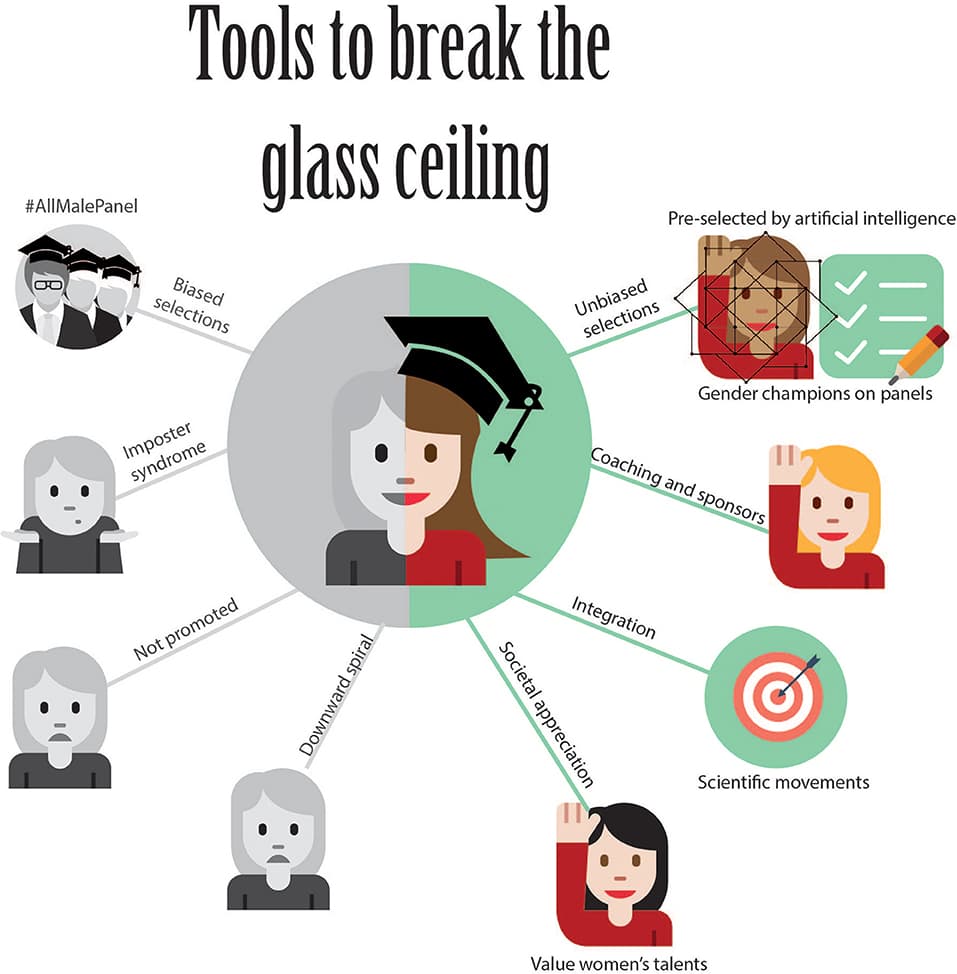
Frontiers | Women in Translational Medicine: Tools to Break the Glass Ceiling View original
Is this image relevant?
Frontiers | The Glass Ceiling for Women Managers: Antecedents and Consequences for Work-Family ... View original
Is this image relevant?
Frontiers | Gender inequalities in the workplace: the effects of organizational structures ... View original
Is this image relevant?
Frontiers | Women in Translational Medicine: Tools to Break the Glass Ceiling View original
Is this image relevant?
Glass ceiling concept and impact
The "glass ceiling" is a metaphor for the invisible barriers that prevent women and minorities from advancing to top leadership positions, even when they have the qualifications and track record to get there. You can't point to a single written rule that blocks people; instead, it's a combination of organizational practices, cultural assumptions, and systemic patterns that quietly filter out certain groups the higher you look in a company's hierarchy.
The numbers tell the story clearly:
- As of 2021, women held only about 8.2% of Fortune 500 CEO positions
- Minorities represented roughly 9% of Fortune 500 CEOs in the same period
These figures matter beyond symbolism. When women and minorities are absent from decision-making roles, the policies, products, and workplace cultures those leaders shape end up reflecting a narrower set of experiences and priorities.

Barriers to workplace advancement
The barriers break down into two broad categories: structural and cultural.
Structural barriers are built into how organizations operate:
- Lack of mentorship and sponsorship for women and minorities. Without a senior advocate pushing for your promotion behind closed doors, advancement stalls.
- Biased hiring and promotion practices that favor men and white candidates, sometimes through criteria that seem neutral but aren't (e.g., valuing "executive presence," a vague standard that often maps onto white male norms).
- Inflexible work arrangements that disproportionately penalize women, who still shoulder more caregiving responsibilities on average. A workplace that equates long office hours with commitment disadvantages anyone managing family obligations.
Cultural barriers operate through assumptions and social dynamics:
- Gender stereotypes associate leadership with traditionally masculine traits like assertiveness and dominance, making women seem like a less natural "fit" for top roles.
- Racial stereotypes and prejudices undermine the perceived competence and credibility of minority leaders, often requiring them to work harder to prove the same level of ability.
- Exclusionary networks and "old boys' clubs" limit access to the informal relationships where deals get made, information gets shared, and careers get boosted.
One particularly well-studied dynamic is the double bind: women are expected to be assertive to be seen as leaders, but when they are assertive, they're often penalized for violating feminine norms of warmth and likability. This creates a no-win situation where the same behavior that earns a man respect can earn a woman the label of "difficult" or "aggressive."

Diversity and Inclusive Leadership
Benefits of leadership diversity
Diverse leadership isn't just a fairness issue. Research consistently shows that organizations with diverse leadership teams tend to:
- Make better decisions by drawing on a wider range of perspectives and experiences
- Attract and retain top talent from underrepresented groups, who are more likely to see a future for themselves in the organization
- Foster greater innovation, since teams with varied backgrounds are more likely to challenge assumptions and generate new ideas
- Better understand diverse markets and customers, which becomes increasingly important as companies expand globally
Diverse leadership also creates a stronger sense of belonging and psychological safety for employees at all levels. When people see leaders who share their background, it signals that advancement is genuinely possible, which boosts engagement and productivity.
Strategies for inclusive leadership
Organizations can address glass ceiling barriers through several concrete approaches:
Diversity and inclusion policies:
- Set measurable diversity targets for hiring, promotion, and retention
- Provide unconscious bias training so employees and leaders can recognize patterns they might not be aware of
- Establish employee resource groups and diversity councils (for example, a Women's Leadership Network) that give underrepresented employees a collective voice
Mentorship and sponsorship programs:
- Pair senior leaders with women and minority employees as mentors and, critically, as sponsors. A mentor gives advice; a sponsor actively advocates for your advancement in rooms you're not in.
- Create formal programs that match participants based on shared professional interests and goals, rather than leaving mentorship to chance
Work-life balance and flexibility:
- Offer parental leave, flexible schedules, and remote work options to support caregiving responsibilities
- Actively encourage men to use these policies too. When only women take parental leave or flex time, it reinforces the assumption that caregiving is "women's work" and penalizes women's careers
Systemic and policy advocacy:
- Support legislation that promotes pay equity and anti-discrimination protections, such as the Equal Pay Act
- Collaborate with industry partners, government agencies, and civil society organizations to push for change beyond any single company's walls
No single strategy is enough on its own. The glass ceiling persists because it's held up by multiple reinforcing factors, so dismantling it requires action at the organizational, cultural, and policy levels simultaneously.
See Fiveable more often in Google
Mark Fiveable as a preferred source and Google is more likely to show you our guides in Top Stories, with a "preferred" badge in AI Mode and AI Overviews.