6.2 Educational institutions and gendered experiences

🚻Intro to Gender Studies Unit 6 Review
6.2 Educational institutions and gendered experiences
🚻 Intro to Gender Studies
Educational Institutions and Gender Socialization

Top images from around the web for Curriculum and classroom gender socialization
Socialization in the Schooling Process – Sociology of Education in Canada View original
Is this image relevant?
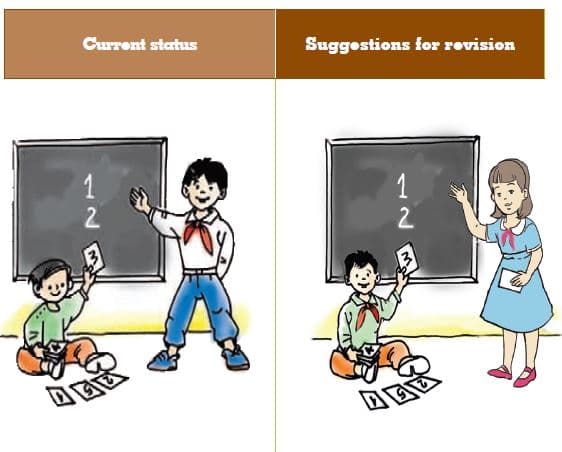
Viet Nam: Using Textbooks and Curricula for Gender Equality | World Education Blog View original
Is this image relevant?
Socialization in the Schooling Process – Sociology of Education in Canada View original
Is this image relevant?
Socialization in the Schooling Process – Sociology of Education in Canada View original
Is this image relevant?
Viet Nam: Using Textbooks and Curricula for Gender Equality | World Education Blog View original
Is this image relevant?
Curriculum and classroom gender socialization
Schools don't just teach academic subjects. They also teach students what society expects from them based on gender. This happens through both the official curriculum and what scholars call the hidden curriculum, which refers to the unspoken lessons students absorb from teacher attitudes, peer interactions, and institutional norms.
Textbooks and learning materials often reinforce traditional gender roles. Studies have found that many textbooks disproportionately depict men as leaders, scientists, and decision-makers while showing women as caregivers or support figures. When students repeatedly see these patterns, it shapes their sense of what's "normal" for their gender.
Teaching methods also play a role:
- Research shows teachers tend to call on boys more often and praise them for assertiveness, while rewarding girls for being quiet and compliant.
- Feedback can be gendered too. For example, teachers may attribute a boy's math success to ability but a girl's to hard work, subtly reinforcing the stereotype that boys are naturally better at math.
- These patterns are usually unintentional, which is part of what makes them so persistent.
Classroom dynamics among students reinforce these norms further. Boys tend to dominate class discussions and take on leadership roles in group work. Peer pressure punishes non-conformity: a boy interested in dance or a girl who's outspoken may face teasing or social exclusion. These interactions teach students to police gender boundaries in themselves and others.

Gender disparities in education
Historically, education systems excluded or limited women's access at every level. Significant progress toward gender parity has been made in primary and secondary education over recent decades, but disparities persist, especially in higher education and in specific fields.
Subject choice follows gendered patterns that show up early. Girls tend to gravitate toward humanities and social sciences, while boys cluster in STEM fields. This isn't random. Societal expectations steer students toward "gender-appropriate" subjects. Girls who might excel in physics or computer science often lack role models in those fields, making it harder to picture themselves there.
Career aspirations reflect these same patterns:
- Gender differences in career goals appear as early as elementary school.
- Stereotypes shape what children see as realistic options. Research has found that girls sometimes express lower professional ambitions, not because of lower ability, but because of narrower expectations about what careers are "for them."
- Structural barriers in male-dominated professions, such as exclusionary professional networks and hiring discrimination, further discourage women from pursuing or advancing in those fields.

Educators' role in gender stereotypes
Teachers are one of the most direct channels through which gender messages reach students, and much of this influence is unconscious.
Unconscious bias shows up in everyday interactions. A teacher might consistently call on boys for challenging math problems while asking girls easier questions, or praise boys for being "brilliant" and girls for being "hardworking." Over time, these small differences create self-fulfilling prophecies: students internalize the expectations placed on them and perform accordingly.
Curriculum choices matter too. The examples used in word problems, the historical figures highlighted in lessons, and the authors assigned in English class all send messages about whose contributions are valued. An educator who only references male scientists in a biology class is implicitly telling students that science is a male domain.
The good news is that educators can also actively challenge stereotypes:
- Using diverse examples and role models across all subjects
- Being intentional about calling on students of all genders equally
- Choosing materials that represent a range of gender identities and experiences
Gender sensitivity training helps educators recognize their own biases and develop strategies for creating more equitable classrooms. This kind of professional development is increasingly recognized as essential, not optional.
Single-sex education vs gender identity
Single-sex education remains a debated topic in gender studies. Proponents and critics both raise valid points, and the research is genuinely mixed.
Potential benefits:
- Some students, particularly girls, report higher confidence and participation in single-sex settings, especially in subjects like math and science where stereotype threat can undermine performance.
- Stereotype threat is the phenomenon where awareness of a negative stereotype about your group (e.g., "girls aren't good at math") actually impairs your performance. Removing the opposite-sex audience can reduce this effect.
- Single-sex environments may give students more freedom to explore interests without fear of judgment from peers of another gender.
Potential drawbacks:
- Gender-segregated schools can reinforce the idea that boys and girls are fundamentally different, which may actually strengthen stereotypes rather than weaken them.
- Students in single-sex settings have fewer opportunities to develop cross-gender friendships and learn to collaborate across gender lines, skills that matter in workplaces and communities.
- Research on academic outcomes is inconclusive. Some studies show slight gains for girls in STEM subjects, but others find no significant difference once you control for factors like school resources and student selection.
The core debate comes down to this: does separating students by gender give them space to thrive beyond stereotypes, or does it reinforce the very binary categories that gender studies aims to question? There's no settled answer, which is why this remains an active area of research and policy discussion.
See Fiveable more often in Google
Mark Fiveable as a preferred source and Google is more likely to show you our guides in Top Stories, with a "preferred" badge in AI Mode and AI Overviews.