2.1 Biological determinism vs. social constructionism

🚻Intro to Gender Studies Unit 2 Review
2.1 Biological determinism vs. social constructionism
🚻 Intro to Gender Studies
Biological Determinism vs. Social Constructionism
These two frameworks represent the core debate in gender studies: is gender rooted in biology, or is it built by society? Understanding where each perspective comes from, what evidence supports it, and where it falls short gives you the foundation for nearly every other topic in this course.

Top images from around the web for Biological determinism vs social constructionism
The Eight Cultural Forces - The lens & the lever — The Learner's Way View original
Is this image relevant?
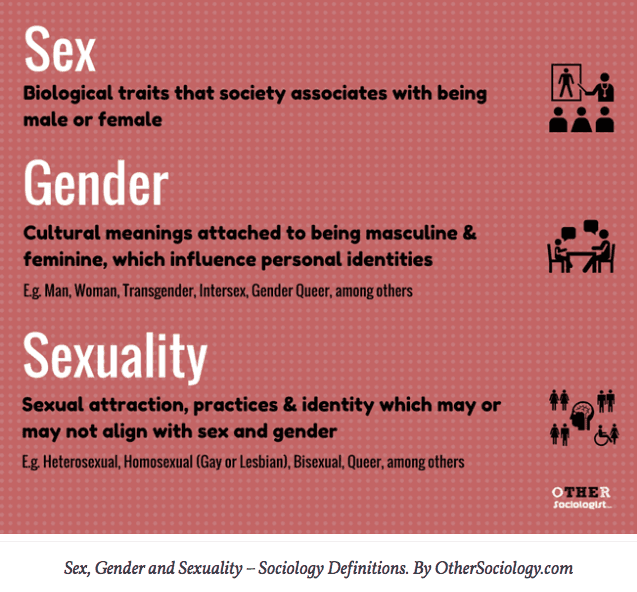
Putting It Together: Gender, Sex, and Sexuality | Sociology View original
Is this image relevant?
Socialization in the Schooling Process – Sociology of Education in Canada View original
Is this image relevant?
The Eight Cultural Forces - The lens & the lever — The Learner's Way View original
Is this image relevant?
Putting It Together: Gender, Sex, and Sexuality | Sociology View original
Is this image relevant?
Defining the Two Perspectives
Biological determinism is the view that gender differences are primarily driven by biological factors like hormones, chromosomes, and brain structure. Under this framework, gender roles and behaviors are seen as innate and largely predetermined by sex. For example, proponents point to the role of testosterone in shaping aggression-related behaviors, or to the presence of the Y chromosome as a trigger for a cascade of developmental differences.
Social constructionism takes the opposite starting point. It argues that gender is primarily shaped by social, cultural, and historical forces. Gender roles and behaviors, in this view, are learned through socialization: the messages you absorb from family, peers, media, and institutions like schools and religious organizations. What counts as "masculine" or "feminine" isn't fixed; it's a product of cultural expectations that vary across time and place.
Despite their differences, both perspectives acknowledge that gender differences exist. The disagreement is about where those differences come from and how fixed they are.

Key Arguments
Biological determinism holds that because gender differences have a biological basis, they should be relatively universal and stable across cultures. Supporters often draw on evolutionary psychology, which argues that certain behavioral tendencies were shaped by natural selection over thousands of generations. The concept of sexual dimorphism (observable physical differences between males and females of a species) is frequently cited as evidence that biology plays a foundational role.
Social constructionism holds that because gender is culturally produced, gender differences should be variable. And they are: what's considered "women's work" or "men's behavior" shifts dramatically across cultures and historical periods. Socialization processes like parenting practices, peer pressure, and media representation actively teach people how to "do" gender in their particular context.

Evidence Supporting Each View
For biological determinism:
- Research has documented sex-based differences in brain structure and function, such as average differences in amygdala size.
- Prenatal androgen exposure has been linked to certain behavioral tendencies in children, suggesting hormones play a role before socialization even begins.
- Some gender-typed behaviors, like toy preferences, appear early in development and show up across different cultural settings.
For social constructionism:
- Gender roles vary widely across cultures. Some societies, such as the Mosuo in China, organize kinship and authority in ways that don't match Western gender norms, challenging the idea that any single arrangement is "natural."
- Gender norms have shifted significantly over time even within the same culture. Consider how expectations around women in the workforce have changed in the U.S. over the past century.
- Media representations and parenting styles demonstrably shape children's understanding of gender. Studies show that advertising campaigns and children's media reinforce specific stereotypes that children then internalize.
Challenges to Each View
Neither framework holds up perfectly on its own.
Biological determinism struggles to explain the wide cross-cultural variation in gender roles. It also runs into the fact that differences within a single sex often exceed the average differences between sexes. In other words, knowing someone's sex tells you less about their individual traits than you might expect.
Social constructionism has difficulty accounting for gender-typed behaviors that appear very early in life, before heavy socialization has occurred, and for patterns that persist across very different cultural environments. Prenatal hormone exposure studies suggest biology exerts at least some influence that isn't easily explained by culture alone.
Implications of Each Perspective
Biological determinism, taken to an extreme, risks reinforcing gender stereotypes and limiting individual agency. If gender differences are seen as fixed and natural, that reasoning can be used to justify discrimination or to dismiss efforts toward equality. This tendency is sometimes called gender essentialism or biological reductionism.
Social constructionism, by contrast, emphasizes that gender identities and expressions are malleable and diverse. This perspective supports the possibility of social change and greater gender equality. However, if it completely dismisses biological influences, it can overlook real factors that shape people's experiences.
Most contemporary gender scholars work with a biopsychosocial model, which recognizes that biology, psychology, and social context all interact to shape gender. This approach avoids the oversimplification of picking just one side. It also connects to the concept of intersectionality, which examines how gender intersects with race, class, sexuality, and other social categories to produce different lived experiences. For this course, the takeaway is that the most useful analysis of gender draws on both perspectives rather than treating them as an either/or choice.
See Fiveable more often in Google
Mark Fiveable as a preferred source and Google is more likely to show you our guides in Top Stories, with a "preferred" badge in AI Mode and AI Overviews.