8.2 Gender pay gap: causes, consequences, and potential solutions

🚻Intro to Gender Studies Unit 8 Review
8.2 Gender pay gap: causes, consequences, and potential solutions
🚻 Intro to Gender Studies
Understanding the Gender Pay Gap
The gender pay gap measures the difference in earnings between men and women in the workforce. Understanding its causes and consequences is central to gender studies because it reveals how discrimination, social norms, and structural barriers interact to produce economic inequality.

Top images from around the web for Definition of gender pay gap
Equal pay, gender wage gaps and "constantly moving goalposts": Review of 40 years of research ... View original
Is this image relevant?
Gender pay gap - Wikipedia View original
Is this image relevant?
Ukrainian Law Blog: How Pronounced Is The Gender Pay Gap In Developed Nations? View original
Is this image relevant?
Equal pay, gender wage gaps and "constantly moving goalposts": Review of 40 years of research ... View original
Is this image relevant?
Gender pay gap - Wikipedia View original
Is this image relevant?
Definition of the Gender Pay Gap
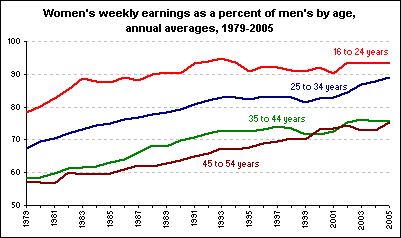
The gender pay gap refers to the difference in average (median or mean) earnings between men and women, usually expressed as a percentage of men's earnings. In the U.S., for example, women working full-time earn roughly 84 cents for every dollar men earn (as of recent Census data). That number drops further for most women of color.
- The gap varies across industries. It tends to be larger in male-dominated fields like finance, technology, and manufacturing, and smaller in female-dominated fields like education and healthcare.
- It also differs by country. Nations with stronger gender equality policies, like Sweden and Denmark, generally have smaller gaps, while countries with weaker labor protections or more traditional gender norms tend to have larger ones.
Two versions of the gap come up frequently in research:
Uncontrolled (or raw) gap: Compares all men's and all women's earnings without adjusting for job type, hours, or experience. This captures the full picture of economic inequality, including the effects of occupational segregation.
Controlled (or adjusted) gap: Compares men's and women's earnings within the same job, experience level, and hours. This isolates the portion of the gap that looks more like direct pay discrimination. The controlled gap is smaller, but it still exists.

Factors Behind the Gender Pay Gap
No single cause explains the pay gap. It results from several overlapping factors:
Discrimination can be overt (paying a woman less than a man for the same role) or subtle (unconscious bias in hiring, promotion, and performance reviews). Studies show that identical résumés with male names receive higher salary offers than those with female names, which points to implicit bias shaping pay decisions.
Occupational segregation channels women into lower-paying jobs and industries while men dominate higher-paying ones. This isn't random. It stems from gendered socialization (what careers boys and girls are encouraged to pursue), stereotypes about who "belongs" in certain fields, and barriers to entry like hostile work environments or lack of mentors in male-dominated industries.
Work-life balance and caregiving disproportionately affect women's earnings. Women are more likely to reduce hours, take career breaks, or shift to part-time work for caregiving responsibilities. The lack of affordable childcare and inflexible workplace policies make this worse. Researchers also identify a motherhood penalty: mothers face additional hiring discrimination and lower pay compared to childless women and to fathers, who sometimes receive a wage boost after having children.
Other contributing factors include differences in negotiation (partly shaped by social penalties women face for negotiating assertively), lack of pay transparency that makes it hard to identify disparities, and differences in accumulated work experience tied to caregiving breaks.
Intersectionality is critical here. The pay gap is not the same for all women. Black women, Latina women, Indigenous women, disabled women, and LGBTQ+ individuals typically face larger gaps because gender-based disadvantage compounds with racism, ableism, and other forms of discrimination.

Consequences of the Gender Pay Gap
Economic consequences compound over a lifetime. Lower annual earnings translate into significantly less retirement savings, reduced Social Security benefits, and less accumulated wealth. This increases the risk of poverty, particularly for single mothers and older women. At a macro level, the pay gap also reduces overall consumer spending and limits economic growth.
Social consequences reinforce broader gender inequality. When women earn less, it strengthens the assumption that men should be primary earners and women primary caregivers, locking both genders into limiting roles. Pay inequality also contributes to power imbalances in households and relationships, and research links it to increased stress and poorer health outcomes for women.
Intergenerational effects mean the gap doesn't just affect individual women. Children in households with lower maternal earnings may have fewer educational and economic opportunities, creating cycles of disadvantage that persist across generations.
Policies for Gender Pay Equity
Closing the pay gap requires action at multiple levels:
Legal and policy measures:
- Strengthen and enforce equal pay laws
- Mandate pay transparency so workers can identify disparities (several U.S. states and EU countries have begun requiring this)
- Ban salary history inquiries, which can carry forward past discrimination into new jobs
- Implement gender-neutral job evaluation systems that assess roles based on skill, effort, and responsibility rather than the gender composition of the field
Workplace initiatives:
- Offer flexible work arrangements and family-friendly policies like paid parental leave and onsite or subsidized childcare
- Conduct regular pay audits to catch and correct internal disparities
- Provide bias training for managers involved in hiring, promotion, and compensation decisions
- Build mentoring and sponsorship programs that actively support women's advancement into leadership
Education and awareness:
- Challenge gender stereotypes early by encouraging girls and women to pursue a wide range of fields, including STEM and trades
- Provide negotiation and financial literacy training for women
- Raise public awareness about the pay gap and its structural causes, pushing back against the idea that it simply reflects women's "choices"
Broader social and economic policies:
- Invest in affordable, high-quality childcare and eldercare so caregiving doesn't derail careers
- Promote equitable division of household labor and caregiving between partners
- Address intersecting forms of discrimination (racism, ableism, homophobia) that widen the gap for marginalized women
See Fiveable more often in Google
Mark Fiveable as a preferred source and Google is more likely to show you our guides in Top Stories, with a "preferred" badge in AI Mode and AI Overviews.