15.4 Challenges and opportunities for gender studies in academia and beyond

🚻Intro to Gender Studies Unit 15 Review
15.4 Challenges and opportunities for gender studies in academia and beyond
🚻 Intro to Gender Studies
Challenges Facing Gender Studies
Gender studies occupies an unusual position in academia. It's a field that has reshaped how we think about identity, power, and inequality, yet it still faces persistent institutional resistance and political backlash. Understanding these challenges matters because they shape what research gets done, who gets to do it, and how findings reach the public.
At the same time, the field's challenges open doors. New interdisciplinary partnerships, emerging research areas, and growing public interest in gender issues create real opportunities for scholars and practitioners.

Top images from around the web for Challenges in gender studies
Markers of achievement for assessing and monitoring gender equity in translational research ... View original
Is this image relevant?
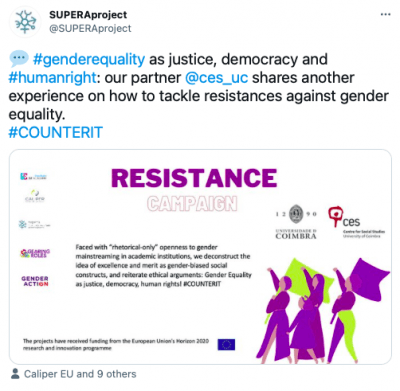
Using social media to raise awareness on resistances against gender equality - Supera Project View original
Is this image relevant?
Journey for Fair Trade: Women's Empowerment and Fair Trade View original
Is this image relevant?
Markers of achievement for assessing and monitoring gender equity in translational research ... View original
Is this image relevant?
Using social media to raise awareness on resistances against gender equality - Supera Project View original
Is this image relevant?
Institutional Barriers and Resistance
Gender studies programs often struggle to secure funding and resources compared to longer-established disciplines. Many programs operate with small budgets, limited faculty lines, and uncertain institutional support. Women's and Gender Studies departments, for example, are sometimes folded into other departments or treated as secondary to "core" disciplines.
Beyond resources, scholars in the field frequently encounter skepticism from colleagues in other departments who question gender studies' academic rigor or legitimacy. This can make interdisciplinary collaboration harder and limit the field's visibility within universities.
Theoretical and Methodological Debates
Like any evolving field, gender studies contains real internal tensions:
- Competing feminist frameworks pull in different directions. Liberal feminism focuses on legal equality and individual rights, radical feminism targets patriarchal structures, Marxist feminism centers economic exploitation, and postcolonial feminism critiques Western-centric assumptions. These perspectives don't always agree on priorities or methods.
- Intersectionality raises ongoing questions about how to study gender alongside race, class, sexuality, disability, and other axes of inequality without flattening any of them. The concept, introduced by Kimberlé Crenshaw in 1989, is widely embraced in theory but difficult to operationalize in research design.
- Theory vs. practice remains a persistent tension. Some scholars prioritize rigorous theoretical analysis, while others argue the field should be more directly tied to activism and social change. Balancing both is a defining challenge.

Shifting Political and Cultural Landscapes
Gender studies doesn't exist in a vacuum. The political environment directly shapes what the field can accomplish:
- Backlash movements have intensified in many countries. Anti-feminist rhetoric, "gender ideology" moral panics (particularly in parts of Europe and Latin America), and organized opposition to LGBTQ+ rights create hostile conditions for both researchers and the communities they study.
- Anti-gender politics sometimes translate into concrete policy. Governments have defunded gender studies programs (as Hungary did in 2018), restricted reproductive rights, or rolled back legal protections for transgender people.
- Rapidly evolving public debates around trans rights, #MeToo, and concepts like toxic masculinity require the field to respond to new questions in real time, which can strain existing theoretical frameworks.
Opportunities for Gender Studies
Interdisciplinary Collaborations
Some of the most productive gender studies work happens at the boundaries between fields. Collaborations with public health researchers have advanced understanding of gendered health disparities. Partnerships with international development organizations have reshaped how aid programs account for gender. Queer theory and intersectionality themselves emerged from cross-disciplinary dialogue.
These partnerships also expand the field's reach beyond academia. When gender studies scholars work with community organizations, activist groups, and policymakers, research findings are more likely to influence real-world decisions.
Emerging Research Areas
Several frontiers are generating significant new scholarship:
- Gender and technology: Digital feminisms, algorithmic bias, online harassment, and the gendered dimensions of AI and surveillance
- Reproductive technologies: Surrogacy, fertility treatments, and genetic testing raise new questions about bodily autonomy and who controls reproduction
- Transnational gender justice: Migration, climate change, and global economic inequality all have gendered dimensions that require analysis beyond any single national context
- Contemporary social movements: #MeToo, Black Lives Matter, and trans rights activism are generating both new research questions and new methods for studying how movements form and spread
Public Engagement and Knowledge Translation
Gender studies has become more publicly visible than ever. Scholars contribute to public understanding through op-eds, podcasts, social media, and media commentary. This kind of engagement matters because it connects academic research to pressing debates about workplace harassment, intimate partner violence, reproductive rights, and more.
Participatory action research represents a particularly promising model. In this approach, researchers collaborate directly with affected communities to co-create knowledge and develop solutions, rather than studying people from a distance.

Impact of Gender Studies
Contributions to Social Movements
Gender studies provides the intellectual infrastructure for many feminist and LGBTQ+ movements. Concepts like intersectionality, rape culture, compulsory heterosexuality, and toxic masculinity originated in or were refined by academic gender scholarship before entering mainstream conversation.
The field also documents experiences that might otherwise go unrecorded. Oral histories, community archives, zines, and indie media preserve the voices of gender and sexual minorities whose stories are often excluded from dominant historical narratives.
Influence on Policy and Institutions
Research in gender studies has directly informed:
- Legislation on reproductive rights, pay equity, gender-based violence, and anti-discrimination protections
- Educational reform, including more inclusive curricula, consent education programs, and feminist pedagogical approaches that emphasize critical thinking and student empowerment
- Organizational change through diversity and inclusion initiatives, gender-responsive budgeting (which analyzes how government spending affects different genders), and workplace equity programs
Transforming Cultural Attitudes
Gender studies scholars critically analyze how media, advertising, and popular culture reinforce restrictive gender norms, from gendered toy marketing to sexualized portrayals in music videos. This analysis doesn't just stay in academic journals. It feeds into public conversations that shift attitudes over time.
The field also supports the creation of alternative cultural production: feminist film, trans literature, body-positive fashion, and other media that challenge dominant narratives and celebrate gender diversity.
Personal Engagement with Gender Studies
Academic Career Paths
Students drawn to research and teaching can pursue graduate studies in gender studies or related fields. Faculty positions exist within dedicated Gender Studies departments as well as in sociology, literature, history, political science, and other disciplines where gender is a central area of inquiry. Developing new courses and curricula is one way scholars directly shape the next generation of thinkers in the field.
Professional Applications
Gender studies training translates into a range of professional contexts:
- Law and social work: Gender-based analysis informs legal advocacy, family services, and anti-violence work
- Healthcare: Feminist therapy approaches and gender-affirming care draw on gender studies scholarship
- Organizational consulting: Training on sexual harassment prevention, gender diversity, and inclusive workplace culture is in growing demand across private companies, public agencies, and nonprofits
- Policy work: Gender-responsive budgeting and equity impact assessments apply gender analysis to government decision-making
Activist and Community Engagement
Not all engagement with gender studies is professional. Many people apply what they've learned through direct community involvement:
- Participating in feminist, LGBTQ+, and anti-violence organizations and campaigns (Women's Marches, Pride events, reproductive rights advocacy)
- Organizing local awareness events like Take Back the Night or Trans Day of Visibility
- Volunteering skills and knowledge with women's shelters, rape crisis centers, or LGBTQ+ community organizations that do front-line support work
These forms of engagement connect academic knowledge to the lived realities the field studies, and they keep the field grounded in the communities it aims to serve.
See Fiveable more often in Google
Mark Fiveable as a preferred source and Google is more likely to show you our guides in Top Stories, with a "preferred" badge in AI Mode and AI Overviews.