9.1 Genetic Code and Its Properties

👨👩👦👦General Genetics Unit 9 Review
9.1 Genetic Code and Its Properties
👨👩👦👦 General Genetics
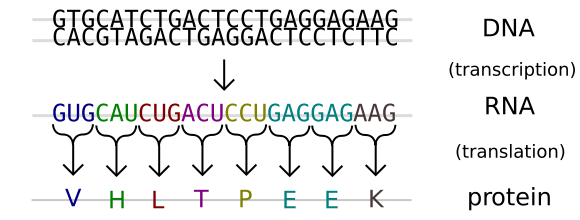
The genetic code is the rulebook for translating DNA into proteins. It's a triplet code where three nucleotides (a codon) specify one amino acid. This system is non-overlapping, unambiguous, and nearly universal across all life forms.
There are 64 possible codons, with 61 coding for amino acids and 3 serving as stop signals. The code is degenerate, meaning multiple codons can specify the same amino acid. This redundancy provides a buffer against mutations and influences codon usage in different organisms.
The Genetic Code
Features of genetic code
- Triplet code consists of three nucleotides (codon) that specify one amino acid
- Non-overlapping means codons are read sequentially without any overlap between them
- Comma-less indicates there is no punctuation or breaks between codons
- Unambiguous signifies that each codon specifies only one amino acid without ambiguity
- Degenerate means multiple codons can code for the same amino acid (synonymous codons)
- Near-universal denotes that the genetic code is conserved across most organisms (bacteria, plants, animals)
- Exceptions exist in mitochondrial and certain protozoal genetic codes that slightly deviate from the standard code
Codons and amino acids
- 64 possible codons exist based on the four nucleotide bases (A, U, C, G)
- 61 codons specify amino acids and are called sense codons
- 3 codons are stop codons that terminate protein synthesis
- 20 amino acids are coded by the genetic code
- Multiple codons can code for the same amino acid due to degeneracy
- Codon-amino acid correspondence is determined by the nucleotide sequence
- First nucleotide of the codon has the strongest influence on amino acid specificity
- Second nucleotide has a moderate influence on amino acid choice
- Third nucleotide (wobble position) has the least influence on amino acid selection
Start and stop codons
- Start codon AUG codes for methionine and initiates protein synthesis
- Methionine is the first amino acid incorporated into the growing polypeptide chain
- Stop codons UAA (Ochre), UAG (Amber), and UGA (Opal) terminate protein synthesis
- Release factors (RF1, RF2) recognize stop codons and release the polypeptide chain from the ribosome
- Premature stop codons can result in truncated proteins
Degeneracy in genetic code
- Degeneracy refers to multiple codons coding for the same amino acid
- 61 codons code for 20 amino acids, resulting in redundancy
- Amino acids can be coded by 1-6 different codons (Met, Trp have one codon; Leu, Ser, Arg have six)
- Wobble hypothesis explains the flexibility in base pairing at the third position of the codon
- Allows tRNAs to recognize multiple codons through non-Watson-Crick base pairing (G-U wobble)
- Reduces the number of tRNAs required to decode the genetic code
- Implications of degeneracy include redundancy and protection against mutations
- Silent mutations change the codon but not the amino acid, minimizing impact on protein function
- Missense mutations change the amino acid but may have minimal effect if the new amino acid is similar
- Codon usage bias refers to the preferential use of certain codons for an amino acid
- Varies among species and genes based on tRNA abundance and translational efficiency
- Highly expressed genes tend to use optimal codons that match abundant tRNAs
See Fiveable more often in Google
Mark Fiveable as a preferred source and Google is more likely to show you our guides in Top Stories, with a "preferred" badge in AI Mode and AI Overviews.