15.1 Polygenic Inheritance and Heritability

👨👩👦👦General Genetics Unit 15 Review
15.1 Polygenic Inheritance and Heritability
👨👩👦👦 General Genetics
Polygenic Inheritance
Polygenic inheritance involves multiple genes, each contributing a small effect, to shape traits like height and skin color. Unlike single-gene Mendelian traits that produce distinct categories, polygenic traits create a continuous spectrum of phenotypes that follows a normal (bell-curve) distribution in populations. Both genetic and environmental factors influence these traits, which makes them more complex to study than classic Mendelian genetics.
Heritability is the tool geneticists use to measure how much of the variation in a polygenic trait comes from genetic differences versus environmental differences. It's central to predicting breeding outcomes and estimating disease risk.

Top images from around the web for Polygenic vs Mendelian inheritance
Laws of Inheritance | Biology for Majors I View original
Is this image relevant?
Sources of Genetic Variation | Boundless Anatomy and Physiology View original
Is this image relevant?
Topic 10.2: Inheritance - AMAZING WORLD OF SCIENCE WITH MR. GREEN View original
Is this image relevant?
Laws of Inheritance | Biology for Majors I View original
Is this image relevant?
Sources of Genetic Variation | Boundless Anatomy and Physiology View original
Is this image relevant?
Polygenic vs. Mendelian Inheritance
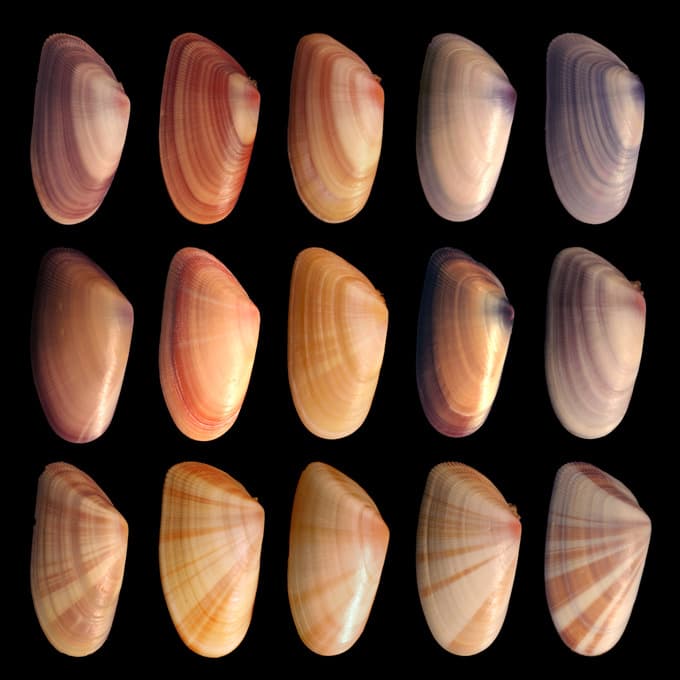
Polygenic inheritance means a trait is controlled by multiple genes, each with a small additive effect on the phenotype. The result is continuous variation, where phenotypes fall along a smooth spectrum rather than into neat categories. Height is a classic example: you don't see people sorted into "tall" and "short" bins the way you see yellow and green peas. Instead, you get a full range of heights that forms a bell curve across a population.
Mendelian inheritance involves a single gene (or a small number of genes) with a large effect, producing discrete variation. Think pea color (green or yellow) or simple coat color in mice (black or brown). These traits sort into distinct phenotypic categories and follow predictable ratios like 3:1 in a monohybrid cross.
A few key distinctions to keep straight:
- Polygenic traits are shaped by both genetic and environmental factors. Mendelian traits are primarily determined by genotype alone.
- Polygenic traits produce a normal distribution in a population. Mendelian traits produce distinct ratio-based categories.
- With polygenic traits, it's much harder to trace the contribution of any single gene because each one has such a small effect.

Heritability

Heritability in Complex Traits
Heritability is the proportion of phenotypic variation in a population that can be attributed to genetic variation. It always refers to a population, not to an individual. A heritability of 0.80 for height does not mean 80% of your height is genetic. It means that 80% of the variation in height across that population is due to genetic differences among individuals.
There are two types:
- Broad-sense heritability () captures all genetic contributions to phenotypic variation, including additive effects, dominance, and gene interactions (epistasis).
- Narrow-sense heritability () captures only the additive genetic contributions. This is the more useful measure for predicting how a trait will respond to selective breeding, because additive effects are the ones reliably passed from parent to offspring.
High heritability = genetic differences explain most of the phenotypic variation in that population. Low heritability = environmental differences play a larger role.
Understanding heritability is crucial for two practical applications: predicting the response to selection in breeding programs (agriculture, animal science) and estimating disease risk in human populations for complex conditions like heart disease or diabetes.
Calculation of Broad-Sense Heritability
Broad-sense heritability is calculated as the ratio of genetic variance to total phenotypic variance:
To use this formula, you need to understand the components of variance:
- Phenotypic variance () is the total observed variation in the trait. It's the sum of genetic and environmental variance:
- Genetic variance () can itself be broken into three components:
- Additive variance (): the cumulative effect of individual alleles
- Dominance variance (): effects due to interactions between alleles at the same locus
- Interaction (epistatic) variance (): effects due to interactions between alleles at different loci
Worked example: Suppose you're studying plant height. You determine that genetic variance and total phenotypic variance .
- Plug into the formula:
- Solve: , or 25%
This means 25% of the variation in plant height in this population is attributable to genetic differences. The remaining 75% comes from environmental factors (soil quality, water, sunlight, etc.).
Limitations of Heritability Estimates
Heritability is a powerful concept, but it comes with several important caveats that show up frequently on exams:
- It's a population measure, not an individual one. Heritability tells you nothing about why a specific individual has a particular phenotype. It only describes the sources of variation across a group.
- Estimates are specific to the population and environment studied. A trait might show high heritability in one population but low heritability in another. For example, if everyone in a population has similar nutrition, environmental variance is low, and heritability will appear higher. Move to a population with wide nutritional differences, and heritability for the same trait could drop.
- It doesn't capture gene-environment interactions or epigenetic effects. Factors like DNA methylation and histone modifications can influence phenotypes in ways that standard heritability calculations don't account for.
- High heritability does not mean genetic determinism. Even when heritability is high, environmental interventions can still have large effects on the trait. A classic example: height has high heritability, yet average height has increased dramatically over the past century due to improved nutrition, not genetic change.
See Fiveable more often in Google
Mark Fiveable as a preferred source and Google is more likely to show you our guides in Top Stories, with a "preferred" badge in AI Mode and AI Overviews.