6.2 Absorption Refrigeration Systems

🧊Thermodynamics II Unit 6 Review
6.2 Absorption Refrigeration Systems
🧊 Thermodynamics II
Absorption refrigeration systems use heat to drive cooling, unlike traditional vapor-compression systems. They employ a binary solution of refrigerant and absorbent, vaporizing and absorbing the refrigerant to create a cooling effect. This unique approach offers advantages in certain applications.
These systems can utilize waste heat or renewable energy, making them eco-friendly and efficient in some scenarios. However, they have lower performance and slower response times compared to vapor-compression systems. Understanding their working principles, components, and performance analysis is crucial for evaluating their potential in various applications.
Absorption Refrigeration Systems

Top images from around the web for Working Principles
Absorption refrigerator - Wikipedia View original
Is this image relevant?
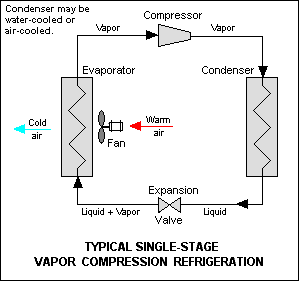
Heat pump and refrigeration cycle - Wikipedia View original
Is this image relevant?
File:Absorption refrigerator working.svg - Wikipedia View original
Is this image relevant?
Absorption refrigerator - Wikipedia View original
Is this image relevant?
Heat pump and refrigeration cycle - Wikipedia View original
Is this image relevant?
Working Principles
- Utilize a heat source to provide the energy needed for the cooling effect
- Employ a binary solution consisting of a refrigerant (ammonia or water) and an absorbent (water or lithium bromide) as the working fluid
- Vaporize the refrigerant from the binary solution in the generator using heat, which then flows to the condenser
- Absorb the refrigerant vapor from the evaporator back into the absorbent solution in the absorber, maintaining the system's low pressure
System Components
- Generator: Uses heat to vaporize the refrigerant from the binary solution
- Absorber: Absorbs the refrigerant vapor from the evaporator back into the absorbent solution
- Condenser: Condenses the refrigerant vapor from the generator
- Evaporator: Evaporates the refrigerant, producing the cooling effect
- Solution heat exchanger: Improves system efficiency by preheating the weak solution entering the generator using the heat from the strong solution leaving the generator
Absorption vs Vapor-Compression Refrigeration
Advantages of Absorption Refrigeration
- Utilize waste heat or renewable energy sources (solar, geothermal) to drive the cooling process
- Require less maintenance and have a longer system life due to fewer moving parts
- Operate more quietly due to the absence of a mechanical compressor
- Produce cooling effect without using ozone-depleting refrigerants or greenhouse gases

Disadvantages of Absorption Refrigeration
- Have a lower coefficient of performance (COP) compared to vapor-compression systems, typically ranging from 0.5 to 1.5
- Require larger system size and have higher initial costs due to the need for additional heat exchangers and components
- Respond more slowly to load changes and have longer start-up times compared to vapor-compression systems
- Require a constant heat source to maintain the cooling effect, which may not always be available or economical
Performance Analysis of Absorption Systems
Coefficient of Performance (COP)
- Ratio of the cooling capacity to the heat input
- Determines the overall efficiency of the absorption refrigeration system
Energy and Mass Balance Equations
- Energy balance equations determine the heat transfer rates in the generator, absorber, condenser, and evaporator, considering the enthalpies of the refrigerant and solution streams
- Mass balance equations are applied to the absorber and generator to determine the mass flow rates and concentrations of the strong and weak solutions

Solution Heat Exchanger Effectiveness
- Calculated using the NTU (number of transfer units) method or the LMTD (logarithmic mean temperature difference) method
- Improves the overall efficiency of the absorption refrigeration system
Thermodynamic Properties
- Binary solution properties (enthalpy, concentration) can be determined using property tables or equations of state (Gibbs-Duhem equation)
- Essential for accurate performance analysis and system design
Applications and Limitations of Absorption Systems
Industrial Applications
- Waste heat recovery in industrial processes (combined heat and power plants, refineries, chemical plants)
- Solar cooling systems that utilize solar thermal energy to drive the absorption cycle
- Tri-generation systems that produce electricity, heating, and cooling simultaneously
- Refrigeration in remote or off-grid locations where electrical power is limited or unavailable
Limitations and Challenges
- Not suitable for applications with high cooling demands or rapid load fluctuations due to their lower COP and slower response times
- Limited applicability in certain locations or industries due to the need for a constant heat source
- Corrosive nature of some working fluids (lithium bromide) may require special materials and maintenance considerations
- Complexity of the system and the need for skilled personnel for operation and maintenance may hinder widespread adoption in some cases
See Fiveable more often in Google
Mark Fiveable as a preferred source and Google is more likely to show you our guides in Top Stories, with a "preferred" badge in AI Mode and AI Overviews.