17.6 Talent Development and Succession Planning

👥Organizational Behavior Unit 17 Review
17.6 Talent Development and Succession Planning
👥 Organizational Behavior
Talent Development and Succession Planning
Talent development and succession planning help organizations prepare for the future by growing their people from within. Without these strategies, companies risk leadership gaps, lost institutional knowledge, and scrambling to fill critical roles when someone leaves unexpectedly. Together, they form a system for identifying who has potential, helping them grow, and making sure the right people are ready when key positions open up.

Top images from around the web for Components of talent development
Employee Training and Development | OpenStax Intro to Business View original
Is this image relevant?
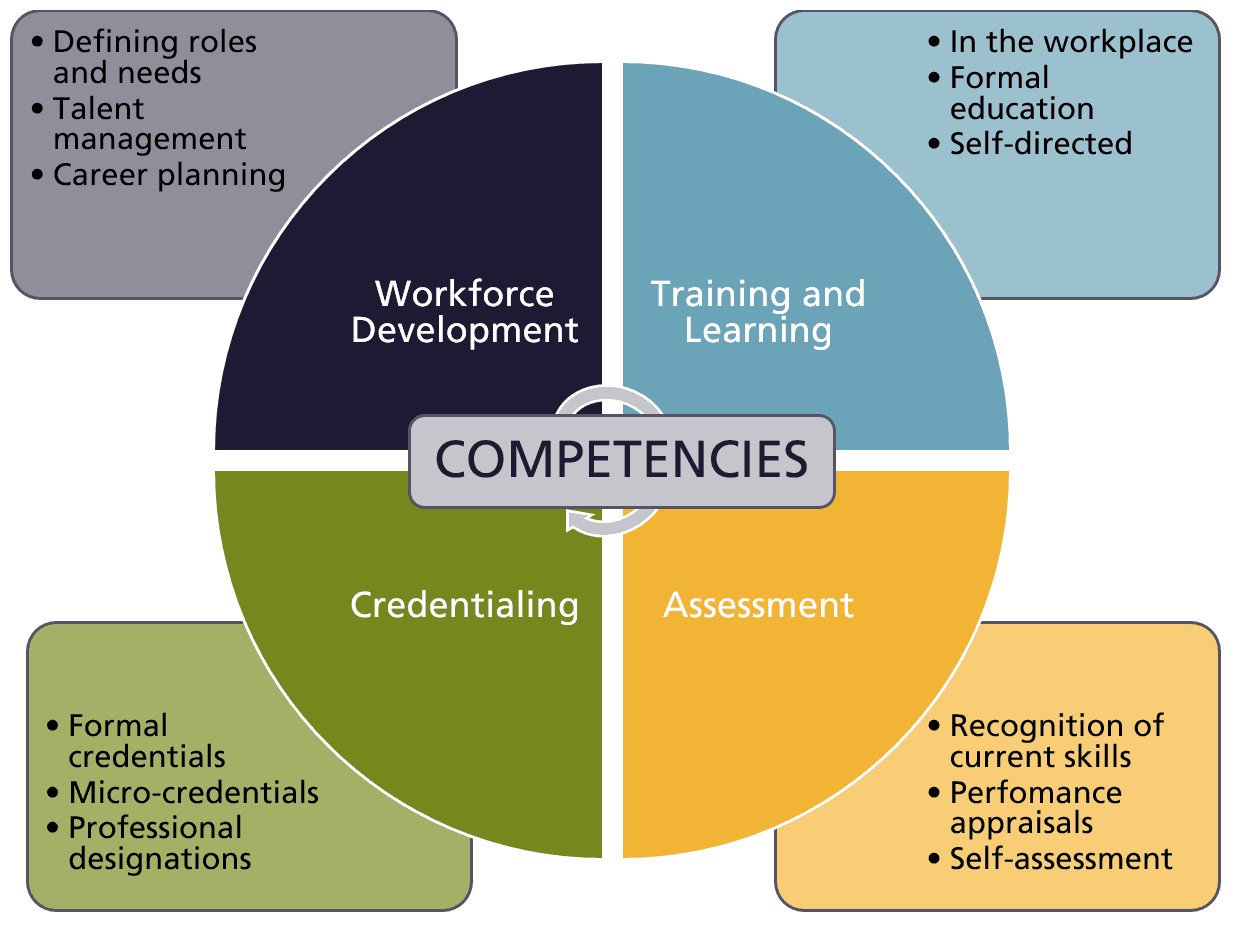
Uses for competency frameworks – eCampusOntario Open Competency Toolkit View original
Is this image relevant?
The Challenge of Organizational Learning | Bridgespan View original
Is this image relevant?
Employee Training and Development | OpenStax Intro to Business View original
Is this image relevant?
Uses for competency frameworks – eCampusOntario Open Competency Toolkit View original
Is this image relevant?
Components of Talent Development
Talent development isn't a single program. It's a set of overlapping practices that build employee capability over time.
- Identifying high-potential employees means spotting individuals who have the skills, drive, and ability to take on greater responsibility. This goes beyond just looking at current performance; it also considers adaptability, learning agility, and leadership qualities.
- Training and development opportunities equip employees for both their current roles and future ones. These range from leadership development workshops to technical certifications. The goal is closing specific skill gaps, not just offering generic courses.
- Mentoring and coaching programs pair experienced employees with less experienced colleagues for guidance and knowledge transfer. This can take the form of one-on-one meetings, job shadowing, or structured mentorship over several months.
- Job rotations and stretch assignments expose employees to different parts of the organization. A marketing analyst might spend three months on a cross-functional product launch team, for example, building skills they'd never develop staying in one department.
- A culture of continuous learning encourages employees to keep developing on their own. Organizations support this through tuition reimbursement, access to online learning platforms, and making time for professional development a normal part of the job.
- Career pathing initiatives help employees visualize their long-term growth within the organization. Rather than leaving advancement to guesswork, career paths map out what roles, skills, and experiences are needed to move from one level to the next.

Assessment with Talent Reviews
Organizations need a structured way to evaluate who's ready for more and who needs support. That's where talent reviews and assessment tools come in.
Talent reviews are regular meetings where HR, managers, and senior leaders discuss employee performance and potential together. These aren't casual check-ins. They're formal conversations that assess employees based on past achievements and future growth prospects, creating a shared picture of the organization's talent landscape.
The 9-box grid is the most common tool used in these reviews. It plots employees on two axes: performance (low, medium, high) on one axis and potential (low, medium, high) on the other. Each employee lands in one of nine boxes:
- Employees in the high performance / high potential box are considered top talent and prime candidates for advancement and succession planning.
- Employees in the low performance / low potential box may need a performance improvement plan, a role change, or in some cases, a managed exit.
- The boxes in between help managers make nuanced decisions. Someone with high potential but medium performance, for instance, might benefit from a stretch assignment or coaching rather than a promotion right away.
The grid's real value is in prioritizing development efforts. It forces leaders to have honest conversations about where to invest time and resources.
Competency assessments complement the 9-box grid by evaluating employees' specific skills and abilities against predetermined criteria for target roles. While the 9-box gives a broad view, competency assessments get granular about what someone can and can't do yet.

Steps for Succession Planning
Succession planning is the process of making sure qualified people are ready to step into key roles when they become vacant. Here's how it works:
- Identify critical roles that are essential for organizational success and require unique skills or institutional knowledge. These typically include C-suite positions (CEO, CFO), but also less obvious roles like a head of R&D or a regional director with deep client relationships.
- Assess the current talent pool using talent reviews and 9-box grids. The question here is: who already shows readiness for advancement, and how close are they to being prepared?
- Develop succession plans for each critical role. For every key position, identify potential successors, rate their readiness level (ready now, ready in 1-2 years, ready in 3+ years), and pinpoint what development each person still needs.
- Provide targeted development through training, mentoring, and stretch assignments tailored to each successor's specific gaps. If a potential CFO successor lacks experience with investor relations, for example, they might be assigned to lead the next earnings call preparation.
- Communicate the plan to relevant stakeholders. Potential successors should understand their development plans and future opportunities. Transparency here builds trust and motivation.
- Monitor and update regularly. Succession plans go stale fast. Promotions, departures, reorganizations, and new strategic priorities all change the picture. Review and adjust at least annually.
- Evaluate bench strength across the organization. Bench strength refers to how deep your pool of qualified candidates is for key positions. If only one person could fill a critical role, that's a significant risk.
Talent Management Strategy
Succession planning doesn't work in isolation. It sits within a broader talent management strategy that covers the full employee lifecycle.
- Talent acquisition focuses on attracting and hiring people who not only fill current needs but also have the potential to grow into future leadership roles. Succession planning should inform recruiting priorities.
- Knowledge transfer ensures that critical information, relationships, and institutional know-how get passed from experienced employees to their potential successors. This is especially important when long-tenured leaders approach retirement.
- Talent retention keeps the pipeline intact. If you invest in developing high-potential employees but they leave for competitors, your succession plan falls apart. Retention strategies like competitive compensation, meaningful work, and clear advancement paths help protect that investment.
See Fiveable more often in Google
Mark Fiveable as a preferred source and Google is more likely to show you our guides in Top Stories, with a "preferred" badge in AI Mode and AI Overviews.