16.1 Organizational Structures and Design

👥Organizational Behavior Unit 16 Review
16.1 Organizational Structures and Design
👥 Organizational Behavior
Organizational Structures
Organizational structures shape how companies operate and adapt to their environments. From rigid, top-down approaches to flexible, collaborative setups, these structures determine how work gets done and decisions are made. Managers use organizational design to match authority, communication, and workflow to the goals and pressures a company faces.

Top images from around the web for Mechanistic vs organic structures
Organic versus Mechanistic Models | Organizational Behavior and Human Relations View original
Is this image relevant?
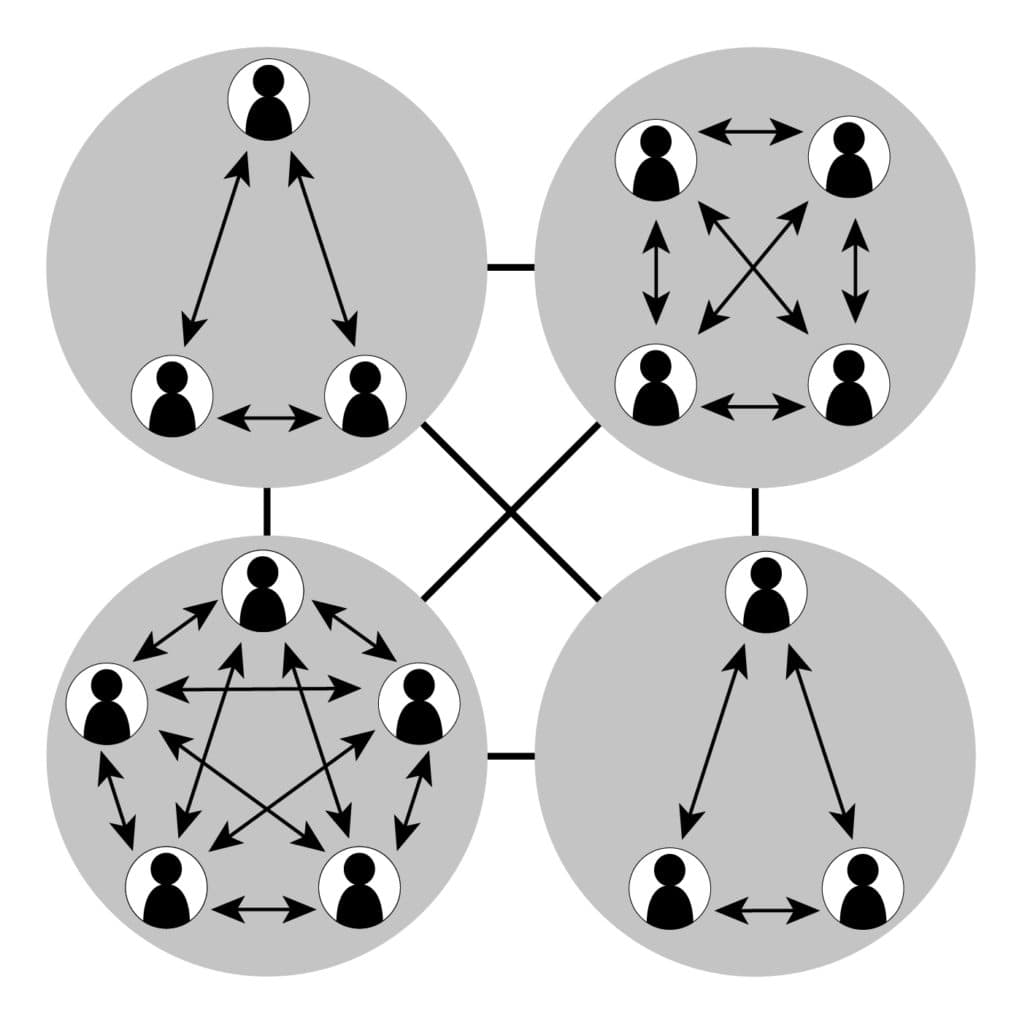
Organic versus Mechanistic Models | Organizational Behavior and Human Relations View original
Is this image relevant?
Organic versus Mechanistic Models | Organizational Behavior and Human Relations View original
Is this image relevant?
Organic versus Mechanistic Models | Organizational Behavior and Human Relations View original
Is this image relevant?
Organic versus Mechanistic Models | Organizational Behavior and Human Relations View original
Is this image relevant?
Mechanistic vs. Organic Structures
These two models sit at opposite ends of a spectrum. Most real organizations fall somewhere in between, but understanding the extremes helps you recognize the trade-offs involved.
Mechanistic structures are built for stability and control:
- Centralized authority — Decision-making power is concentrated at the top of the hierarchy. Lower-level employees carry out directives rather than setting direction.
- Formalized procedures and rules — Strict guidelines and standardized processes govern tasks and behavior, reducing ambiguity.
- Specialized tasks and roles — Employees have narrow, well-defined responsibilities. Think of assembly line workers who each handle one specific step.
- Vertical communication — Information flows top-down through the chain of command, as in military organizations.
- Best suited for stable environments — When market conditions are predictable and work is routine (like manufacturing), mechanistic structures maximize efficiency.
Organic structures are built for flexibility and innovation:
- Decentralized authority — Employees at various levels are empowered to make decisions. Startups often operate this way out of necessity.
- Flexible roles — People adapt to changing needs and take on multiple tasks. Project teams frequently shift responsibilities based on what the work requires.
- Emphasis on collaboration — Cross-functional interaction and joint problem-solving are encouraged rather than siloed work.
- Horizontal communication — Information flows directly between employees and departments instead of going up and down a hierarchy.
- Best suited for dynamic environments — When markets shift quickly and tasks are complex, organic structures enable faster responses. Tech companies often lean toward this model.

Elements of Bureaucratic Design
Bureaucracy gets a bad reputation, but Max Weber originally described it as a rational, efficient way to organize large groups of people. The five core elements each come with clear benefits and real drawbacks.
Division of labor breaks work into specialized tasks. Employees focus on specific areas of expertise, which builds deep knowledge and increases efficiency. The downside is that highly specialized workers can struggle to adapt when demands change or when they need to take on unfamiliar roles.
Hierarchy of authority establishes a clear chain of command. Everyone knows who reports to whom, which helps coordinate efforts and maintain accountability. However, when information must pass through multiple levels before a decision gets made, the process slows down and employees at lower levels lose autonomy.
Formalized rules and procedures create standardized methods for completing tasks and handling situations. This consistency reduces errors and confusion. The trade-off is that strict adherence to rules can stifle creativity, since employees may hesitate to try new approaches that fall outside established guidelines.
Impersonality means decisions are based on facts and policies rather than personal relationships. This promotes fairness and equal treatment regardless of characteristics like gender or race. On the other hand, a purely impersonal environment can feel detached and demotivating because individual contributions go unrecognized.
Merit-based selection and promotion ties hiring and advancement to qualifications and performance. This incentivizes skill development and rewards results. The limitation is that measurable criteria may overlook important but harder-to-quantify qualities like leadership ability or creative thinking.

Functional and Geographic Structures
Functional structure groups employees by specialized function, such as marketing, finance, or HR.
- Advantages:
- Fosters deep expertise and knowledge sharing within each function, since people with similar skills work together daily
- Enables economies of scale by centralizing resources and avoiding duplication across departments
- Provides clear career development paths within each area of specialization
- Drawbacks:
- Can create silos where departments struggle to collaborate or communicate across functional boundaries
- May lead departments to prioritize their own metrics over company-wide objectives
- Tends to be slower at responding to market shifts that require coordination across multiple functions
Geographic structure groups employees by region or market. A company with regional sales teams across North America, Europe, and Asia is using this approach.
- Advantages:
- Allows products and services to be customized to local preferences and requirements
- Enables quick responses to region-specific opportunities or challenges
- Empowers local managers to make decisions without waiting for headquarters approval
- Drawbacks:
- Often results in duplicated resources and efforts, since each region may maintain its own version of the same functions
- Can lead to inconsistent processes and policies across regions, causing inefficiencies
- May limit the transfer of knowledge and best practices between geographic units
Additional Organizational Design Concepts
- Organizational design is the process of creating structures and systems that help an organization achieve its goals effectively. It's not a one-time decision but an ongoing effort to align structure with strategy.
- Span of control refers to the number of subordinates a manager directly oversees. A wide span (many direct reports) creates a flatter organization; a narrow span creates more hierarchical layers. The right span depends on the complexity of the work and how much supervision employees need.
- Departmentalization is the grouping of activities and employees into departments. Functional and geographic structures are two common approaches, but organizations can also departmentalize by product, customer type, or process.
- Matrix structure combines functional and project-based groupings, giving employees dual reporting relationships. For example, an engineer might report to both a functional manager (head of engineering) and a project manager. This increases flexibility but can create confusion about priorities and authority.
- Organizational culture refers to the shared values, beliefs, and norms that shape how employees behave. Culture and structure influence each other: a rigid bureaucratic structure tends to reinforce a rule-following culture, while an organic structure supports a culture of experimentation.
See Fiveable more often in Google
Mark Fiveable as a preferred source and Google is more likely to show you our guides in Top Stories, with a "preferred" badge in AI Mode and AI Overviews.