15.2 External Environments and Industries

👥Organizational Behavior Unit 15 Review
15.2 External Environments and Industries
👥 Organizational Behavior
External Environments and Organizational Adaptation
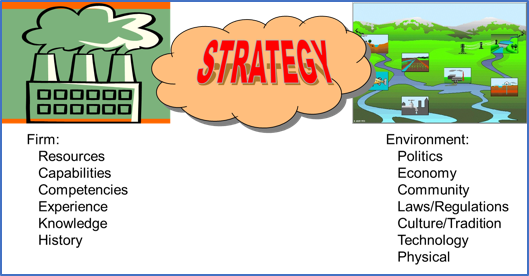
Organizations don't operate in a vacuum. Every company sits within an external environment that shapes what strategies work, what structures make sense, and how quickly decisions need to be made. The core framework here classifies these environments along two dimensions: complexity (how many external factors matter) and stability (how predictable those factors are). Getting this right helps explain why some organizations are bureaucratic and routine-driven while others are flat and agile.
Organizational Adaptation to Environments
The two-by-two matrix of simple/complex and stable/unstable gives you four environment types. Each one demands a different organizational response.
- Simple-stable environments
- Few external variables to track (limited suppliers, few competitors), and those variables change slowly
- Organizations can rely on standardized processes, routines, and fixed operating procedures
- Minimal need for frequent strategy adjustments
- Think of a local utility company or a container manufacturer: the competitive landscape and customer demands stay fairly constant
- Simple-unstable environments
- Still few external factors to monitor, but those factors shift quickly and unpredictably
- Organizations need flexibility and fast decision-making to pivot when conditions change
- The tourism and live events industries fit here: there aren't many core variables (consumer demand, weather, policy), but a sudden travel ban or economic downturn can upend everything overnight
- Complex-stable environments
- Many external factors and stakeholders to manage, but conditions are relatively predictable over time
- Organizations need strong coordination across departments to handle the sheer number of relationships and regulations
- Healthcare and higher education are classic examples: they deal with regulators, accrediting bodies, insurers, and diverse populations, but the rules of the game don't change week to week
- Complex-unstable environments
- Many external factors, and they're all shifting rapidly
- Organizations must be highly adaptive, continuously scanning the environment, learning fast, and innovating
- High-tech industries like software development and global financial markets live here: new competitors, new technologies, and regulatory changes can emerge at any time

Strategies for Managing Complexity
Once you understand the environment, the question becomes: how does an organization structure itself to cope? Three strategies show up repeatedly in this literature.
- Differentiation (structural, not competitive)
- Creating specialized units or teams, each focused on a different slice of the environment. A multinational might have separate divisions for each geographic market, each with its own expertise.
- The upside is deep, focused knowledge. The downside is that these units can become siloed, so effective coordination mechanisms are essential.
- Integration
- The counterpart to differentiation. This means building cross-functional teams, liaison roles, and shared processes that connect specialized units back together.
- Integration is especially important when complex challenges require input from multiple areas. For example, launching a new product might need R&D, marketing, legal, and supply chain all working in sync.
- Lawrence and Lorsch's classic research showed that the highest-performing organizations in complex environments had both high differentiation and high integration.
- Ambidexterity
- Balancing exploration (innovation, experimentation, risk-taking) with exploitation (efficiency, optimization, refining what already works)
- This is hard because exploration and exploitation require different cultures, structures, and mindsets. Some companies handle it through separate units (e.g., a skunkworks team for innovation alongside a traditional operations division). Others try to build a culture that can switch between modes.
- Apple is a frequently cited example: it optimizes existing product lines (exploitation) while simultaneously developing entirely new product categories (exploration).
Global and Innovative Strategies
Beyond internal structure, organizations use outward-facing strategies to navigate complex environments.
- Globalization involves expanding operations across international borders. This opens up growth opportunities and access to new talent and resources, but it also means adapting to diverse cultural norms, economic conditions, and regulatory frameworks. The complexity of the external environment increases significantly with each new country.
- Strategic alliances are partnerships formed to achieve mutual goals. Rather than building every capability in-house, a company might partner with a local firm to enter a foreign market or with a tech company to access a new platform. Alliances help manage risk and share the cost of navigating uncertain environments.
- Disruptive innovation refers to new products, services, or business models that fundamentally reshape existing markets. Christensen's theory emphasizes that disruption typically starts in overlooked or underserved segments (where incumbents see little profit) and then gradually moves upmarket. Netflix disrupting Blockbuster is a textbook case. Organizations facing disruption need the willingness to cannibalize their own existing offerings before a competitor does it for them.
Industry Alignment and Performance
Thriving in an external environment isn't just about reacting to change. It also requires aligning your strategy with the broader industry context and actively managing relationships with key external actors.
Alignment with External Environments
- Industry life cycle alignment
- Industries move through stages (emergence, growth, maturity, decline), and the right strategy depends on where your industry sits.
- In emerging industries, the focus is on innovation and establishing a market position (think e-commerce in the 1990s).
- In mature industries, the focus shifts to efficiency, scale, and incremental improvement (automotive manufacturing).
- In declining industries, survival often depends on renewal or diversification (print media pivoting to digital content).
- Competitive positioning
- Porter's generic strategies describe three main ways to position within an industry:
- Cost leadership: Competing on lower prices through efficiency and economies of scale (Walmart)
- Differentiation: Competing on unique features, quality, or brand value (Apple)
- Focus: Targeting a specific niche with tailored offerings (Rolls-Royce serving the ultra-luxury segment)
- The key insight from Porter is that getting "stuck in the middle" without a clear position tends to produce poor performance.
- Porter's generic strategies describe three main ways to position within an industry:
- Stakeholder management
- Stakeholders are any groups that influence or are influenced by the organization: investors, regulators, customers, employees, communities, suppliers.
- Effective management means identifying which stakeholders matter most, understanding their interests, and aligning organizational actions accordingly.
- Building genuine partnerships and collaborations with key stakeholders enhances legitimacy and secures the resources and support an organization needs to succeed.
- Environmental scanning and adaptation
- This is the ongoing process of monitoring external trends, threats, and opportunities.
- PESTEL analysis is a common framework that organizes scanning across six categories: Political, Economic, Social, Technological, Environmental, and Legal factors.
- Scanning alone isn't enough. Organizations also need dynamic capabilities, which are the ability to reconfigure resources and processes in response to what scanning reveals.
- The most proactive organizations don't just adapt to their environment; they try to shape it through lobbying, thought leadership, and setting industry standards.
- Industry convergence
- Sometimes the boundaries between distinct industries blur. Technology has driven much of this: financial services and tech converging into fintech, or media and telecommunications merging into streaming platforms.
- Convergence forces organizations to develop new capabilities and compete against players they never previously considered rivals.
See Fiveable more often in Google
Mark Fiveable as a preferred source and Google is more likely to show you our guides in Top Stories, with a "preferred" badge in AI Mode and AI Overviews.