12.1 Montague's intensional logic and lambda calculus

🔠Intro to Semantics and Pragmatics Unit 12 Review
12.1 Montague's intensional logic and lambda calculus
🔠 Intro to Semantics and Pragmatics
Montague's Intensional Logic
Montague's intensional logic gives us a formal system for analyzing meaning in natural language. It combines a type system, the distinction between intensions and extensions, and lambda calculus to represent how meanings compose. The key insight is that meaning isn't just about what words refer to right now; it's about what they could refer to across different possible worlds.
Lambda calculus is the engine that makes this compositional. By treating meanings as functions and applying them to arguments, you can build up the meaning of a whole sentence from the meanings of its parts.

Top images from around the web for Components of Montague's intensional logic
Logic & circuits View original
Is this image relevant?
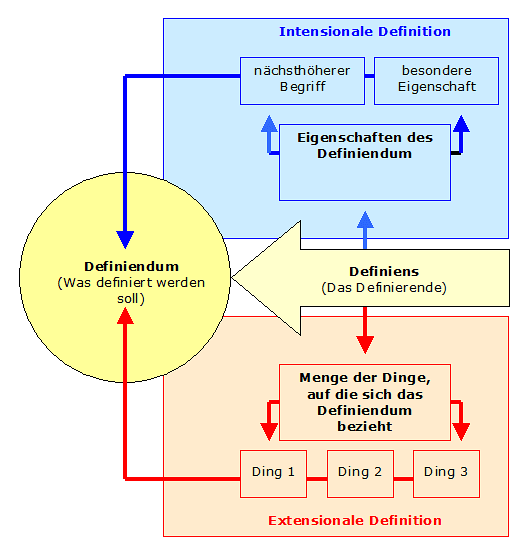
Intensional/extensional Definition View original
Is this image relevant?
Intensional/extensional Definition View original
Is this image relevant?
Inductive and Deductive Reasoning | English Composition 1 View original
Is this image relevant?
Inductive and Deductive Reasoning | English Composition 1 View original
Is this image relevant?
Inductive and Deductive Reasoning | English Composition 1 View original
Is this image relevant?
Intensional/extensional Definition View original
Is this image relevant?
Welcome to Real Digital View original
Is this image relevant?
Logic & circuits View original
Is this image relevant?
Logic & circuits View original
Is this image relevant?
Frontiers | Transition From Sublexical to Lexico-Semantic Stimulus Processing View original
Is this image relevant?
Logic & circuits View original
Is this image relevant?
Logic & circuits View original
Is this image relevant?
Logic & circuits View original
Is this image relevant?
Intensional/extensional Definition View original
Is this image relevant?
Components of Montague's Intensional Logic
Types categorize every semantic object in the system. There are two basic types:
- e (entity): the type of individuals, like John or the cat
- t (truth value): the type of things that are either true or false
Complex types are built as functions from one type to another, written as . For example, is the type of a function that takes an entity and returns a truth value. That's exactly what a predicate like is tall does: you give it an entity, and it tells you whether the sentence is true or false.
Intensions capture meaning across possible worlds. The intension of an expression is a function from possible worlds to extensions. You mark intension with the (up) operator:
- represents the property of being a man, not tied to any single world. It's a function that, given a possible world, returns the set of men in that world.
Extensions are the actual referents or truth values in a specific world. You mark extension with the (down) operator:
- (relative to a world ) gives you the set of individuals who are men in .
- Extensions can differ from world to world. Someone who is a teacher in this world might not be one in another.
Lambda Calculus for Semantic Representation
Lambda calculus is a formal system for defining and applying functions. Montague adopted it because it lets you represent meanings compositionally, piece by piece.
Lambda abstraction creates a function by abstracting over a variable. For example:
- represents the property of being a man. The variable is bound by the lambda operator, meaning it's a placeholder waiting for an argument.
Function application fills in that placeholder. You combine a function with an argument by substituting the argument for the bound variable:
- Start with the function:
- Apply it to the argument :
- Substitute for :
- The result is the proposition that John is a man.
This two-step process (abstraction then application) is how Montague's system builds complex meanings from simpler ones. The compositionality principle states that the meaning of a complex expression is determined by:
- The meanings of its parts
- The syntactic rules used to combine them
So if you know what man means and what John means, and you know the rule for combining a predicate with a subject, you can derive the meaning of John is a man mechanically.

Possible Worlds and Semantic Interpretation
Possible Worlds in Semantic Interpretation
A possible world is an alternative way things could be. The actual world is one possible world among many. Montague's system evaluates expressions relative to a possible world, which is what lets it handle statements about necessity, possibility, belief, and other contexts where truth might vary.
Accessibility relations connect possible worlds to each other. They determine which worlds count as "relevant" when you evaluate a modal claim. For instance, when you say "It's possible that it rains tomorrow," you're saying there's at least one accessible world where it rains tomorrow. Different modal operators (necessity , possibility ) rely on these relations:
- means is true in all accessible worlds
- means is true in at least one accessible world
Semantic interpretation assigns meanings to expressions in context. In Montague's system, this means evaluating an expression's intension across possible worlds. The intension maps each world to the set of individuals who are men in . The extension in any particular world is just the output of that function for that world.
De Dicto vs. De Re Readings
These two readings arise when modal operators interact with descriptions, and they're a classic source of ambiguity.
De dicto ("about the saying") applies the modal operator to the entire proposition. The description is evaluated inside the scope of the modal:
- Necessarily, the number of planets is eight. Here, necessity scopes over the whole claim. This says: in every possible world, the number of planets is eight. (This is false, since the number of planets could have been different.)
De re ("about the thing") applies the modal operator to a specific entity that's been picked out in the actual world. The description is evaluated outside the scope of the modal:
- The number of planets is necessarily eight. Here, you first identify the actual number of planets (eight), then say that that number is necessarily eight. Since 8 is necessarily 8, this reading is true.
The same sentence can have both readings, creating scope ambiguity. Montague's intensional logic disambiguates them using:
- The and operators to control where intensions are formed and where they're evaluated
- Lambda calculus to make scope relations explicit in the logical form
The de dicto/de re distinction shows up frequently with propositional attitude verbs too (like believe, want), not just with necessity and possibility.
See Fiveable more often in Google
Mark Fiveable as a preferred source and Google is more likely to show you our guides in Top Stories, with a "preferred" badge in AI Mode and AI Overviews.