4.2 Diplomacy and Negotiation in International Relations

🏴☠️Intro to International Relations Unit 4 Review
4.2 Diplomacy and Negotiation in International Relations
🏴☠️ Intro to International Relations
Types of Diplomacy

Top images from around the web for Traditional Diplomatic Approaches
File:Kim and Trump shaking hands at the red carpet during the DPRK–USA Singapore Summit.jpg ... View original
Is this image relevant?
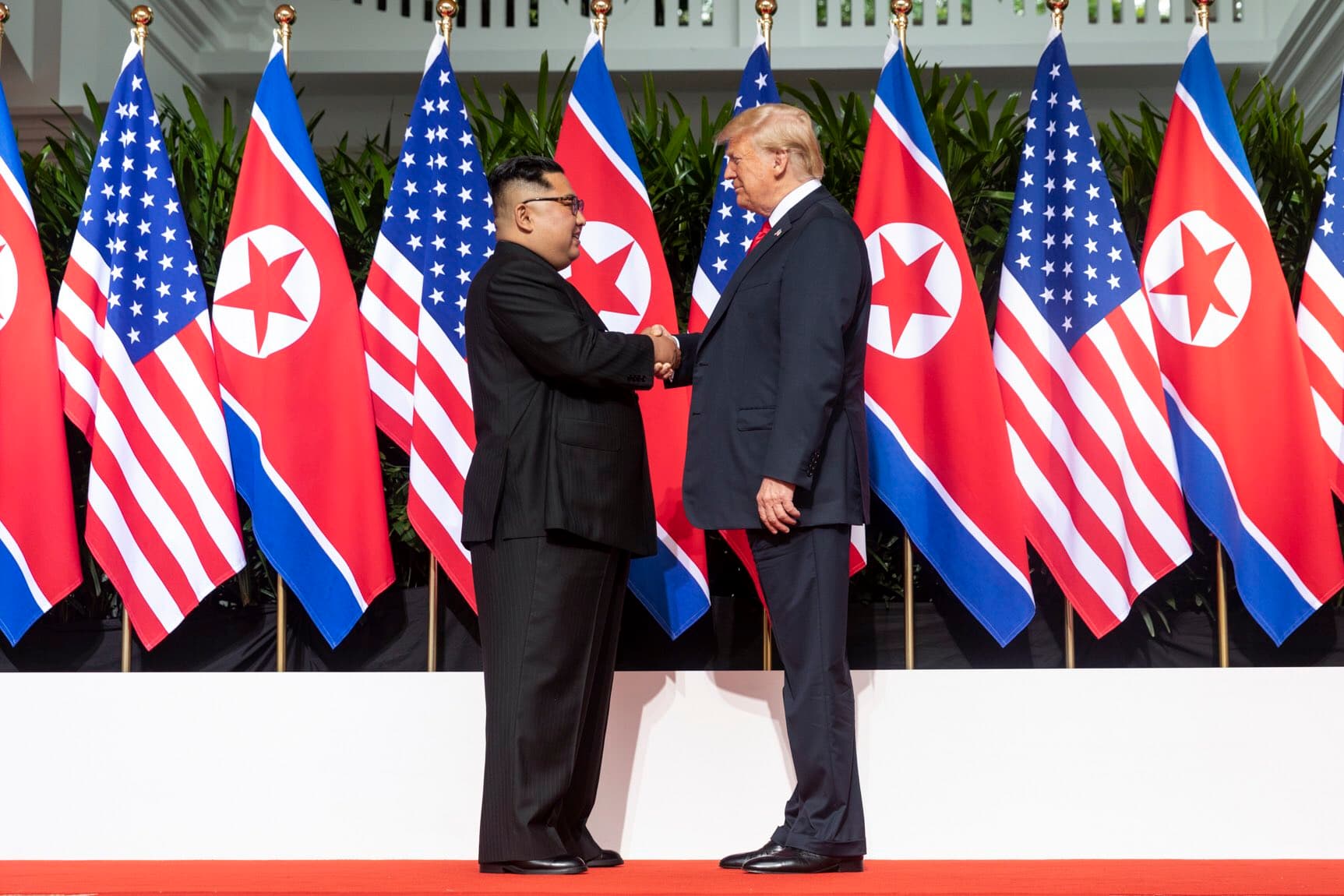
File:Kim and Trump shaking hands at the red carpet during the DPRK–USA Singapore Summit.jpg ... View original
Is this image relevant?
Traditional Diplomatic Approaches
Diplomacy is how states manage their relationships with one another. At its core, it's about advancing national interests and resolving conflicts without resorting to force. Different situations call for different diplomatic formats.
Bilateral diplomacy is the most straightforward: two countries negotiate directly to address a shared issue or strengthen their relationship. A U.S.-Japan trade agreement, for example, is a bilateral matter.
Multilateral diplomacy involves three or more countries working together, usually through international organizations. The United Nations General Assembly is the classic example, where nearly every country in the world participates in discussions on shared challenges like climate change or nuclear proliferation.
Track I diplomacy refers specifically to official, government-to-government interactions conducted by professional diplomats, foreign ministers, or political leaders. This is "traditional" diplomacy in the most formal sense.
Summit diplomacy is a subset of Track I where heads of state meet face-to-face. These high-profile meetings often address the most urgent or politically sensitive issues, like the Camp David Accords between Egypt and Israel in 1978.
Alternative Diplomatic Channels
Not all diplomacy happens through official government channels. Alternative approaches can reach audiences and open doors that formal diplomacy cannot.
- Track II diplomacy involves unofficial, informal interactions between non-governmental actors like academics, former officials, or NGO leaders. These back-channel conversations can build trust and explore solutions when official talks have stalled or broken down entirely.
- Public diplomacy targets foreign populations rather than foreign governments. Countries use cultural exchanges (like the Fulbright Program), educational initiatives, and media outreach to shape how people in other countries perceive them.
- Digital diplomacy uses social media platforms and other online tools to engage foreign audiences directly. World leaders now routinely use platforms like X (formerly Twitter) to communicate positions, sometimes bypassing traditional diplomatic channels altogether.
Diplomatic Tools and Strategies
Persuasive Approaches
States have a range of tools for achieving their foreign policy goals. Persuasive tools rely on attraction and dialogue rather than threats.
- Negotiation is the most fundamental diplomatic tool: structured discussions between parties aimed at reaching a mutually acceptable agreement. Successful negotiation typically requires each side to make concessions.
- Soft power, a concept coined by Joseph Nye, is a country's ability to influence others through the appeal of its culture, political values, and foreign policies rather than through coercion. The global popularity of American movies or the attraction of Scandinavian social models are forms of soft power.
- Mediation brings in a neutral third party to help conflicting sides communicate and find common ground. The mediator facilitates but does not impose a solution. Norway's role in mediating the 1993 Oslo Accords between Israel and the PLO is a well-known example.
Coercive and Legal Methods
When persuasion falls short, states may turn to harder tools.
- Hard power uses economic sanctions, military force, or the threat of force to compel another country to change its behavior. U.N. sanctions on North Korea over its nuclear weapons program illustrate economic hard power in action.
- Arbitration is a legal mechanism where disputing parties submit their case to a neutral third party (often an international tribunal) for a binding decision. Unlike mediation, the parties must accept the outcome. The Permanent Court of Arbitration in The Hague handles many such cases.
The distinction between soft and hard power matters for exams. Soft power attracts; hard power coerces. Many scholars also use the term smart power to describe a strategy that blends both.
Diplomatic Protocols and Conventions
International Agreements and Immunities
Diplomacy operates within a legal framework that countries have agreed to over centuries.
- The Vienna Convention on Diplomatic Relations (1961) is the foundational treaty. It establishes the rules for diplomatic missions, including the inviolability of embassies and the rights of diplomatic personnel.
- Diplomatic immunity is one of the convention's most important provisions. It protects diplomats from arrest or prosecution under the host country's laws, ensuring they can perform their duties without interference. The host country can declare a diplomat persona non grata (unwelcome) and expel them, but cannot put them on trial.
- The Vienna Convention on Consular Relations (1963) is a separate treaty that defines the rights and duties of consular officers. Consular officials handle more routine matters like issuing visas and assisting citizens abroad, and they receive more limited protections than full diplomats.
Diplomatic Etiquette and Practices
Beyond legal frameworks, diplomacy relies on established customs that keep interactions smooth and predictable.
- Protocol governs the proper procedures in diplomatic settings: formal greetings, seating arrangements at state dinners, the order in which flags are displayed, and gift exchanges. These details may seem minor, but breaches of protocol can cause real diplomatic friction.
- Diplomatic language uses careful, often indirect wording to maintain politeness in sensitive situations. When a foreign ministry says it views a situation with "grave concern," that's a strong warning. This kind of coded language helps states communicate displeasure without escalating a conflict.
- Credentials presentation is the formal process by which a new ambassador submits official documents to the head of state of the host country, officially beginning their diplomatic mission.
See Fiveable more often in Google
Mark Fiveable as a preferred source and Google is more likely to show you our guides in Top Stories, with a "preferred" badge in AI Mode and AI Overviews.