12.1 Shifting Global Power Dynamics

🏴☠️Intro to International Relations Unit 12 Review
12.1 Shifting Global Power Dynamics
🏴☠️ Intro to International Relations
Global power dynamics are shifting as multiple countries gain influence on the world stage. Understanding these shifts matters because they affect everything from trade agreements to military alliances to how global problems get solved. This section covers the move toward multipolarity, the role of international organizations, and the different types of power states use to pursue their interests.
Changing Power Dynamics

Top images from around the web for Multipolarity and Power Transition
Meeting of BRICS leaders • President of Russia View original
Is this image relevant?
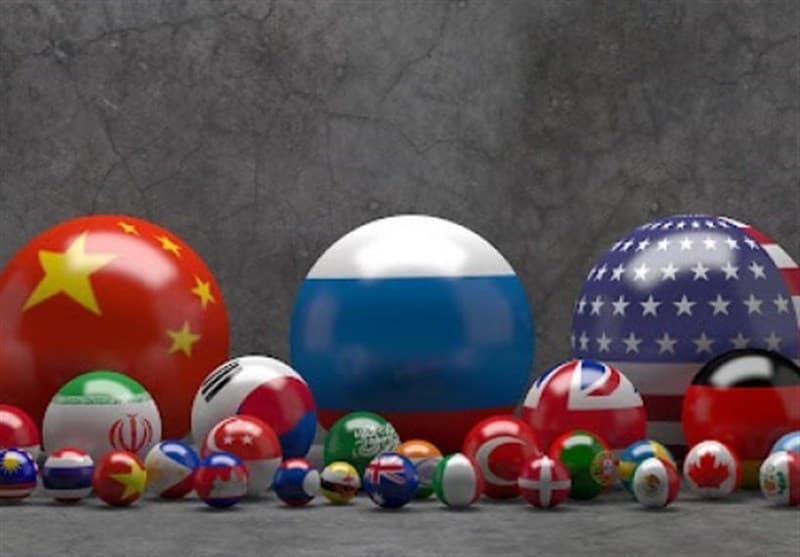
Vision of Multipolar World: A New Paradigm in International Relations - World news - Tasnim News ... View original
Is this image relevant?
Milanovic Graph on International Inequality | CEPR Blog | Blogs | Publications | The Center for ... View original
Is this image relevant?
Meeting of BRICS leaders • President of Russia View original
Is this image relevant?
Vision of Multipolar World: A New Paradigm in International Relations - World news - Tasnim News ... View original
Is this image relevant?
Multipolarity and Power Transition
For most of the post-Cold War era, the international system was unipolar, with the United States as the single dominant power. That's changing. Multipolarity describes a system where several states or blocs hold significant power, and no single country dominates across all dimensions.
Power transition theory helps explain why these shifts can be dangerous. The theory focuses on the relationship between a dominant state and rising challengers. When a rising power approaches the strength of the established leader, the risk of conflict increases. The dominant state may try to preserve its position, while the rising state pushes for a larger role in setting international rules.
A few key trends define the current transition:
- The United States is experiencing relative decline, not in absolute terms, but as other states grow faster in economic output and regional influence
- China has become the world's second-largest economy and is expanding its military reach, particularly in the Indo-Pacific
- India is one of the fastest-growing major economies, with a population exceeding 1.4 billion
- Brazil and Russia assert themselves as regional powers with ambitions to shape global affairs
"Relative decline" is an important distinction. The US hasn't gotten weaker in isolation; other countries have simply closed the gap.
Implications of Changing Power Dynamics
These power shifts create both risks and opportunities:
- Competition over strategic regions intensifies. The South China Sea is a prime example, where China's territorial claims clash with the interests of neighboring states and the US.
- Alliance structures shift. Countries reassess partnerships as power balances change. Some states hedge by maintaining ties with both the US and China.
- Conflict potential rises when rising powers challenge the rules and institutions that the dominant power established.
- Cooperation becomes possible on shared threats like climate change and terrorism, since no single state can address them alone.
- New economic arrangements emerge, such as China's Belt and Road Initiative, which funds infrastructure across Asia, Africa, and Europe to expand Chinese economic and political influence.
International Organizations and Groups

BRICS and Emerging Economies
BRICS stands for Brazil, Russia, India, China, and South Africa. (The group expanded in 2024 to include additional members, but the original five remain the core.) Together, these countries represent over 3 billion people and a substantial share of global GDP.
The group exists because emerging economies felt underrepresented in institutions like the World Bank and IMF, which were designed primarily by Western powers after World War II. BRICS gives these states a platform to coordinate on economic and political issues.
Concrete initiatives include:
- The New Development Bank, created in 2014 to fund infrastructure and development projects as an alternative to Western-led institutions
- Regular summits where leaders coordinate policies on trade, development, and geopolitical issues
BRICS faces real limitations, though. Its members have vastly different economies (China's GDP dwarfs South Africa's), different political systems (democratic India vs. authoritarian China), and sometimes competing foreign policy goals. This makes deep coordination difficult.
G20 and Global Economic Governance
The G20 brings together 19 countries plus the European Union, representing roughly two-thirds of the world's population and about 85% of global GDP. It includes both established economies (US, Germany, Japan) and emerging ones (China, India, Brazil).
The G20 rose to prominence during the 2008 global financial crisis, when leaders recognized that the older G7 format excluded too many economically important countries. Its focus areas include:
- Coordinating responses to economic crises
- Setting frameworks for trade and financial regulation
- Addressing sustainable development and climate finance
The main criticism of the G20 is that it still leaves out most of the world's countries. Smaller and poorer nations have little voice in its decisions, and the forum lacks binding enforcement mechanisms, so commitments don't always translate into action.
Global Governance and International Institutions
Global governance refers to the collective frameworks states use to manage problems that cross borders, from climate change to pandemics to armed conflict.
The United Nations sits at the center of this system. The Security Council holds primary responsibility for international peace and security, with five permanent members (US, UK, France, Russia, China) holding veto power. Specialized agencies handle specific issues: the World Health Organization coordinates global health responses, UNICEF focuses on children's welfare, and UNESCO promotes education and cultural preservation.
A persistent tension in global governance is the gap between what these institutions were designed to do and the current distribution of power. The Security Council's permanent membership, for instance, reflects the power balance of 1945, not today. Calls for reform (such as adding India, Brazil, or an African nation as permanent members) have gone nowhere because existing members resist changes that would dilute their influence. The US withdrawal from and later rejoining of the Paris Climate Agreement illustrates another tension: states sometimes prioritize national interests over collective commitments.

Types of Power
Soft Power and Cultural Influence
Soft power is the ability to influence others through attraction and persuasion rather than force or payment. The term was coined by political scientist Joseph Nye in the early 1990s.
Soft power rests on three pillars:
- Culture: When a country's culture appeals to others, it generates goodwill. Hollywood films, K-pop, and Japanese anime all function as soft power by making people around the world feel positively toward those countries.
- Political values: Countries that practice what they preach (democracy, human rights, rule of law) tend to attract admiration.
- Foreign policy: Policies seen as legitimate and having moral authority enhance soft power; policies seen as hypocritical undermine it.
States actively invest in soft power. The US funds educational exchanges like the Fulbright Program. China has established hundreds of Confucius Institutes at universities worldwide to promote Chinese language and culture. These efforts are a form of public diplomacy, where governments try to influence foreign publics, not just foreign governments.
Hard Power and Military Capabilities
Hard power is the use of coercion or inducement to get others to do what you want. It comes in two main forms:
- Military force (or the threat of it): deploying troops, conducting airstrikes, maintaining overseas bases, or possessing nuclear weapons as a deterrent
- Economic leverage: imposing sanctions, controlling market access, or offering financial aid with conditions attached
The US still leads in hard power by a wide margin, spending more on its military than the next several countries combined. But hard power has clear limitations:
- It's expensive. Military interventions and sustained deployments strain budgets.
- It can backfire. Coercion often provokes resistance, drives adversaries to form counter-alliances, or creates instability (as seen in various post-intervention scenarios).
- It's poorly suited to many modern challenges. You can't solve a pandemic or slow climate change with aircraft carriers.
Smart Power and Strategic Combinations
Smart power is the strategic combination of hard and soft power, tailored to specific situations. Nye introduced this concept to argue that effective foreign policy requires knowing when to coerce, when to persuade, and when to attract.
In practice, smart power looks like:
- Pursuing multilateral diplomacy while maintaining credible military capabilities as a backstop
- Using economic engagement (trade deals, development aid) alongside promotion of democratic governance
- Investing in technological cooperation with allies while maintaining competitive advantages in strategic sectors like AI and space
The challenge with smart power is execution. It requires coordination across military, diplomatic, economic, and intelligence agencies, all of which may have different priorities. It also demands flexibility, since the right mix of tools changes as the global context shifts. A strategy that works in one region or crisis may fail in another.
See Fiveable more often in Google
Mark Fiveable as a preferred source and Google is more likely to show you our guides in Top Stories, with a "preferred" badge in AI Mode and AI Overviews.