8.2 Globalization Debates: Opportunities and Challenges

🏴☠️Intro to International Relations Unit 8 Review
8.2 Globalization Debates: Opportunities and Challenges
🏴☠️ Intro to International Relations
Globalization sparks real debates about whether deeper global integration helps or hurts. These debates aren't just academic: they shape the trade policies countries adopt, the international agreements they sign, and the protest movements that push back. Understanding the competing perspectives here is central to making sense of modern international relations.
Perspectives on Globalization
Competing Views on Global Integration
Three major schools of thought frame how scholars and policymakers think about globalization:
Hyperglobalists argue that rapid, extensive global integration is both inevitable and beneficial. They promote free trade, open markets, and minimal government intervention, believing that globalization drives economic growth for all nations. This view is generally supported by multinational corporations and international financial institutions like the World Bank and IMF.
Skeptics push back on these claims. They argue that globalization's impact is exaggerated and that national governments and regional blocs still matter far more than hyperglobalists suggest. Skeptics point to persistent economic inequalities both between countries (the Global North vs. Global South gap) and within them (rising domestic inequality in wealthy nations) as evidence that globalization isn't the tide that lifts all boats.
Transformationalists take a middle path. They see globalization as a real and powerful force, but one that's complex and uneven. Rather than being purely good or purely bad, globalization affects different regions, sectors, and social groups in different ways. Transformationalists argue for balanced policies that manage globalization's impacts rather than embracing or rejecting it wholesale.
Economic Ideology and Globalization
Neoliberalism is the economic ideology most closely associated with pro-globalization policy. Its core prescriptions include:
- Deregulation of industries and financial markets
- Privatization of state-owned enterprises
- Reduction of trade barriers and capital controls
- Reliance on market forces to allocate resources efficiently
Neoliberal ideas heavily influenced the policies of institutions like the World Trade Organization (WTO), the IMF, and the World Bank, particularly from the 1980s onward. Critics argue that these policies disproportionately benefit wealthy nations and corporations while leaving developing countries vulnerable to economic shocks.

Globalization Resistance
Movements Challenging Global Integration
Not everyone accepts that current globalization trends are desirable. Two broad movements offer different forms of resistance:
The anti-globalization movement directly opposes many features of economic globalization. It criticizes the negative impacts on workers, the environment, and developing countries. This movement gained major visibility during the 1999 WTO protests in Seattle, where roughly 40,000 demonstrators disrupted trade negotiations. The movement is a coalition of diverse groups: labor unions, environmentalists, human rights activists, and others who see current globalization as favoring corporate interests over people.
The alter-globalization movement takes a different approach. Rather than rejecting global integration entirely, it advocates for alternative forms of it. Alter-globalists push for fair trade (not just free trade), stronger protections for workers' rights and the environment, and participatory democracy in global decision-making. They support international cooperation on issues like climate change and poverty but want that cooperation to prioritize equity over profit.
The key distinction: anti-globalization says "stop this," while alter-globalization says "do this differently."
Localization in a Global Context
Glocalization describes how global forces and local cultures interact and adapt to each other. The classic example is McDonald's: the company operates in over 100 countries but adjusts its menu to local tastes (teriyaki burgers in Japan, McAloo Tikki in India). This isn't just a business strategy. It reflects a broader dynamic where global products, ideas, and institutions get reshaped by local identities and traditions.
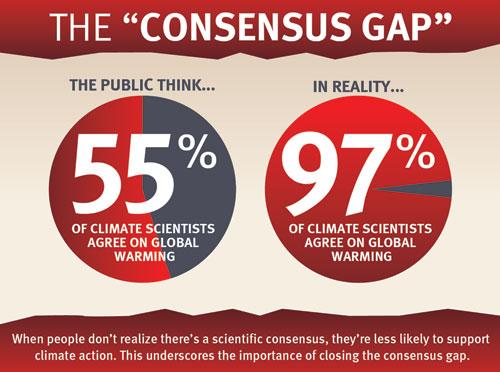
Glocalization also applies to serious policy issues. Climate change is a global phenomenon, but its impacts are intensely local: rising sea levels threaten Pacific Island nations differently than drought affects the Sahel. Effective responses often require blending global coordination with local knowledge and decision-making.
Globalization Challenges
Economic and Labor Concerns
The race to the bottom is one of the most frequently cited risks of economic globalization. Here's how it works:
- Countries compete to attract foreign investment and multinational corporations.
- To win that competition, governments may lower labor standards, weaken environmental regulations, or cut corporate taxes.
- Companies relocate production to wherever costs are lowest, which can mean countries with the fewest worker protections.
- Workers in developing countries face exploitation (low wages, unsafe conditions), while workers in developed countries lose jobs to outsourcing.
Whether the race to the bottom is a widespread reality or an overstated fear is itself debated, but the concern drives much of the opposition to unrestricted free trade.
Global Governance Issues
Global public goods are resources or conditions that benefit everyone but that no single country can provide or maintain alone. Clean air, disease control, a stable global financial system, and a functioning climate are all examples. The core challenge is the free-rider problem: every country benefits from these goods, but each has an incentive to let others bear the costs of providing them. International cooperation is required, but coordinating funding and enforcement across sovereign nations is difficult.
Sovereignty erosion is the concern that globalization weakens the ability of nation-states to govern themselves. This happens through several channels:
- International trade agreements can limit a government's ability to set its own economic policies (for example, WTO rules restricting certain subsidies).
- Transnational corporations with revenues larger than some countries' GDPs can exert significant influence over national economies.
- International institutions may impose conditions on loans or aid that constrain domestic decision-making.
This raises a fundamental question for international relations: if key decisions are increasingly made at the global level or by non-state actors, who is democratically accountable for those decisions? That tension between global integration and national sovereignty runs through nearly every globalization debate.
See Fiveable more often in Google
Mark Fiveable as a preferred source and Google is more likely to show you our guides in Top Stories, with a "preferred" badge in AI Mode and AI Overviews.