What is AP Euro unit 5?
Between 1648 and 1815, European states faced overlapping crises: commercial rivalries at sea, fiscal collapse at home, revolutionary upheaval in France, and Napoleon's attempt to remake the continent. By 1815, the old order had been shaken but partially restored, and new forces like nationalism and Romanticism had permanently altered European thought.
Unit 5 is about how Enlightenment ideas, fiscal crisis, and commercial competition produced the French Revolution, how Napoleon spread and then distorted those revolutionary ideals, and how Europe responded with nationalism, conservative diplomacy at Vienna, and Romantic culture.
Commercial rivalry drives conflict
Britain and France competed for Atlantic and Asian trade throughout the 18th century. The Seven Years' War (1756-1763) left Britain dominant in India and North America but saddled France with debt that helped trigger revolution at home.
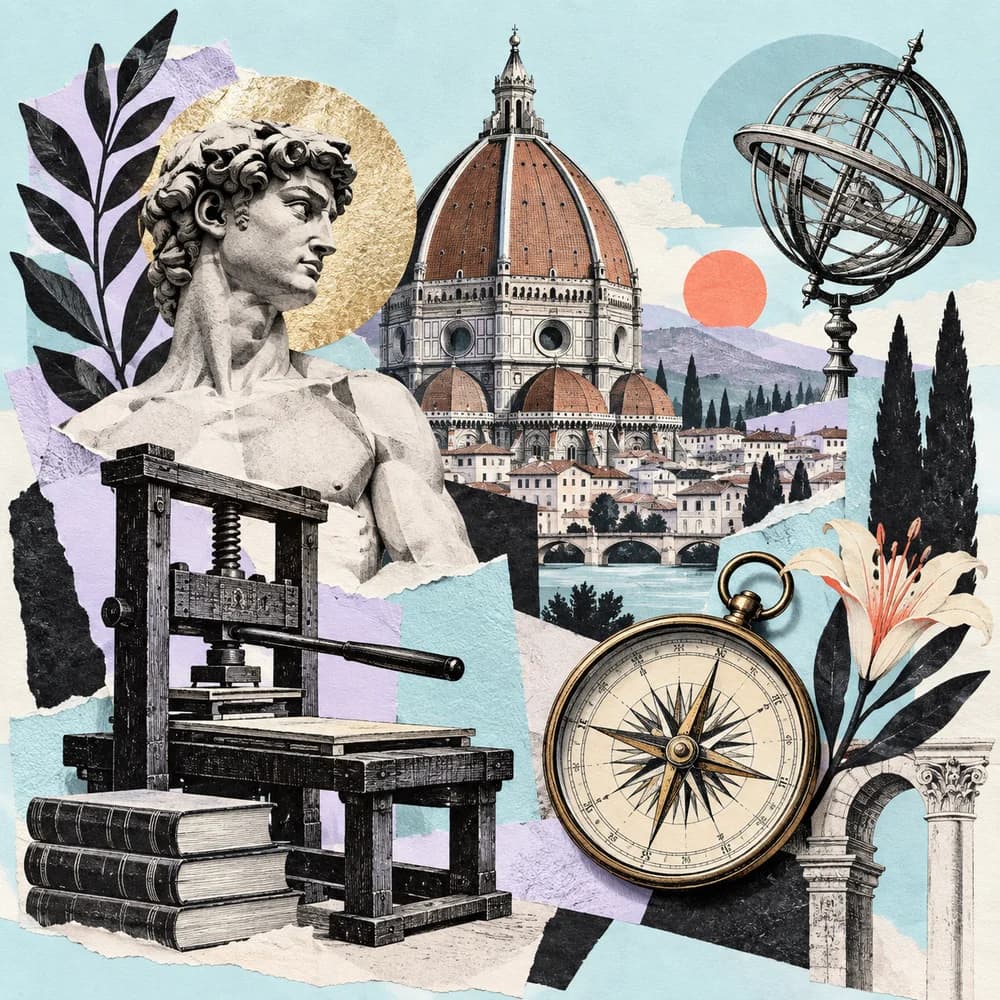
Revolution transforms politics
The French Revolution moved through a liberal constitutional phase, a radical Jacobin phase marked by the Reign of Terror, and a conservative Directory before Napoleon took power. Each phase produced key documents, institutions, and violence that the exam tests directly.
Reaction and restoration
Napoleon's empire provoked nationalist resistance in Spain, the German states, and Russia. After his defeat, the Congress of Vienna (1814-1815) tried to restore the balance of power and suppress liberalism and nationalism, setting up the tensions of Unit 7.
The central tension: change vs. orderEvery topic in Unit 5 connects to one question: how much could the old political and social order survive? The French Revolution said it could not. Napoleon said he could preserve revolutionary gains while building an empire. The Congress of Vienna said stability required rolling back both. Romanticism questioned whether reason alone could guide any of it. Tracking that tension across all nine topics is the key to writing strong arguments on the AP exam.
Unit 5 review notes
5.1
Context: Europe from 1648 to 1815
Topic 5.1 asks you to explain the broader context before diving into specific events. Three overlapping forces set the stage: competing models of political sovereignty (absolutism vs. constitutionalism from Unit 3), expanding commercial networks and the rivalries they produced, and the spread of Enlightenment ideas that challenged traditional authority. Understanding how these forces intersected explains why the French Revolution happened when and where it did.
- Political sovereignty models: Absolutism, constitutional monarchy, and republicanism competed as frameworks for legitimate government, shaping how states related to their subjects.
- Commercial rivalry: European sea powers competed for Atlantic and Asian trade, linking economic competition directly to diplomacy and warfare.
- Enlightenment ideas: Reason, natural rights, and popular sovereignty challenged divine-right monarchy and hereditary privilege, providing intellectual fuel for revolution.
- Peace of Westphalia (1648): Established the principle of state sovereignty and ended the Thirty Years' War, marking the starting point of this unit's period.
Can you explain how commercial rivalry, Enlightenment thought, and competing sovereignty models together created the conditions for crisis by the late 18th century?
| Force | Key idea | Connection to revolution |
|---|
| Political sovereignty | Who has the right to rule? | Challenged divine-right monarchy |
| Commercial rivalry | Who controls Atlantic and Asian trade? | French debt from wars destabilized the monarchy |
| Enlightenment | Reason and natural rights over tradition | Justified popular resistance to the old order |
5.2
Atlantic and Asian Trade Rivalry, and Britain's Ascendancy
Topics 5.2 and 5.3 share a common mechanism: commercial competition leading to warfare, which reshapes the European balance of power. European sea powers competed for Atlantic influence throughout the 18th century, while Portuguese, Dutch, French, and British rivalries in Asia culminated in British dominance in India and Dutch control of the East Indies. The Seven Years' War and the American Revolution are the two required illustrative examples for Britain-France rivalry.
- Seven Years' War (1756-1763): A global conflict in which Britain defeated France in North America and India, establishing British commercial and colonial supremacy and leaving France deeply in debt.
- American Revolution: French support for American colonists against Britain temporarily restored French prestige but worsened French finances, contributing to the fiscal crisis that preceded the French Revolution.
- British East India Company: The vehicle for British commercial and eventually political domination of India, outcompeting French and Dutch rivals in Asia.
- British maritime rivalry: Britain's sustained competition with France and the Netherlands for control of Atlantic and Asian trade routes, ultimately producing British global dominance by 1815.
Can you trace the cause-and-effect chain from Atlantic commercial rivalry to the Seven Years' War to French fiscal crisis to revolution?
| Region | Rivals | Outcome by 1815 |
|---|
| Atlantic | Britain vs. France vs. Spain | British dominance; France loses colonies |
| India | Britain vs. France | British East India Company controls India |
| East Indies | Britain vs. Netherlands | Dutch retain East Indies; Britain focuses on India |
5.4
The French Revolution: Causes, Phases, and Consequences
Topic 5.4 is the most content-dense topic in the unit. The French Revolution had long-term causes (social inequality under the Estates system, Enlightenment ideas, weak constitutional structures) and short-term triggers (fiscal crisis from war debt, bread shortages). It moved through three distinct phases, each with its own institutions, documents, and key figures.
- Liberal phase (1789-1792): The National Assembly established a constitutional monarchy, issued the Declaration of the Rights of Man and Citizen, nationalized the Church through the Civil Constitution of the Clergy, and abolished hereditary privileges.
- Radical phase / Reign of Terror (1793-1794): After Louis XVI's execution, the Jacobin republic under Robespierre used the Committee of Public Safety to suppress internal opposition, fix prices and wages, pursue de-Christianization, and raise armies through the levee en masse.
- Thermidorian Reaction and Directory (1794-1799): Robespierre's execution ended the Terror; the more conservative Directory governed until Napoleon's coup in 1799.
- Levee en masse: Mass conscription that raised revolutionary armies, transforming warfare by mobilizing the entire nation and spreading revolutionary ideals across Europe.
- Declaration of the Rights of Man and Citizen: The foundational document of the liberal phase, asserting liberty, equality, and popular sovereignty as universal principles.
Can you identify the causes of each phase transition in the French Revolution and explain what changed politically and socially in each phase?
| Phase | Key institution | Key action | Key figure |
|---|
| Liberal (1789-1792) | National Assembly | Constitutional monarchy, Declaration of Rights | Louis XVI (deposed) |
| Radical (1793-1794) | Committee of Public Safety | Reign of Terror, levee en masse | Robespierre |
| Conservative (1795-1799) | Directory | Stabilization, military campaigns | Napoleon (rises) |
5.5
Effects of the French Revolution: Global Spread and Backlash
Topic 5.5 asks you to explain how revolutionary ideals traveled beyond France and how they provoked both inspiration and opposition. The Haitian Revolution is the required example of revolutionary ideals inspiring action outside Europe. Edmund Burke is the required example of conservative opposition to the revolution.
- Haitian Revolution: Enslaved people in the French colony of Saint-Domingue, inspired by the Declaration of the Rights of Man, revolted under Toussaint L'Ouverture and established Haiti as an independent nation in 1804, the first Black republic in the world.
- Toussaint L'Ouverture: Leader of the Haitian Revolution who organized the revolt in Saint-Domingue and became a symbol of the universal reach of revolutionary ideals.
- Edmund Burke: British conservative thinker whose Reflections on the Revolution in France (1790) argued that the revolution's violence and rejection of tradition made it destructive rather than liberating, founding modern conservatism.
- Olympe de Gouges: French activist who wrote the Declaration of the Rights of Woman and the Female Citizen (1791), arguing that revolutionary ideals of equality must extend to women.
Can you explain both why the Haitian Revolution was inspired by French revolutionary ideals and why Burke rejected those same ideals, using specific evidence for each?
| Response | Representative figure | Core argument |
|---|
| Inspired by revolution | Toussaint L'Ouverture | Liberty and equality apply universally, including to enslaved people |
| Conservative opposition | Edmund Burke | Tradition and gradual change prevent destructive radicalism |
| Feminist extension | Olympe de Gouges | Revolutionary rights must include women, not just men |
5.6
Napoleon: Reforms, Empire, and Nationalist Resistance
Topic 5.6 covers Napoleon's domestic reforms, his military expansion, and the nationalist reactions his empire provoked. The AP exam expects you to hold two ideas at once: Napoleon preserved some revolutionary gains while curtailing others, and his empire spread revolutionary ideals even as it triggered the nationalism that would eventually destroy it.
- Napoleonic Code: The Civil Code of 1804 unified French law, established equality before the law, protected property rights, and abolished feudal privileges, but also restricted women's legal rights.
- Concordat of 1801: Napoleon's agreement with Pope Pius VII that restored the Catholic Church's role in France while keeping it under state control, ending the de-Christianization of the radical phase.
- Careers open to talent: Napoleon's meritocratic principle that advancement in the military and bureaucracy should depend on ability rather than birth, a lasting legacy of revolutionary equality.
- Nationalist responses: Napoleon's expansion provoked guerrilla war in Spain, student protests in the German states, and Russia's scorched earth policy, all driven by resistance to French domination.
- Continental System: Napoleon's economic blockade of Britain, which damaged European economies and fueled resentment among allied states, contributing to his eventual defeat.
Can you list three specific reforms Napoleon made and three specific rights he curtailed, and explain how his empire generated nationalist resistance in at least two regions?
| Category | Example | Effect |
|---|
| Reform preserved | Napoleonic Code | Legal equality, property rights spread across Europe |
| Right curtailed | Censorship and secret police | Limited free expression despite revolutionary rhetoric |
| Nationalist resistance | Guerrilla war in Spain | Showed limits of French military control |
| Nationalist resistance | Russian scorched earth | Destroyed Napoleon's Grand Army in 1812 |
5.7
The Congress of Vienna and Conservative Restoration
Topic 5.7 covers the 1814-1815 diplomatic settlement after Napoleon's defeat. The Congress of Vienna was guided by three principles: legitimacy (restoring pre-revolutionary monarchies), balance of power (preventing any single state from dominating Europe), and containment of liberalism and nationalism. Klemens von Metternich of Austria was the dominant architect of the settlement.
- Balance of power: The Congress redrew European borders to ensure no single state could handle the continent, restoring and adjusting monarchies to create a stable equilibrium.
- Legitimacy: The principle that pre-revolutionary dynasties had the rightful claim to their thrones, used to justify restoring Bourbon rule in France and other displaced monarchies.
- Klemens von Metternich: Austrian foreign minister and the leading conservative voice at Vienna, who worked to suppress liberal and nationalist movements across Europe for decades after 1815.
- Concert of Europe: The informal system of great-power cooperation established after Vienna, in which Britain, Austria, Prussia, Russia, and France managed European affairs to prevent revolution.
Can you explain the three guiding principles of the Congress of Vienna and identify at least one specific territorial or political outcome of the settlement?
5.8
Romanticism and Religious Revival
Topic 5.8 asks you to explain how Romanticism and religious revival challenged Enlightenment rationality. Romanticism was not simply anti-intellectual; it was a reorientation toward emotion, imagination, nature, and the individual as sources of truth that reason alone could not access. Rousseau is the intellectual bridge between Enlightenment and Romanticism. Methodism is the required example of religious revival.
- Jean-Jacques Rousseau: Philosopher who questioned exclusive reliance on reason and argued that emotion and natural feeling were essential to moral improvement, anticipating Romantic themes while still rooted in Enlightenment thought.
- Romanticism: A cultural and intellectual movement that celebrated emotion, imagination, nature, and the individual as correctives to Enlightenment rationalism, expressed in literature, art, and music.
- Methodism: A Protestant revival movement founded by John Wesley that emphasized personal spiritual experience and emotional faith, exemplifying the religious challenge to Enlightenment secularism.
- Mass politics and nationalism: Revolution, war, and rebellion demonstrated that emotion and collective identity, not just rational argument, drove political action, reinforcing Romantic themes in the political sphere.
Can you explain how Romanticism differed from Enlightenment rationalism and give two specific examples of Romantic thinkers, artists, or movements that illustrate that difference?
| Dimension | Enlightenment emphasis | Romantic emphasis |
|---|
| Source of truth | Reason and empirical observation | Emotion, imagination, and intuition |
| View of nature | Object of scientific study | Source of spiritual and moral insight |
| Religion | Skepticism, deism, secularism | Revival, personal faith, Methodism |
| Politics | Rational social contract | Nationalist feeling and collective identity |
5.9
Continuity and Change from 1648 to 1815
Topic 5.9 is a synthesis topic. It asks you to weigh what changed against what persisted across the full period. Monarchy, aristocracy, and the Church survived 1815, but they were permanently weakened. Popular sovereignty, nationalism, and legal equality were now ideas that could not be erased. This topic is where you practice the continuity and change over time reasoning that appears in AP long-essay and document-based questions.
- What changed: Popular sovereignty replaced divine right as the dominant legitimating principle; legal equality spread through the Napoleonic Code; nationalism emerged as a political force; mass armies replaced professional ones.
- What continued: Monarchy was restored across Europe after 1815; aristocratic privilege persisted in modified forms; the Catholic Church retained social influence; great-power competition continued under new diplomatic rules.
- Synthesis argument: The period produced irreversible ideological change even where political structures were restored, meaning the Congress of Vienna could redraw borders but could not erase the French Revolution's legacy.
Can you write a thesis that argues whether the period 1648-1815 produced more continuity or more change in European political and social life, using specific evidence from at least three topics in the unit?
Practice AP Euro unit 5 questions
Try AP-style multiple-choice questions and written prompts after you review the notes.
QuestionHow did Napoleon's claim to defend Revolutionary ideals while conquering Europe provoke nationalist resistance in occupied territories?
French legal and administrative imposition spurred cultural defense and national identity
Nationalism arose simply from anger over military defeat and occupation
Nationalism did not stem from enthusiasm for revolutionary equality among elites
Economic strain from war exacerbated unrest but did not primarily create nationalism
QuestionHow did Romantic depictions of the sublime, such as Robert's Imaginary View of the Grand Gallery in Ruins, challenge Enlightenment thought?
Depicting nature and ruins as overwhelming forces beyond human reason's control.
Presenting geological detail to advance empirical scientific knowledge and classification efforts.
Insisting that beauty requires classical symmetry and strict geometric proportion rules.
Celebrating technological innovations that reshape nature for industrial progress and improvement.
"The Jacobins were able to overthrow the religion of our fathers and trample underfoot the venerated objects of the people. They were able to make the infernal Robespierre the first pope of Deism. It was through his mouth that the French rendered homage to the Supreme Being. The new calendar was an act of despotism forced on the people, and the festivals based on it were detestable."
Pierre-Joseph Denis, a former Girondin imprisoned during the Terror and then recalled to the National Convention, Opinion on the Decades, 1795.
A.Describe the criticism Denis makes of the Jacobins' religious policies in the passage.
B.Explain one way in which Denis's argument reflects the broader historical context of France in 1795.
C.Explain one way in which the revolutionary attack on religious institutions described by Denis reflected broader Enlightenment ideas about the relationship between church and state.
Respond to parts A, B, and C.
Evaluate the extent to which challenges to traditional political and social authority in Europe between 1689 and 1900 fundamentally transformed European governance and power structures.
In your response you should do the following:
Respond to the prompt with a historically defensible thesis or claim that establishes a line of reasoning.
Describe a broader historical context relevant to the prompt.
Support an argument using at least four of the provided documents.
Use at least one additional piece of specific historical evidence beyond the documents.
For at least two documents, explain how or why the document's point of view, purpose, historical situation, or audience is relevant.
Demonstrate a complex understanding through sophisticated argumentation and/or effective use of evidence.
In your response you should do the following:
Respond to the prompt with a historically defensible thesis or claim that establishes a line of reasoning.
Describe a broader historical context relevant to the prompt.
Support an argument in response to the prompt using at least two pieces of specific and relevant evidence.
Use historical reasoning (e.g., comparison, causation, continuity or change over time) to frame or structure an argument that addresses the prompt.
Demonstrate a complex understanding of a historical development related to the prompt through sophisticated argumentation and/or effective use of evidence.
2. Evaluate the extent to which the expansion of the global economy shaped the diplomatic strategies of European states from 1648 to 1815.
3. Evaluate the extent to which the French Revolution changed the social and political structure of France from 1789 to 1815.
4. Evaluate the most significant difference between the intellectual values of the Enlightenment and the Romantic movement from 1750 to 1850.