9.4 Plant-Wide Control and Integration

🧪Advanced Chemical Engineering Science Unit 9 Review
9.4 Plant-Wide Control and Integration
🧪 Advanced Chemical Engineering Science
Plant-wide control is crucial in chemical engineering, focusing on how different process units interact and affect each other. It's about seeing the big picture of a plant's operations and understanding how changes in one area ripple through the entire system.
Advanced control strategies take plant-wide control to the next level. They use smart techniques like predictive models and real-time optimization to boost efficiency, safety, and profits. These methods help plants run smoother, react faster to problems, and make better use of resources.
Plant-Wide Control Fundamentals
Interactions in plant-wide control
- Process units interconnected through material and energy streams
- Outputs from one unit feed into another as inputs (reactors, separators, heat exchangers)
- Operating condition changes in one unit propagate throughout the plant
- Complex interactions arise from recycle streams, heat integration, and shared utilities
- Recycle streams create feedback loops amplifying disturbances (reactor-separator systems)
- Heat integration establishes energy dependencies between units (heat exchanger networks)
- Shared utilities couple operation of multiple units (steam, cooling water systems)
- Directionality and magnitude of interactions crucial for effective control
- Identify key linking variables (flow rates, temperatures, pressures)
- Analyze sensitivity of downstream units to upstream condition changes
- Determine interaction time scales (fast dynamics vs. slow responses)
- Interaction analysis techniques
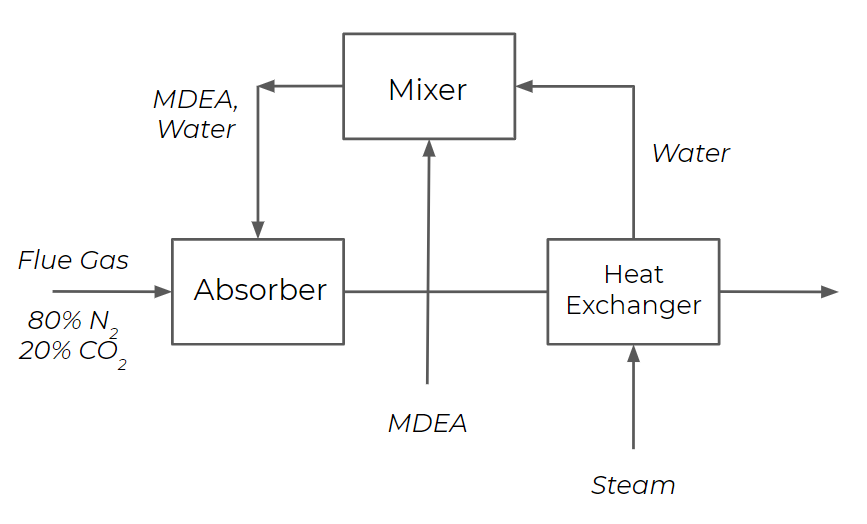
- Process flow diagrams visualize stream connectivity and directionality
- Cause-and-effect matrices quantify input-output variable influence
- Dynamic simulations predict time-dependent plant behavior under different scenarios

Architectures for plant-wide optimization
- Decentralized control architectures: local controllers for individual process units
- Each controller maintains its own controlled variables
- Interactions handled through manipulated variable and setpoint selection
- Advantages: simplicity, robustness, ease of implementation
- Limitations: suboptimal performance, lack of controller coordination
- Centralized control architectures: single controller optimizes entire plant
- Controller receives measurements from all units, computes optimal control actions
- Interactions explicitly accounted for in optimization problem formulation
- Advantages: optimal performance, handles complex constraints and objectives
- Limitations: high computational requirements, sensitivity to model uncertainties and measurement errors
- Hierarchical control architectures: combine decentralized and centralized elements
- Lower-level controllers handle local regulation and disturbance rejection
- Higher-level controllers coordinate multiple units, optimize plant-wide performance
- Advantages: balance simplicity and optimality, improved scalability and modularity
- Control architecture selection factors
- Plant complexity, available measurements, communication infrastructure
- Decentralized control suits plants with weak interactions, limited instrumentation (batch processes)
- Centralized control benefits plants with strong interactions, high-performance requirements (continuous processes)
- Hierarchical control provides flexible framework for managing plant-wide objectives while preserving local autonomy
Advanced Control and Integration Strategies
Integration of advanced systems
- Advanced control techniques improve plant-wide performance
- Model predictive control (MPC) uses dynamic models to predict future behavior, compute optimal actions
- Real-time optimization (RTO) solves steady-state optimization for optimal operating conditions
- Integrating MPC and RTO enables dynamic optimization and constraint handling
- Data analytics and machine learning enhance monitoring and fault detection
- Analyze process data to identify patterns and anomalies (sensor data, historian databases)
- Train machine learning algorithms for real-time fault detection and diagnosis
- Integrate data-driven models with physics-based models for improved accuracy and reliability
- Integration strategies
- Define clear interfaces and data exchange protocols between systems
- Establish unified data management and storage infrastructure
- Develop consistent key performance indicators (KPIs) and objectives
- Implement hierarchical control structure aligned with organizational hierarchy
- Provide operator training and decision support tools for adopting advanced technologies
- Integration challenges
- Ensure sensor measurement and historical data accuracy and reliability
- Update models to reflect plant configuration and operating condition changes
- Implement secure communication protocols and access control to prevent unauthorized access
Impact of plant-wide control
- Process safety improvements
- Maintain key variables within safe operating limits
- Detect and mitigate abnormal situations before escalation
- Provide operators with early warnings and decision support tools
- Automate emergency shutdown procedures and safety interlocks
- Efficiency gains
- Optimize operating conditions of individual process units
- Minimize energy consumption and waste generation
- Reduce variability and improve product quality consistency
- Increase asset utilization and minimize downtime
- Profitability enhancements
- Increase throughput and yield
- Reduce raw material and utility costs
- Improve product quality and customer satisfaction
- Minimize environmental and safety incidents leading to fines and reputational damage
- Holistic impact evaluation approach
- Consider direct benefits (increased production, reduced operating costs)
- Account for indirect benefits (improved employee morale, reduced maintenance)
- Assess lifecycle costs (initial investment, training, ongoing support)
- Evaluate risks and uncertainties (market fluctuations, regulatory changes)
- Impact evaluation techniques
- Economic analysis using net present value (NPV) and return on investment (ROI) metrics
- Sensitivity analysis to assess control strategy robustness under different scenarios
- Benchmarking against industry best practices and peer performance
- Pilot studies and phased implementation to validate benefits and refine control strategy
See Fiveable more often in Google
Mark Fiveable as a preferred source and Google is more likely to show you our guides in Top Stories, with a "preferred" badge in AI Mode and AI Overviews.