7.1 Post-Traumatic Stress Disorder (PTSD)

😵Abnormal Psychology Unit 7 Review
7.1 Post-Traumatic Stress Disorder (PTSD)
😵 Abnormal Psychology
Understanding Post-Traumatic Stress Disorder (PTSD)
Post-traumatic stress disorder (PTSD) is a mental health condition that can develop after someone experiences or witnesses a traumatic event. It goes beyond normal stress reactions: PTSD involves persistent symptoms that last more than a month and interfere with a person's ability to function in daily life. Because PTSD affects relationships, work, physical health, and overall well-being, recognizing its features and risk factors is a core topic in abnormal psychology.

Top images from around the web for Definition and criteria of PTSD
Post-Traumatic Stress Disorder | Abnormal Psychology View original
Is this image relevant?
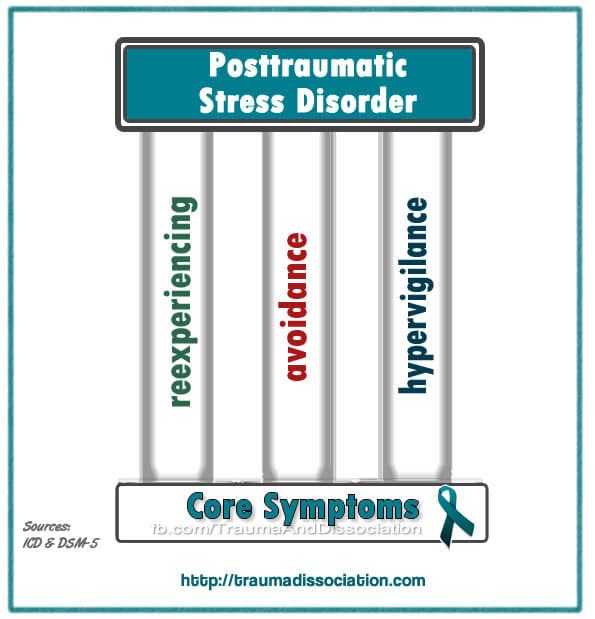
PTSD - Posttraumatic stress disorder symptoms and causes, DSM-5 & ICD-11 criteria View original
Is this image relevant?
Complex Posttraumatic Stress Disorder (C-PTSD) symptoms and diagnostic criteria View original
Is this image relevant?
Post-Traumatic Stress Disorder | Abnormal Psychology View original
Is this image relevant?
PTSD - Posttraumatic stress disorder symptoms and causes, DSM-5 & ICD-11 criteria View original
Is this image relevant?
Definition and Criteria of PTSD
PTSD is formally classified in the DSM-5 under Trauma- and Stressor-Related Disorders, not among the anxiety disorders (a common misconception from earlier editions). To meet the diagnosis, a person must satisfy criteria across several clusters:
- Exposure to a traumatic event — directly experiencing, witnessing, learning about a close family member or friend's exposure to, or repeated professional exposure to details of traumatic events (combat, sexual assault, natural disasters, serious accidents).
- Intrusive symptoms — at least one (e.g., flashbacks, nightmares, intrusive memories).
- Avoidance — persistent avoidance of trauma-related stimuli (at least one type).
- Negative alterations in cognition and mood — at least two (e.g., distorted blame, emotional numbing).
- Alterations in arousal and reactivity — at least two (e.g., hypervigilance, sleep disturbance).
These symptoms must persist for more than one month, cause clinically significant distress or functional impairment, and not be attributable to substance use or another medical condition. If symptoms appear but last less than a month, the diagnosis may be Acute Stress Disorder instead.

Primary Symptoms of PTSD
The four symptom clusters map onto distinct patterns of distress:
Intrusive symptoms are the hallmark of PTSD. The person re-experiences the trauma involuntarily through recurrent distressing memories, vivid nightmares, or flashbacks (dissociative reactions where the person feels or acts as if the event is happening again). Exposure to trauma reminders, such as a loud noise for a combat veteran, can trigger intense psychological distress or physiological reactions like a racing heart.
Avoidance involves deliberate efforts to steer clear of anything connected to the trauma. This can mean avoiding internal cues (thoughts, feelings, memories about the event) or external cues (people, places, conversations, activities that serve as reminders). A car accident survivor, for example, might refuse to drive or even ride in a vehicle.
Negative alterations in cognition and mood include:
- Inability to remember key aspects of the traumatic event (dissociative amnesia, not ordinary forgetting)
- Persistent and exaggerated negative beliefs about oneself, others, or the world ("No one can be trusted," "I am permanently damaged")
- Distorted cognitions about the cause or consequences of the event, leading to inappropriate self-blame or blame of others
- Persistent negative emotional states (fear, horror, anger, guilt, shame)
- Markedly diminished interest in significant activities
- Feelings of detachment or estrangement from others
- Persistent inability to experience positive emotions (emotional numbing)
Alterations in arousal and reactivity reflect a nervous system stuck in "threat mode":
- Irritable behavior and angry outbursts with little or no provocation
- Reckless or self-destructive behavior
- Hypervigilance (constantly scanning the environment for danger)
- Exaggerated startle response
- Concentration problems
- Sleep disturbances

Factors Contributing to PTSD
Not everyone who experiences trauma develops PTSD. Whether someone does depends on an interaction of biological, psychological, and social factors.
Biological factors play a significant role. Research shows that PTSD involves changes in brain structure and function, particularly in three regions: the amygdala (overactive, heightening fear responses), the hippocampus (often reduced in volume, impairing the ability to distinguish past trauma from present safety), and the prefrontal cortex (underactive, reducing the ability to regulate emotional responses). The HPA axis, which controls the body's stress hormone response, becomes dysregulated. There's also evidence of genetic predisposition: twin studies suggest heritability of around 30-40%, meaning some people are biologically more vulnerable.
Psychological factors include pre-existing mental health conditions like depression or anxiety, which lower the threshold for developing PTSD. How someone cognitively appraises the event matters too. A person who interprets the trauma as meaning "the world is completely dangerous" is at higher risk than someone who can contextualize it. Personality traits like high neuroticism, poor coping strategies, and low resilience also increase vulnerability.
Social factors are among the strongest predictors. Lack of social support after the trauma is one of the most consistent risk factors across studies. Stigma around seeking help, cultural beliefs that discourage emotional expression, and additional life stressors like financial hardship or relationship problems all compound the risk.
Impact of PTSD on Individuals
PTSD reaches into nearly every area of a person's life:
- Social functioning — Difficulty maintaining relationships, social withdrawal, emotional numbing that creates distance from loved ones, and strained family dynamics. Partners and children of people with PTSD often experience secondary traumatic stress.
- Occupational functioning — Decreased work performance, increased absenteeism, difficulty concentrating, and in severe cases, inability to maintain employment.
- Physical health — PTSD is associated with elevated rates of cardiovascular disease, chronic pain, gastrointestinal problems, and immune system dysfunction. The chronic stress response takes a measurable toll on the body over time.
- Comorbidity — PTSD rarely occurs in isolation. Roughly 80% of people with PTSD meet criteria for at least one other disorder, most commonly major depression, other anxiety disorders, and substance use disorders. Substance use often develops as a form of self-medication.
- Suicide risk — People with PTSD have a significantly elevated risk of suicidal ideation and suicide attempts, which is why thorough assessment is critical.
Prevalence of PTSD in Populations
PTSD rates vary substantially depending on the type of trauma and the population studied.
- General population — Lifetime prevalence in the U.S. is approximately 6.8%. Women are about twice as likely as men to develop PTSD, partly because they are more likely to experience high-impact traumas like sexual assault and partly due to biological differences in stress response. Prevalence varies across countries and cultures.
- Military veterans — Rates range from roughly 11-30% depending on the conflict and era of service. Veterans exposed to direct combat or held as prisoners of war show the highest rates. Vietnam-era veterans, for instance, had higher lifetime rates than Gulf War veterans.
- Survivors of sexual assault — Estimated prevalence of 30-50%, making sexual violence one of the trauma types most likely to lead to PTSD. Rates are higher among women than men.
- First responders — Firefighters, police officers, and emergency medical personnel show prevalence rates of approximately 10-32%. Their risk is elevated by repeated exposure to traumatic scenes rather than a single event, which is why the DSM-5 specifically includes repeated professional exposure as a qualifying criterion.
These numbers highlight that while most people who experience trauma do not develop PTSD, certain populations carry substantially higher risk and deserve targeted screening and support.
See Fiveable more often in Google
Mark Fiveable as a preferred source and Google is more likely to show you our guides in Top Stories, with a "preferred" badge in AI Mode and AI Overviews.