15.3 Etiology and Management of Neurocognitive Disorders

😵Abnormal Psychology Unit 15 Review
15.3 Etiology and Management of Neurocognitive Disorders
😵 Abnormal Psychology
Neuropathology and Risk Factors of Neurocognitive Disorders
Neurocognitive disorders arise from distinct types of brain damage, whether that's abnormal protein deposits, loss of neurons, or disrupted blood supply. Understanding the specific neuropathology behind each disorder helps explain why symptoms differ across diagnoses and why treatment options vary.

Top images from around the web for Neuropathology of neurocognitive disorders
Frontiers | Impact of Tau on Neurovascular Pathology in Alzheimer's Disease View original
Is this image relevant?
Frontiers | Mathematical Modeling of Protein Misfolding Mechanisms in Neurological Diseases: A ... View original
Is this image relevant?
Neurocognitive Disorder Due to Alzheimer’s Disease | Abnormal Psychology View original
Is this image relevant?
Frontiers | Impact of Tau on Neurovascular Pathology in Alzheimer's Disease View original
Is this image relevant?
Frontiers | Mathematical Modeling of Protein Misfolding Mechanisms in Neurological Diseases: A ... View original
Is this image relevant?
Neuropathology of Neurocognitive Disorders
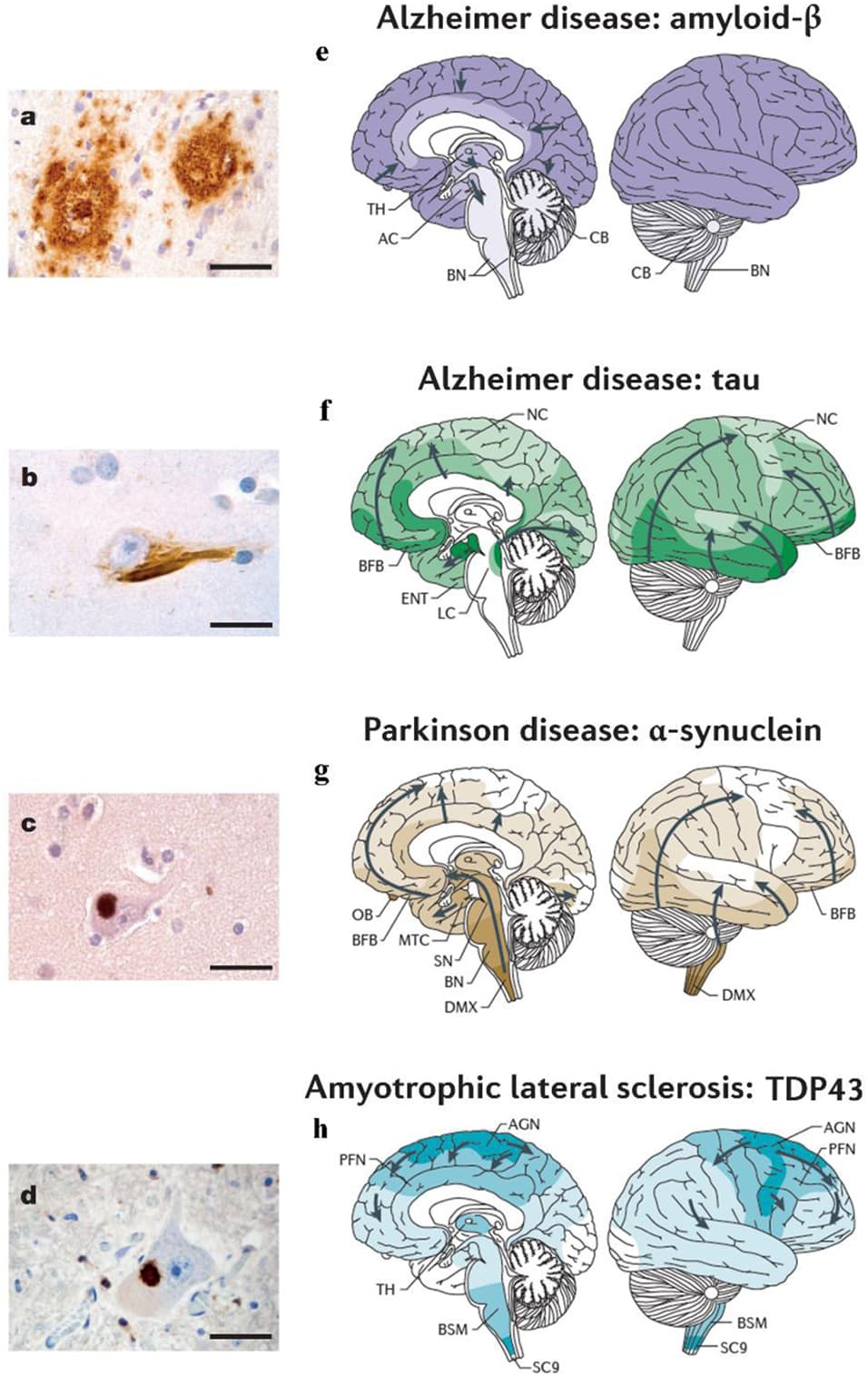
Alzheimer's disease involves two hallmark brain changes. First, amyloid plaques form when fragments of beta-amyloid protein accumulate between neurons, disrupting cell-to-cell communication. Second, neurofibrillary tangles develop when tau protein becomes abnormally twisted inside neurons, blocking the transport of nutrients and eventually killing the cell. Together, these changes cause widespread brain atrophy, particularly in the hippocampus early on.
Lewy body dementia is driven by Lewy bodies, which are clumps of alpha-synuclein protein that build up inside neurons. These deposits interfere with normal brain signaling and are associated with fluctuating cognition, visual hallucinations, and motor symptoms that overlap with Parkinson's disease.
Frontotemporal dementia (FTD) features selective atrophy of the frontal and temporal lobes. Neurons and synapses in these regions progressively deteriorate, which is why FTD tends to affect personality, behavior, and language more than memory in its early stages.
Vascular dementia results from cerebrovascular disease. Strokes or chronic small vessel disease reduce blood flow to the brain, starving neurons of oxygen and nutrients. The pattern of cognitive impairment depends on which brain regions are affected, and onset can be sudden (after a major stroke) or gradual (from accumulating small vessel damage).

Factors in Neurocognitive Disorder Development
Risk factors for neurocognitive disorders fall into three broad categories: genetic, lifestyle, and medical.
Genetic factors:
- Familial Alzheimer's disease is caused by mutations in the APP, PSEN1, or PSEN2 genes. These mutations lead to early-onset Alzheimer's (often before age 65) and tend to produce more severe symptoms.
- The APOE gene has several variants. The APOE ε4 allele is the strongest genetic risk factor for late-onset Alzheimer's. Carrying one copy roughly doubles to triples your risk; carrying two copies increases it even further. Having the ε4 allele doesn't guarantee you'll develop Alzheimer's, though, and many people with the allele never do.
Lifestyle factors:
- Physical inactivity raises risk for both vascular dementia and Alzheimer's, likely through its effects on cardiovascular health and brain blood flow.
- A diet high in saturated fat and sugar is associated with increased risk, while Mediterranean-style diets appear somewhat protective.
- Smoking increases oxidative stress and inflammation in the brain, accelerating neuronal damage.
- Chronic heavy alcohol use can lead to alcohol-related dementia through direct neurotoxic effects and nutritional deficiencies (especially thiamine).
Comorbid medical conditions:
- Cardiovascular disease, including hypertension, high cholesterol, and diabetes, damages blood vessels throughout the body, including the brain. Managing these conditions in midlife appears to reduce dementia risk.
- Traumatic brain injury (TBI), especially repeated concussions, is linked to chronic traumatic encephalopathy (CTE) and increased Alzheimer's risk.
- Depression may increase the risk of developing dementia later in life, though researchers are still working out whether depression is a true risk factor or an early symptom of the disease process itself.

Treatment and Ethical Considerations in Neurocognitive Disorders
No current treatment can cure or reverse most neurocognitive disorders. The goal of treatment is to slow decline, manage symptoms, and support quality of life for both the patient and their caregivers.
Treatment Approaches for Neurocognitive Disorders
Pharmacological treatments:
- Cholinesterase inhibitors (donepezil, rivastigmine, galantamine) work by preventing the breakdown of acetylcholine, a neurotransmitter important for memory and learning. These are most commonly used in mild to moderate Alzheimer's and can modestly improve or stabilize cognitive function for a period of time.
- Memantine is an NMDA receptor antagonist that regulates glutamate activity. Too much glutamate can overstimulate and damage neurons, so memantine helps protect against this. It's typically used in moderate to severe Alzheimer's, sometimes in combination with a cholinesterase inhibitor.
These medications don't stop the underlying disease process. They manage symptoms and may slow the rate of decline, but their effects are generally modest.
Non-pharmacological treatments:
- Cognitive stimulation therapy involves structured group activities (puzzles, word games, discussions) designed to actively engage thinking and memory skills.
- Reminiscence therapy uses photos, music, or objects from a person's past to prompt conversation and recall, which can improve mood and sense of identity.
- Physical exercise improves cardiovascular health and may slow cognitive decline. Even moderate activity like regular walking shows benefits.
- Music therapy can reduce agitation, improve mood, and sometimes elicit responses in patients who are otherwise difficult to engage verbally.
Caregiver support is a critical part of the treatment picture, since family members often provide the majority of daily care:
- Education and training help caregivers understand disease progression and develop strategies for managing behavioral symptoms.
- Respite care gives caregivers temporary breaks, which is essential for preventing burnout. Caregiver burnout is a serious concern, as it affects both the caregiver's health and the quality of care the patient receives.
- Support groups provide emotional connection with others in similar situations and practical problem-solving advice.
Challenges in Neurocognitive Disorder Care
Diagnostic challenges are significant because neurocognitive disorders can look like other conditions. Depression, delirium, medication side effects, and normal age-related cognitive changes can all mimic early dementia. There's no single definitive test for most neurocognitive disorders. Diagnosis typically relies on clinical evaluation, neuropsychological testing, brain imaging, and ruling out other causes. This means misdiagnosis or delayed diagnosis is common, especially in the early stages.
Decision-making capacity becomes a central concern as the disease progresses. Clinicians assess whether a person can:
- Understand the relevant information being presented
- Appreciate how that information applies to their own situation
- Reason through the options and their consequences
- Communicate a consistent choice
The challenge is balancing respect for the patient's autonomy with the need to protect them from harm. Capacity can fluctuate, and a person may have capacity for some decisions but not others. When capacity is lost, a surrogate decision-maker (often designated through a power of attorney) steps in.
End-of-life care raises some of the most difficult ethical questions in neurocognitive disorder management:
- Advance care planning should ideally happen early in the disease, while the person can still express their preferences for future medical care. This includes advance directives and designating a healthcare proxy.
- Palliative care shifts the focus from curative treatment to comfort and quality of life. This becomes especially relevant in late-stage dementia.
- Ethical dilemmas frequently arise around withholding or withdrawing life-sustaining treatments (such as artificial feeding), particularly when the patient can no longer communicate their wishes. Clinicians must navigate the sometimes conflicting perspectives of the patient's prior stated wishes, family members' desires, and medical judgment about what constitutes appropriate care.
See Fiveable more often in Google
Mark Fiveable as a preferred source and Google is more likely to show you our guides in Top Stories, with a "preferred" badge in AI Mode and AI Overviews.