11.2 Cluster B Personality Disorders

😵Abnormal Psychology Unit 11 Review
11.2 Cluster B Personality Disorders
😵 Abnormal Psychology
Cluster B Personality Disorders
Cluster B personality disorders are characterized by dramatic, erratic, and highly emotional behavior patterns. The four disorders in this cluster are antisocial (ASPD), borderline (BPD), histrionic (HPD), and narcissistic (NPD). Each one disrupts relationships, emotional regulation, and daily functioning in distinct ways, but they share a common thread of intensity and instability.

Top images from around the web for Core features of Cluster B disorders
Frontiers | Emotion Regulation, Physical Diseases, and Borderline Personality Disorders ... View original
Is this image relevant?
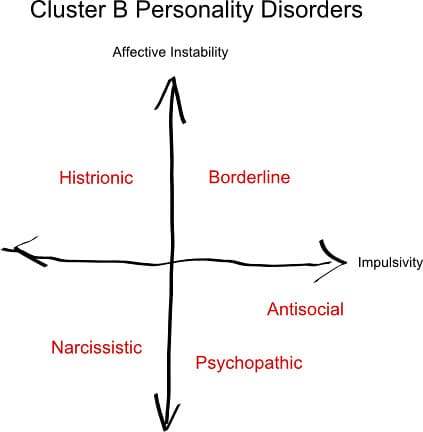
Cluster B Personality Disorders | Snipergirl | Flickr View original
Is this image relevant?
Information about misdiagnosis and other disorders/problems related to trauma and dissociative ... View original
Is this image relevant?
Frontiers | Emotion Regulation, Physical Diseases, and Borderline Personality Disorders ... View original
Is this image relevant?
Cluster B Personality Disorders | Snipergirl | Flickr View original
Is this image relevant?
Core Features of Cluster B Disorders
Antisocial Personality Disorder (ASPD)
ASPD centers on a pervasive disregard for the rights of others. People with ASPD consistently violate social norms through lying, stealing, or aggression. They act impulsively without considering consequences and rarely plan ahead. Deceit and manipulation are used for personal gain, and there's a striking lack of remorse when their actions harm someone else.
A key diagnostic requirement: the person must be at least 18 years old, with evidence of conduct disorder before age 15. This distinguishes ASPD from general rule-breaking behavior.
Borderline Personality Disorder (BPD)
BPD is defined by instability across relationships, self-image, and emotions. Relationships tend to swing between extremes of idealization ("you're perfect") and devaluation ("I hate you"), sometimes called splitting. Other core features include:
- Impulsive, self-damaging behaviors (reckless spending, substance abuse, risky sexual behavior)
- Chronic feelings of emptiness
- Intense, inappropriate anger and difficulty regulating emotions
- Frantic efforts to avoid real or imagined abandonment
- Recurrent suicidal behavior or self-harm
BPD is one of the most commonly diagnosed personality disorders in clinical settings and carries a high risk for suicide.
Histrionic Personality Disorder (HPD)
HPD revolves around excessive emotionality and a constant need for attention. People with HPD may use dramatic outbursts, exaggerated emotional expressions, or sexually provocative behavior to stay at the center of attention. Their emotions tend to be shallow and shift rapidly. They're also highly suggestible, meaning they're easily influenced by other people or by the current situation. When they're not the focus of attention, they become noticeably uncomfortable.
Narcissistic Personality Disorder (NPD)
NPD is built around a grandiose sense of self-importance. People with NPD exaggerate their achievements, expect to be recognized as superior, and feel entitled to special treatment. They're preoccupied with fantasies of unlimited success, power, or ideal love. Exploitative behavior toward others is common, and empathy is markedly lacking.
Underneath the grandiosity, though, self-esteem is often fragile. Criticism or failure can trigger intense shame or rage, sometimes called narcissistic injury.
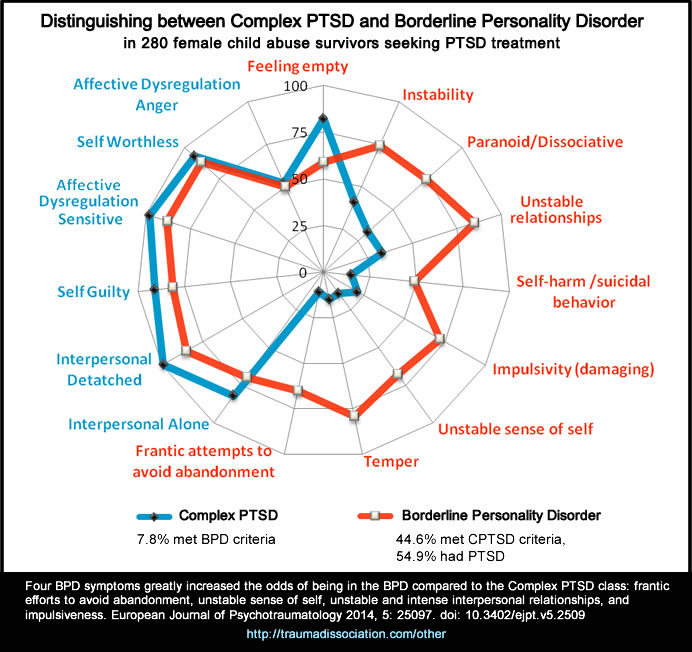
Emotional Patterns Across Cluster B
Each Cluster B disorder has a distinct emotional signature:
- ASPD: Shallow emotions overall, limited empathy, and a tendency toward irritability and aggression. Emotional responses tend to be muted rather than intense.
- BPD: The opposite extreme. Emotions are intense, unstable, and hard to regulate. Anger can flare quickly and disproportionately, and chronic emptiness sits underneath the volatility.
- HPD: Emotions are dramatic but shallow. They shift rapidly and often seem performative rather than deeply felt. Emotional expression is used as a tool for gaining attention.
- NPD: Envy of others is common, along with a belief that others envy them. Empathy is lacking, and self-esteem, despite outward confidence, is brittle and reactive to perceived slights.
These emotional patterns also drive distinct behavioral tendencies. ASPD leads to deceit and rights violations (including criminal behavior). BPD drives self-harm, suicidal gestures, and chaotic relationships. HPD produces attention-seeking and manipulative social behavior. NPD results in exploitation, arrogance, and entitled demands.

Causes of Cluster B Disorders
No single factor causes a Cluster B disorder. These conditions develop from a combination of influences:
Genetic factors play a meaningful role. Twin studies show moderate heritability for Cluster B traits, particularly for ASPD and BPD. Having a first-degree relative with a personality disorder increases your risk.
Environmental factors are equally important, especially early in life:
- Childhood trauma, including physical, emotional, or sexual abuse
- Neglect or inconsistent parenting (lack of boundaries, emotional unavailability)
- Growing up in unstable or violent family environments (domestic abuse, parental substance use)
BPD in particular has strong associations with childhood abuse and invalidating environments, where a child's emotional experiences are repeatedly dismissed or punished.
Neurobiological factors involve differences in brain structure and function. Research has found abnormalities in the prefrontal cortex (involved in impulse control and decision-making) and the amygdala (involved in emotional processing). In ASPD, reduced amygdala activity may explain the blunted fear and empathy responses. In BPD, an overactive amygdala paired with a less responsive prefrontal cortex helps explain the emotional dysregulation.
Psychosocial factors include maladaptive coping strategies (avoidance, aggression) and dysfunctional interpersonal patterns learned through observation. A child who watches a parent use manipulation or intimidation to get their way may internalize those strategies as normal.
Impact on Functioning and Relationships
Cluster B disorders create widespread difficulties across multiple areas of life.
Interpersonal difficulties are the hallmark. Relationships tend to be unstable and conflict-ridden, with frequent breakups, intense arguments, and misunderstandings. Maintaining long-term friendships or romantic partnerships is a consistent struggle across all four disorders, though for different reasons (fear of abandonment in BPD, exploitation in NPD, superficiality in HPD, violation of trust in ASPD).
Occupational problems are common. Impulsivity, interpersonal conflicts, and emotional instability make it hard to maintain steady employment. This can show up as frequent job changes, poor performance, or failure to reach professional goals.
Comorbid mental health issues frequently develop alongside Cluster B disorders:
- Substance use disorders, often used as a coping mechanism
- Mood disorders, especially depression
- Anxiety disorders, including generalized anxiety and panic disorder
BPD has particularly high comorbidity rates, with many individuals meeting criteria for multiple additional diagnoses.
Legal and social consequences are most pronounced in ASPD, where criminal behavior (theft, assault, fraud) is part of the diagnostic picture. But all Cluster B disorders can lead to difficulty adhering to social norms and expectations, creating friction in community and social settings.
See Fiveable more often in Google
Mark Fiveable as a preferred source and Google is more likely to show you our guides in Top Stories, with a "preferred" badge in AI Mode and AI Overviews.