4.1 Experimental and Correlational Research

😵Abnormal Psychology Unit 4 Review
4.1 Experimental and Correlational Research
😵 Abnormal Psychology
Research Designs in Abnormal Psychology
Abnormal psychology research relies on two core designs: experimental and correlational. Experimental designs manipulate variables to establish cause-and-effect relationships, while correlational designs examine naturally occurring relationships without any manipulation. Understanding the difference between these two approaches is essential because it determines what conclusions you can (and can't) draw from a study's findings.

Top images from around the web for Experimental vs correlational research designs
Types of Research Studies | Boundless Psychology View original
Is this image relevant?
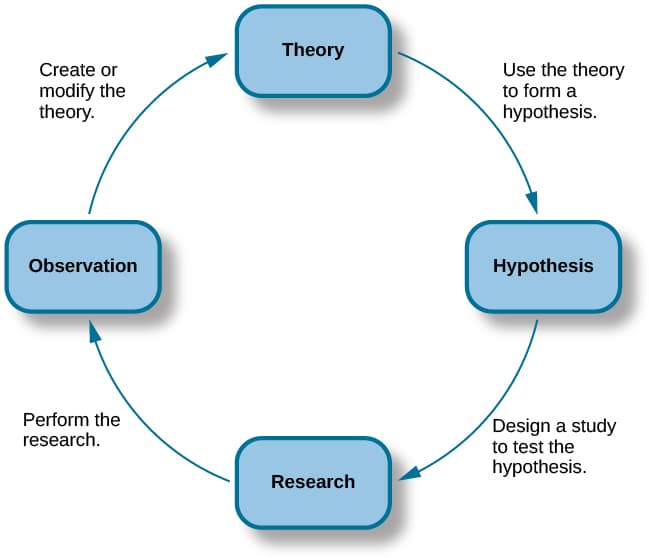
The Scientific Method | Introduction to Psychology View original
Is this image relevant?
Correlational Research | Introduction to Psychology View original
Is this image relevant?
Types of Research Studies | Boundless Psychology View original
Is this image relevant?
The Scientific Method | Introduction to Psychology View original
Is this image relevant?
Experimental vs. Correlational Research Designs
Experimental research manipulates one or more independent variables to observe their effect on a dependent variable. Participants are randomly assigned to different conditions or groups, which is what allows researchers to claim that changes in the independent variable caused changes in the dependent variable.
- Testing whether a new therapy reduces depression symptoms by assigning one group to receive the therapy and another to receive a placebo
- Comparing the effects of two different medications on anxiety by randomly assigning participants to each drug condition
Correlational research measures two or more variables as they naturally occur and analyzes whether they're related. There's no manipulation and no random assignment, so you can identify associations but never cause-and-effect.
- Examining whether higher stress levels are associated with more severe OCD symptoms
- Investigating whether childhood trauma is linked to higher rates of PTSD
The core distinction: experiments tell you if X causes Y. Correlations tell you if X and Y tend to go together.

Advantages and Limitations of Experimental Research
Experiments are powerful because they let you isolate variables. By controlling extraneous factors and randomly assigning participants, you can be confident that the independent variable is what's driving the results. This gives experiments high internal validity, meaning the observed effects can be attributed to the manipulated variable rather than something else.
That said, experiments in abnormal psychology face real constraints:
- Limited external validity. Tightly controlled lab conditions may not reflect how people behave in everyday life, so results don't always generalize to real-world settings or populations.
- Ethical barriers. You can't deliberately give someone a disorder or withhold effective treatment to create a control group. This limits which variables researchers can manipulate.
- Practical restrictions. Some variables of interest, like childhood abuse or genetic makeup, simply can't be assigned or manipulated, which puts them outside the reach of experimental designs entirely.

Correlational Research in Abnormal Psychology
Correlational studies measure variables of interest and use statistical analysis to determine the strength and direction of their relationship. A correlation can be positive (both variables increase together), negative (one increases as the other decreases), or near zero (no consistent pattern).
Common topics studied with correlational designs include:
- Social media use and symptoms of depression or anxiety
- Genetic predisposition and the likelihood of developing a specific disorder
- Sleep quality and the severity of bipolar disorder episodes
These are all situations where you can't randomly assign people to conditions. You can't assign someone to have poor sleep or a genetic risk factor, so correlational designs are often the only ethical option.
Strengths and Limitations of Correlational Studies
Correlational research fills gaps that experiments can't reach. It allows researchers to study variables that would be unethical or impossible to manipulate, and it captures relationships as they exist in real-world settings. Correlational studies also tend to be less expensive and less time-consuming than experiments, and their findings can generate hypotheses that future experimental research can test.
The limitations, however, are significant:
- No cause-and-effect conclusions. Finding that two variables are correlated doesn't tell you that one causes the other. A correlation between social media use and depression doesn't mean social media causes depression.
- Reverse causality. The assumed direction of influence might be backward. Maybe depression leads people to use social media more, rather than the other way around.
- Confounding variables. A third, unmeasured variable could be driving the relationship between the two variables you're studying. For example, loneliness might independently increase both social media use and depression, creating a correlation that has nothing to do with a direct link between the two.
Bottom line: Experimental designs give you causal answers but face ethical and practical limits in abnormal psychology. Correlational designs let you study nearly anything but can never prove causation. Strong research programs use both approaches together, with correlational findings pointing toward questions that experiments can then test more rigorously.
See Fiveable more often in Google
Mark Fiveable as a preferred source and Google is more likely to show you our guides in Top Stories, with a "preferred" badge in AI Mode and AI Overviews.