20.1 Emerging Technologies in Motor Learning Assessment

⛹️♂️Motor Learning and Control Unit 20 Review
20.1 Emerging Technologies in Motor Learning Assessment
⛹️♂️ Motor Learning and Control
Novel Technologies for Motor Learning Assessment
Emerging technologies are changing how researchers assess and understand motor learning. Tools like motion capture, brain imaging, and wearable sensors now provide high-resolution, objective data on movement patterns, muscle activation, and the neural mechanisms behind skill acquisition. These advancements let researchers quantify subtle performance changes that older methods would miss entirely.
The payoff spans multiple fields: sports scientists use them to optimize technique, clinicians track rehabilitation progress in real time, and ergonomists redesign workplaces around actual movement data. That said, these tools come with real trade-offs, including high costs, steep technical learning curves, and challenges managing massive datasets.

Top images from around the web for Motion Capture and Muscle Activation Analysis
Frontiers | Increased Muscle Activity Accompanying With Decreased Complexity as Spasticity ... View original
Is this image relevant?
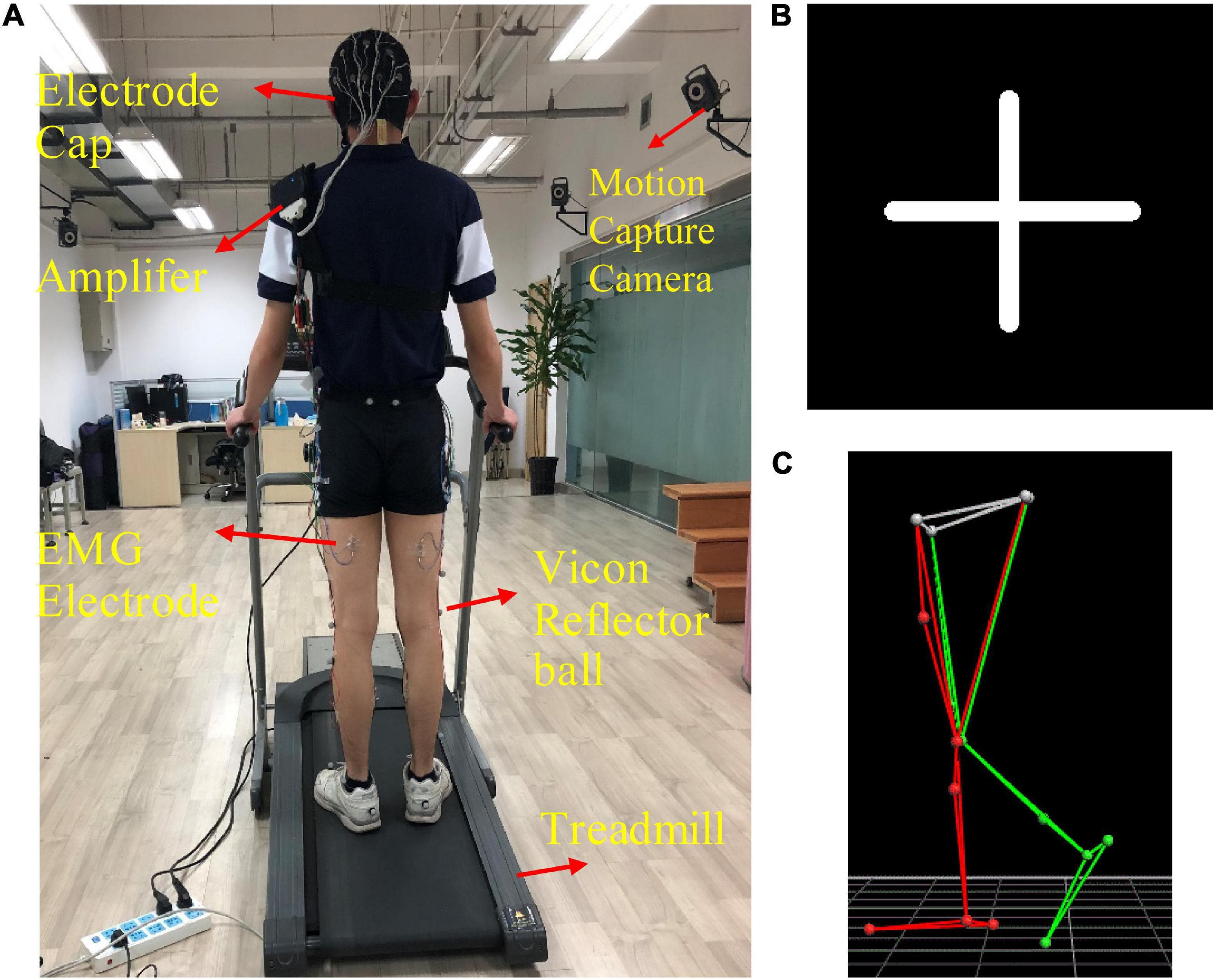
Frontiers | Surface Electromyography and Electroencephalogram-Based Gait Phase Recognition and ... View original
Is this image relevant?
Frontiers | Trunk Muscle Activation Patterns Differ Between Those With Low and High Back ... View original
Is this image relevant?
Frontiers | Increased Muscle Activity Accompanying With Decreased Complexity as Spasticity ... View original
Is this image relevant?
Frontiers | Surface Electromyography and Electroencephalogram-Based Gait Phase Recognition and ... View original
Is this image relevant?
Motion Capture and Muscle Activation Analysis
Motion capture systems use either optical markers (cameras tracking reflective dots on the body) or inertial sensors (small devices worn on body segments) to record detailed kinematic data about how the body moves through space.
- They quantify changes in movement kinematics as skills develop, such as reduced movement variability and increased efficiency
- Researchers can track joint angles, segment velocities, and coordination patterns frame by frame
- Common systems: Vicon (optical), Xsens (inertial)
Electromyography (EMG) measures the electrical activity of muscles during movement, revealing activation patterns and timing.
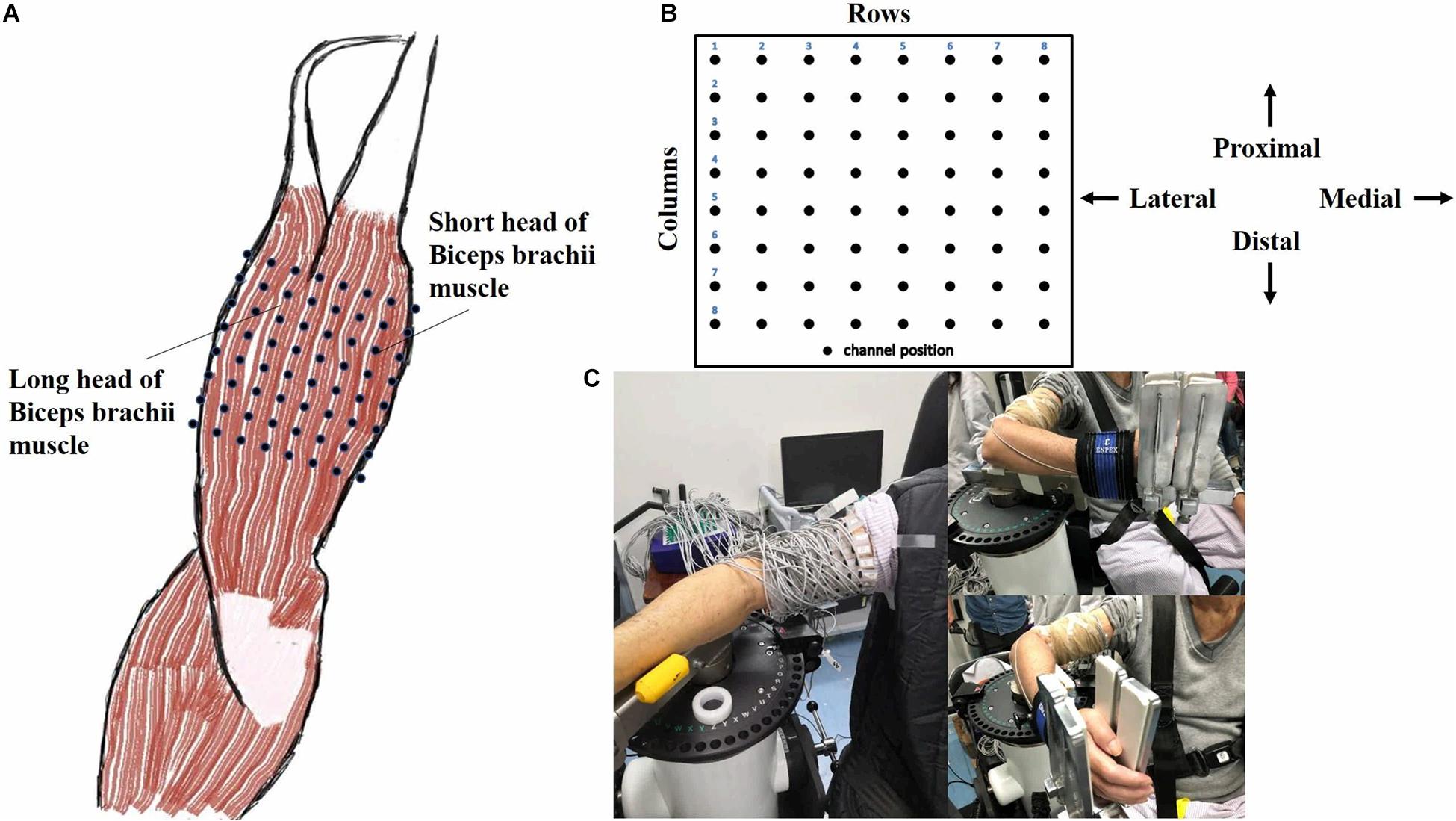
- Surface EMG uses electrodes placed on the skin over a muscle; fine-wire EMG inserts thin needles directly into deeper muscles for more targeted readings
- EMG shows how muscle synergies and coordination develop during learning. As a skill is refined, you'll typically see cleaner activation timing, less unnecessary co-contraction, and more efficient recruitment of muscle groups
- It also reveals changes in the magnitude of activation, helping researchers understand how the nervous system becomes more economical with practice
Immersive Technologies and Brain Imaging
Virtual reality (VR) and augmented reality (AR) create controlled, immersive environments for studying motor learning under conditions that would be difficult or impossible to replicate in a standard lab.
- Researchers can systematically manipulate task complexity, feedback type, and environmental constraints while keeping everything else constant
- These platforms produce standardized, reproducible training scenarios, which is a major advantage for comparing results across participants or studies
- Examples: Oculus Rift (VR), Microsoft HoloLens (AR)
Brain imaging techniques let researchers observe what's happening in the brain as someone learns a motor skill.
- fMRI (functional magnetic resonance imaging) measures changes in blood flow to detect which brain regions are active during a task. It has excellent spatial resolution but relatively slow temporal resolution.
- EEG (electroencephalography) records electrical activity at the scalp using an array of electrodes. It captures neural activity in real time (millisecond resolution) but is less precise about where in the brain that activity originates.
- Both methods reveal how brain activation patterns and functional connectivity shift as skills are acquired, providing direct evidence of learning-related neural plasticity
Wearable Sensors and Force Measurement
Wearable sensors containing accelerometers and gyroscopes allow continuous monitoring of movement outside the lab.
- This is a big deal for ecological validity: you can track how someone actually moves during sports, daily activities, or work tasks rather than only in controlled settings
- Wearables help researchers study skill transfer and retention in the real world, not just whether someone can perform well in a lab
- Examples: IMeasureU inertial sensors (research-grade), consumer devices like Fitbit (lower precision but useful for long-term tracking)
Force plates and pressure sensors measure ground reaction forces and pressure distribution during movement.
- They capture how force control and coordination develop during skill acquisition. For instance, a novice might show inconsistent force profiles during a landing task, while an expert produces smooth, repeatable patterns.
- These tools are also central to assessing postural stability and balance
- Examples: AMTI force plates, Tekscan pressure mapping systems
Eye Tracking and Gaze Analysis
Eye-tracking systems record where a person looks, for how long, and in what sequence during motor task performance.
- As people learn a skill, their gaze strategies change. Experts tend to fixate on fewer, more task-relevant locations and use more anticipatory gaze patterns compared to novices, who scan more broadly and reactively.
- Eye tracking reveals the role of visual information processing in motor learning and helps researchers connect gaze behavior directly to performance outcomes
- Examples: Tobii eye trackers (screen-based and wearable), SMI eye tracking glasses
Enhancing Understanding of Motor Skill Acquisition
Quantifying Movement Patterns and Variability
Motion capture gives researchers objective numbers where previously they relied on observation. You can track exactly how movement kinematics change across practice sessions: joint angles become more consistent, movement paths become smoother, and timing variability decreases.
- Researchers can identify the specific performance variables that change most during learning
- Novice-to-expert comparisons become quantifiable rather than qualitative
- These measures help pinpoint what is improving and when during the learning process

Insights into Neuromuscular Control and Coordination
EMG data reveals the "hidden" side of motor learning that you can't see just by watching someone move. As skills are refined, the nervous system reorganizes how it recruits and synchronizes muscle groups.
- Early in learning, people tend to co-contract opposing muscle groups (stiffening the joint for stability). With practice, co-contraction decreases and reciprocal inhibition becomes more refined.
- EMG can also track how fatigue affects neuromuscular control during extended practice, which matters for designing training schedules
Manipulating Task Constraints and Feedback
VR and AR give researchers precise control over the practice environment, which is difficult to achieve in real-world settings.
- You can test how different practice conditions (blocked vs. random, simple vs. complex) affect learning outcomes while holding everything else constant
- Augmented feedback can be delivered in ways that aren't possible in the real world, such as visual overlays showing ideal movement trajectories or haptic cues guiding limb position
- Realistic simulations allow researchers to assess whether skills learned in VR actually transfer to real-world performance
Neural Mechanisms and Brain Plasticity
Brain imaging provides direct evidence that motor learning involves reorganization of neural networks, not just behavioral improvement.
- fMRI studies show shifts in activation across brain regions as learning progresses. Early learning often involves heavy prefrontal cortex engagement (conscious control), while later stages show greater reliance on the primary motor cortex, supplementary motor area, and cerebellum
- Functional connectivity between regions changes too, reflecting the formation of more efficient neural pathways
- These techniques also allow researchers to examine how factors like age, prior expertise, and neurological conditions (e.g., stroke, Parkinson's disease) affect learning-related brain plasticity
Ecological Validity and Real-World Skill Transfer
Wearable sensors address one of the oldest criticisms in motor learning research: that lab findings don't always generalize to real life.
- Researchers can monitor movement parameters during actual sports performance, daily activities, or occupational tasks
- This makes it possible to evaluate whether training interventions actually produce lasting changes in real-world settings
- Wearables also help identify factors that influence skill transfer and retention, such as environmental constraints and task specificity
Visual Attention and Gaze Strategies
Eye tracking connects the perceptual side of motor learning to the motor side.
- Tracking gaze patterns across practice reveals how visual search strategies become more efficient with learning
- Researchers can investigate how task complexity and expertise level influence where and how long someone fixates during performance
- These findings have practical implications for training: if you know where experts look, you can teach novices to adopt similar gaze strategies (a technique called quiet eye training)
Advantages vs. Limitations of Emerging Technologies
Advantages: High-Resolution Data and Objective Measures
- High spatial and temporal resolution enables detection of subtle performance changes that traditional observation or video analysis would miss. Motion capture can track millimeter-level joint displacements; EEG captures neural events at the millisecond scale.
- Objective, quantifiable measures reduce reliance on subjective ratings by human observers, eliminating potential bias and allowing standardized evaluation across studies and populations.
- Controlled, standardized environments (especially with VR/AR) increase experimental control by letting researchers manipulate specific variables while holding others constant, which improves replicability.
- Real-time feedback capability opens the door to adaptive training paradigms. Task difficulty and feedback can be adjusted on the fly based on the learner's current performance, personalizing the learning experience.
Limitations: Cost, Expertise, and Ecological Validity
- High equipment costs can be prohibitive. Research-grade motion capture systems and fMRI scanners require significant investment to acquire and maintain, limiting access for smaller labs and clinical settings.
- Technical expertise requirements are steep. Collecting, processing, and interpreting data from these systems demands specialized training in hardware operation, signal processing, pattern recognition, and statistical modeling.
- Data overload is a real concern. High-resolution systems generate massive datasets that require robust storage infrastructure, computational resources, and thoughtful data management strategies.
- Ecological validity trade-offs persist for lab-based technologies. Controlled conditions may not capture the full complexity and variability of real-world motor tasks, which can limit how well findings generalize.
- Ethical and privacy considerations arise particularly with wearable sensors and brain imaging. Personal movement and neural data require strict governance policies, secure storage, and clear protocols for data sharing.
Applications of Technologies in Various Fields
Sports: Performance Optimization and Injury Prevention
These technologies give coaches and sport scientists tools to move beyond subjective evaluation.
- Technique optimization: Motion capture identifies specific biomechanical factors (joint angles, segment velocities, acceleration profiles) that contribute to performance, enabling individualized training programs targeting an athlete's specific movement deficiencies
- Talent identification: Researchers are exploring whether motor learning rates and capacities measured early in development can predict long-term athletic success, sometimes using machine learning algorithms applied to skill acquisition metrics
- Injury prevention: Biomechanical analysis can flag movement patterns and loading profiles associated with elevated injury risk (e.g., knee valgus patterns linked to ACL injuries, or asymmetric loading linked to stress fractures). Targeted interventions can then correct these patterns before injury occurs.
Rehabilitation: Personalized Therapy and Progress Tracking
For clinical populations, these tools transform how therapists assess impairment and track recovery.
- Quantifying deficits: Motion capture and force plates can precisely measure movement asymmetries and deficits in patients recovering from stroke, managing Parkinson's disease, or rehabbing orthopedic injuries. Changes over time provide objective evidence of whether treatment is working.
- Personalized protocols: Because patients differ in their motor learning characteristics, technology-driven assessment allows therapists to tailor session difficulty, feedback type, and progression rate to each individual.
- Engaging therapy environments: VR and AR create interactive rehabilitation settings that can increase patient motivation while delivering real-time visual, auditory, or haptic feedback to reinforce correct movement patterns.
Ergonomics: Optimizing Work Environments and Training Programs
In occupational settings, these technologies help reduce injury risk and improve worker performance.
- Workstation design: Researchers assess the biomechanical demands of occupational tasks to identify ergonomic risk factors like awkward postures, repetitive motions, and excessive forces, then propose evidence-based design modifications
- Fatigue monitoring: Wearable sensors and EMG can detect when movement patterns and muscle activation begin to degrade during prolonged work, signaling the onset of fatigue-related performance decrements and increased injury risk
- Training development: VR-based simulations are increasingly used for high-risk occupations (aviation, construction, manufacturing) where real-world practice would be dangerous or impractical. Researchers can then evaluate which training strategies best promote acquisition and retention of job-specific motor skills.
See Fiveable more often in Google
Mark Fiveable as a preferred source and Google is more likely to show you our guides in Top Stories, with a "preferred" badge in AI Mode and AI Overviews.