19.3 Motor Control Strategies in Different Sports

⛹️♂️Motor Learning and Control Unit 19 Review
19.3 Motor Control Strategies in Different Sports
⛹️♂️ Motor Learning and Control
Motor control strategies vary significantly between individual and team sports. Individual sports demand precise, consistent movements, relying on closed-loop control and internal feedback. Team sports require adaptability and open-loop control, responding to dynamic environments and teammates' actions.
Anticipation and decision-making are crucial in fast-paced sports. Athletes use perceptual cues to predict opponents' actions, integrating sensory information and cognitive processing. Expertise leads to superior anticipation and decision-making skills, allowing for faster, more accurate responses in high-pressure situations.
Motor Control in Individual vs Team Sports

Top images from around the web for Precision and Consistency in Individual Sports
Indoor Track and Field - Jim Mitchell Invitational at the … | Flickr View original
Is this image relevant?
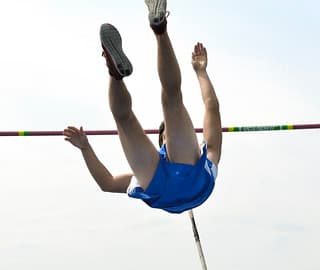
2014 NYSAIS Outdoor Track and Field Championships | May 21, … | Flickr View original
Is this image relevant?
Indoor Track and Field - Jim Mitchell Invitational at the … | Flickr View original
Is this image relevant?
2014 NYSAIS Outdoor Track and Field Championships | May 21, … | Flickr View original
Is this image relevant?
Precision and Consistency in Individual Sports
- Individual sports (gymnastics, diving, track and field) require precise execution of predetermined motor patterns
- Emphasize consistency and reproducibility of movements
- Examples: Gymnasts performing a specific routine on the balance beam, divers executing a particular dive with minimal variation
- Prioritize closed-loop control, relying on internal feedback and proprioception for movement execution and correction
- Utilize sensory information from the body to make fine adjustments and maintain proper form
- Example: A high jumper using proprioceptive feedback to adjust their approach and takeoff
Adaptability and Flexibility in Team Sports
- Team sports (basketball, soccer, hockey) involve dynamic and unpredictable environments
- Require adaptability and flexibility in motor control strategies to respond to changing situations
- Examples: A basketball player adjusting their shot release based on the defender's position, a soccer player changing direction to evade an opponent
- Heavily utilize open-loop control, relying on external cues and anticipation to adapt motor strategies
- Respond to opponents' and teammates' actions in real-time
- Examples: A quarterback anticipating a receiver's route and throwing the ball before they make their cut, a hockey player anticipating a pass and positioning themselves accordingly
- Require coordination and synchronization of multiple players' actions
- Involve complex interactions and timing between teammates
- Examples: A synchronized swimming team performing a coordinated routine, a doubles tennis team executing a well-timed serve and volley combination
Perceptual-Cognitive Skills in Team Sports
- Team sports involve a higher degree of perceptual-cognitive skills compared to individual sports
- Require skills such as decision-making, pattern recognition, and situational awareness
- Examples: A point guard in basketball reading the defense and making a split-second decision to pass or shoot, a midfielder in soccer recognizing an opportunity to launch a counterattack
- Individual sports emphasize the mastery of specific motor skills
- Focus on perfecting techniques and movements through repetition and practice
- Examples: A golfer honing their swing mechanics, a figure skater perfecting a specific jump or spin
Anticipation and Decision-Making in Sports
Role of Anticipation in Fast-Paced Sports
- Anticipation involves predicting future events or actions based on prior knowledge, experience, and perceptual cues
- Enables athletes to make proactive motor adjustments
- Examples: A tennis player anticipating the direction of an opponent's serve based on their toss and body position, a boxer anticipating an opponent's punch based on their shoulder and hip movement
- Crucial for reducing reaction time and increasing the efficiency of motor responses in fast-paced sports (tennis, boxing, ice hockey)
- Allows athletes to initiate movements earlier and respond more effectively
- Examples: A goalkeeper in ice hockey anticipating a shot and positioning themselves before the puck is released, a badminton player anticipating a smash and preparing their defensive stance
Perceptual Cues and Decision-Making
- Athletes use various perceptual cues to anticipate and make rapid decisions
- Utilize opponent's body language, movement patterns, and contextual information
- Examples: A baseball batter using the pitcher's arm angle and release point to anticipate the type and location of a pitch, a volleyball player using the setter's hand position to anticipate the direction of the set
- Effective decision-making requires the integration of sensory information, cognitive processing, and motor execution within a limited time frame
- Involves selecting the most appropriate motor response from multiple options under time pressure and dynamic conditions
- Examples: A running back in American football quickly deciding whether to cut inside or bounce outside based on the defensive formation and pursuit angles, a fencer deciding whether to attack or defend based on their opponent's stance and blade position
Expertise and Superior Anticipation and Decision-Making
- Expert athletes exhibit superior anticipation and decision-making skills
- Able to adapt motor strategies more effectively in fast-paced sports environments
- Examples: An experienced soccer goalkeeper accurately predicting the direction of a penalty kick based on subtle cues from the shooter's approach and body position, a skilled basketball player making a quick and accurate pass to an open teammate while under defensive pressure
- Expertise allows for faster and more accurate processing of relevant information
- Enables more efficient and effective motor responses
- Examples: A professional table tennis player quickly anticipating and reacting to an opponent's spin and placement, an elite martial artist instinctively countering an opponent's attack with a well-timed technique

Motor Control Adaptations for Skill Levels
Conscious Control and Feedback-Based Corrections in Novices
- Novice athletes rely more on conscious control and feedback-based corrections
- Leads to slower and less efficient motor execution
- Examples: A beginner golfer consciously thinking about each step of their swing, resulting in a choppy and inconsistent motion, a novice swimmer focusing on the timing of their breath and arm movements, leading to a less fluid stroke
- Novices require more attentional resources for movement execution
- Struggle to allocate attention to higher-order cognitive processes such as strategy and decision-making
- Examples: A novice tennis player concentrating on the mechanics of their serve, leaving little attention for anticipating their opponent's return, a beginner cyclist focusing on maintaining balance and pedaling technique, with limited capacity for tactical considerations
Automaticity and Implicit Motor Control in Experts
- As skill level increases, athletes transition from conscious control to more automatic and implicit motor control processes
- Allows for more efficient and consistent motor patterns
- Examples: An experienced archer executing a smooth and fluid draw and release without consciously thinking about each step, a skilled basketball player dribbling the ball with minimal visual attention, allowing them to survey the court and make decisions
- Expert athletes exhibit greater automaticity in motor execution
- Enables allocation of attentional resources to higher-order cognitive processes such as strategy and decision-making
- Examples: A professional soccer player instinctively controlling the ball while simultaneously assessing passing options and defensive positions, an elite gymnast effortlessly performing a complex routine while focusing on artistic expression and minor adjustments
Enhanced Perceptual-Cognitive Skills and Adaptability in Skilled Athletes
- Expertise in sports is associated with enhanced perceptual-cognitive skills
- Enables faster and more accurate anticipation and decision-making
- Examples: A skilled baseball batter quickly recognizing a pitcher's release point and ball rotation to predict the type and location of a pitch, an experienced volleyball player anticipating an opponent's attack based on their approach and arm swing
- Skilled athletes demonstrate more efficient and consistent motor patterns
- Exhibit reduced variability and increased adaptability to changing task demands
- Examples: A professional golfer maintaining a consistent swing plane and tempo across various lies and weather conditions, an elite sprinter efficiently adapting their stride pattern to compensate for fatigue or changes in track surface
- Motor control strategies of expert athletes are characterized by greater economy of movement
- Minimize energy expenditure and maximize performance efficiency
- Examples: A world-class marathon runner maintaining optimal stride length and cadence to conserve energy over the course of the race, a skilled weightlifter executing a clean and jerk with minimal extraneous movement, ensuring maximal force transfer to the barbell
Fatigue's Influence on Motor Control in Sports
Neuromuscular and Physiological Effects of Fatigue
- Fatigue, resulting from prolonged or intense physical activity, can impair motor control and performance across various sports disciplines
- Affects neuromuscular coordination, leading to decreased force production, reduced movement accuracy, and slower reaction times
- Examples: A fatigued basketball player experiencing a decrease in jump height and shooting accuracy late in the game, a tired soccer player having difficulty maintaining precise ball control and passing accuracy during the final minutes of a match
- Physiological factors such as dehydration, hyperthermia, and hypoxia can exacerbate the effects of fatigue on motor control and performance
- Contribute to further decrements in neuromuscular function and cognitive processing
- Examples: A dehydrated tennis player experiencing impaired concentration and decision-making during a long, hot match, a fatigued cyclist at high altitude struggling to maintain power output and coordination due to hypoxia
Fatigue-Induced Changes in Motor Control Strategies
- Fatigue-induced changes in motor control strategies may include increased reliance on feedback control, reduced movement efficiency, and altered muscle activation patterns
- Compensatory mechanisms to maintain performance despite fatigue
- Examples: A fatigued runner relying more on visual feedback to maintain balance and stability, leading to increased energy expenditure, a tired swimmer exhibiting altered stroke mechanics and reduced propulsive efficiency due to fatigue-induced changes in muscle activation patterns
- Endurance sports (marathon running, cycling) require athletes to maintain optimal motor control and performance despite the accumulation of fatigue over extended periods
- Necessitates pacing strategies and fatigue management techniques
- Examples: A marathon runner adjusting their pace and stride mechanics to conserve energy and maintain form in the later stages of the race, an ultra-distance cyclist employing various body positions and pedaling techniques to alleviate fatigue and maintain power output over long hours
Acute Effects of Fatigue in Strength and Power-Based Sports
- Strength and power-based sports (weightlifting, sprinting) are particularly susceptible to the acute effects of fatigue on motor control and explosive force production
- Fatigue can lead to technique breakdown and increased risk of injury
- Examples: A fatigued weightlifter struggling to maintain proper form and stability during a heavy clean and jerk attempt, a tired sprinter experiencing a decrease in stride frequency and power output in the final meters of a race
- Strategies to mitigate the impact of fatigue on motor control include proper training periodization, optimal nutrition and hydration, and the use of recovery techniques
- Aim to enhance fatigue resistance and promote optimal performance
- Examples: A strength athlete following a periodized training program that incorporates adequate rest and recovery between high-intensity sessions, a team sport athlete adhering to a well-designed hydration and nutrition plan to maintain electrolyte balance and energy levels during competition, a swimmer using active recovery techniques such as low-intensity swimming and stretching to promote muscle relaxation and reduce fatigue between races
See Fiveable more often in Google
Mark Fiveable as a preferred source and Google is more likely to show you our guides in Top Stories, with a "preferred" badge in AI Mode and AI Overviews.