8.1 Elements of Drama

🥏English 11 Unit 8 Review
8.1 Elements of Drama
Drama is a form of literature designed to be performed on stage. Unlike novels or poems, it relies on live actors, spoken dialogue, and visual elements to tell a story. Understanding its core elements helps you analyze any play you read or watch, from ancient Greek tragedies to modern works.
This section covers the building blocks of drama: plot, characters, dialogue, setting, theme, and stage directions. You'll also learn how these elements work together and how playwrights structure their plots in both linear and non-linear ways.
Key Elements of Drama
Essential Components of Dramatic Works
Drama is literature written to be performed. A script typically contains two things: dialogue (what characters say) and stage directions (instructions for how the performance should look and sound).
Here are the core components:
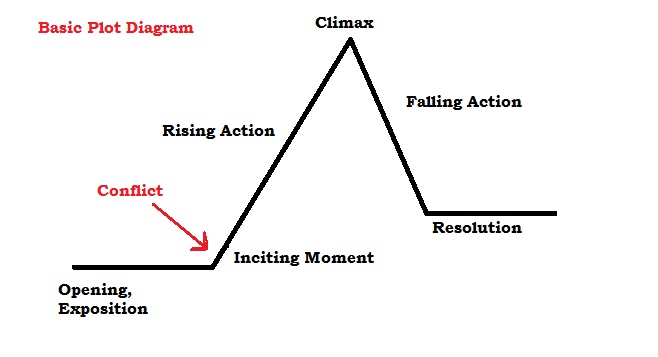
- Plot is the sequence of events in the play. Most plots follow a structure called Freytag's Pyramid: exposition, rising action, climax, falling action, and resolution. The exposition introduces the situation, the rising action builds tension through complications, the climax is the turning point, and the falling action and resolution bring the story to its conclusion.
- Characters are the people portrayed in the play. The protagonist is the central character, the antagonist opposes them, and supporting characters fill out the world of the story. Each character has distinct personality traits, motivations, and relationships that shape the action.
- Setting is the time and place where the drama occurs. It can be historical, contemporary, or entirely fictional. Setting does more than provide a backdrop; it influences how characters behave and shapes the mood of the entire work.
- Dialogue is the spoken conversation between characters. In drama, dialogue does heavy lifting. It advances the plot, reveals who characters really are, and communicates themes to the audience. A character's word choice, rhythm, and tone reflect their background, personality, and emotional state. Dialogue can create conflict, build tension, and deliver exposition all at once.
Central Ideas and Meanings in Drama
Theme is the central idea or underlying meaning of a play. Themes explore universal human experiences or social issues, and they emerge through characters' actions, dialogue, and development rather than being stated outright. Common themes in drama include love, power, justice, identity, and mortality. In Shakespeare's Romeo and Juliet, for instance, the theme isn't simply "love is good." It's that impulsive passion, combined with long-standing hatred, can lead to devastating consequences.
Two related literary devices deepen a play's thematic impact:
- Symbolism uses concrete objects, characters, or actions to represent abstract ideas. In Tennessee Williams' The Glass Menagerie, Laura's glass animal collection represents the fragility of her inner world and the illusions the family clings to. When the glass unicorn breaks, it signals a shift in her character.
- Motifs are recurring elements (images, symbols, phrases, or ideas) that reinforce central themes. The repeated appearance of ghosts in Shakespeare's Hamlet reinforces how the past continues to haunt and influence the present, driving Hamlet's obsession with his father's murder.
Elements of Dramatic Cohesion

Interaction of Dramatic Components
Plot, characters, setting, dialogue, and theme don't exist in isolation. They interact constantly, and strong drama depends on that interaction.
- The plot provides the structural framework, but the characters' actions and decisions are what actually drive events forward. In Arthur Miller's Death of a Salesman, the plot is propelled by Willy Loman's desperate, failing struggle to achieve the American Dream. His choices create the conflict, not the other way around.
- The setting shapes character behavior and contributes to mood. The oppressive heat in Tennessee Williams' A Streetcar Named Desire mirrors the characters' internal tensions and mounting conflicts. You can't separate the story from the sweltering New Orleans atmosphere.
- Dialogue ties everything together by revealing character traits and motivations, advancing the plot, and conveying key information to the audience. Pay attention to how characters speak, not just what they say.
Creating a Unified Dramatic Experience
Several techniques help playwrights build a cohesive, engaging experience:
- Foreshadowing creates suspense by hinting at future events. The witches' prophecies in the opening scene of Shakespeare's Macbeth foreshadow the title character's ambition and eventual downfall. When you encounter these hints on a first read, they might seem minor, but they pay off later.
- Pacing keeps the audience engaged. The careful build of rising action toward a climax, followed by resolution, creates a satisfying dramatic arc. In Lorraine Hansberry's A Raisin in the Sun, tension accumulates through the family's arguments about money and dreams, and the climax arrives when the Younger family decides to move into a predominantly white neighborhood despite facing discrimination.
- Character development adds emotional weight. Characters who grow, change, or reveal tragic flaws make the themes feel real. Nora in Henrik Ibsen's A Doll's House undergoes a profound transformation as she recognizes and ultimately rejects the oppressive gender roles of her society. By the final scene, she's a fundamentally different person than she was at the start.
- Dramatic irony occurs when the audience knows something the characters don't. This can generate tension, humor, or deep empathy depending on context. In Sophocles' Oedipus Rex, the audience knows Oedipus' true identity long before he discovers it himself, which makes every step he takes toward the truth feel increasingly painful to watch.
Stage Directions for Performance
Guiding Actors and Directors
Stage directions are the written instructions in a script that describe characters' actions, movements, emotions, and the technical aspects of production. They're the playwright's way of communicating everything that isn't dialogue.
For actors, stage directions clarify how to deliver lines and move on stage. A direction might say a character speaks "angrily" or "with quiet desperation," shaping the emotional tone of a scene. Without these cues, actors would have to guess at the playwright's intent.
For directors, stage directions inform key production decisions:
- Blocking is the planned movement and positioning of actors on stage. Where characters stand in relation to each other can convey power dynamics, intimacy, or isolation. A character standing alone at the edge of the stage while others cluster together tells you something without a single word being spoken.
- Set design, including props and furniture, creates a visual representation of the play's world. A cluttered, dimly lit set might suggest a character's inner turmoil or a feeling of entrapment.
Conveying Essential Information
Stage directions also communicate details that shape the audience's experience beyond what actors say:
- Setting details establish time, place, and atmosphere. A direction describing "a cold, gray morning in a dilapidated apartment" immediately sets a tone of bleakness.
- Sound effects and music create atmosphere, underscore emotional moments, or signal shifts in the story. A ticking clock might suggest urgency or the relentless passage of time.
- Lighting cues create visual contrast and convey mood changes. A sudden shift to red lighting could signal a character's rage or a violent turn in the plot.
- Entrances and exits reveal character relationships and emotional states. There's a big difference between a character who "storms off stage" and one who "hesitates before reluctantly exiting." When you're reading a play, don't skip over these details. They carry as much meaning as the dialogue itself.
Linear vs Non-linear Plots
Types of Linear Plots
Linear plots follow events in chronological order, with each scene building on the previous one through cause and effect. This is the most straightforward narrative structure.
- Freytag's Pyramid is the traditional linear model: exposition → rising action → climax → falling action → resolution. Shakespeare's Romeo and Juliet follows this pattern, with the lovers' tragic fate unfolding in a clear cause-and-effect chain.
- Episodic structure is a variation where a series of loosely connected scenes are linked by a common theme or character rather than a strict cause-and-effect chain. Thornton Wilder's Our Town uses this approach, presenting scenes from everyday life in a small New England town to explore larger ideas about human existence. The scenes don't build toward one big climax the way Freytag's Pyramid would suggest; instead, meaning accumulates across the episodes.
Non-linear Plot Techniques
Non-linear plots break from chronological order to create more complex narratives. These techniques give playwrights flexibility in how they reveal information to the audience.
- Flashbacks reveal events from before the present moment of the story, often providing context for a character's current behavior. Death of a Salesman uses flashbacks extensively to show how Willy Loman's past shaped his present struggles. The audience pieces together his story from two timelines at once.
- Flash-forwards show events that will happen later, building anticipation or foreshadowing outcomes.
- Parallel storylines involve multiple plot threads happening simultaneously, often intersecting at key moments. Tom Stoppard's Arcadia features two storylines set in different time periods that gradually converge to reveal a shared mystery.
- Circular structure ends the story in a situation similar to where it began, emphasizing cycles or the persistence of certain conditions. Samuel Beckett's Waiting for Godot uses this structure: each act ends with the characters in essentially the same position, reinforcing the play's themes of futility and existential uncertainty.
- In medias res (Latin for "in the middle of things") starts the plot in the middle of the action, with earlier events revealed gradually through flashbacks or exposition. Henrik Ibsen's Ghosts opens this way, with the characters' past actions and secrets slowly surfacing throughout the play to create mounting tension. This technique hooks the audience immediately because you're dropped into a situation that's already in motion.
See Fiveable more often in Google
Mark Fiveable as a preferred source and Google is more likely to show you our guides in Top Stories, with a "preferred" badge in AI Mode and AI Overviews.