5.3 Cause and Effect Essays

🥏English 11 Unit 5 Review
5.3 Cause and Effect Essays
🥏 English 11
Cause and effect essays explore how events or situations are connected. They break down complex relationships, showing how one thing leads to another. This type of writing sharpens your ability to think critically about why things happen and what results from them.
In these essays, you'll learn to identify causes and effects, create strong thesis statements, and support your claims with evidence. The goal is connecting the dots and explaining relationships clearly enough that your reader walks away understanding the "why" behind a topic.
Purpose and Structure of Cause and Effect Essays
Analyzing Causal Relationships
The core job of a cause and effect essay is to analyze and explain the causal relationships between events, situations, or phenomena. You're not just describing what happened. You're explaining why it happened or what it led to.
Your introduction should provide background information on the topic to engage the reader's interest, then narrow down to a clear, focused thesis statement that outlines the specific causal relationship you'll analyze.
Essay Structure
These essays follow the standard structure: introduction, body paragraphs, and conclusion. What makes them distinct is how you organize the body.
- Each body paragraph focuses on a specific cause or effect. Within that paragraph, you provide evidence, examples, and analysis to support the causal claim from your thesis.
- The conclusion summarizes your main points, restates the thesis in fresh language, and offers a final insight on the significance of the causal relationship you analyzed. Don't just repeat yourself here; leave the reader with something to think about.
Identifying Causal Relationships
Types of Causal Relationships
Before you start writing, you need to map out the relationship you're analyzing. A cause is the reason or trigger for an event. An effect is the result or consequence.
These relationships aren't always one-to-one. Here are the patterns you should recognize:
- One cause, multiple effects: A single event can produce several outcomes. For example, a factory closing (cause) could lead to job losses, decreased local tax revenue, and population decline in a town (multiple effects).
- Multiple causes, one effect: Several factors can contribute to a single outcome. Rising tuition costs, student debt anxiety, and increased availability of online alternatives could all contribute to declining college enrollment (single effect).
- Causal chains: A series of linked events where each effect becomes the cause of the next. A drought reduces crop yields, which raises food prices, which increases household spending, which reduces consumer spending in other areas.
You should also distinguish between immediate causes/effects (closely related in time) and remote causes/effects (further removed, often involving intervening factors). A student failing a test has an immediate cause (didn't study) but may also have remote causes (working two jobs, lack of access to tutoring).
Causal Reasoning
Strong cause and effect essays depend on careful reasoning. One of the most common mistakes is confusing correlation with causation.
- Correlation means two things happen together or follow a pattern, but one doesn't necessarily cause the other. Ice cream sales and drowning rates both rise in summer, but ice cream doesn't cause drowning. The shared cause is hot weather.
- Causation means one event directly produces another.
When you analyze complex topics, expect multiple causes and effects interacting with each other. Your job is to untangle those threads and present them clearly, avoiding oversimplified or faulty conclusions.
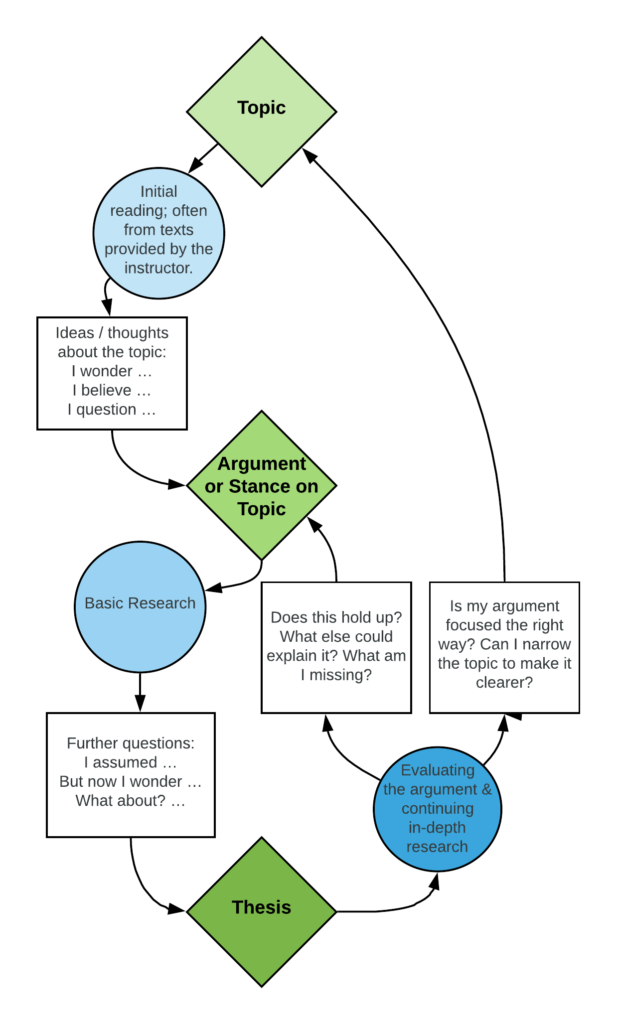
Thesis Statements for Cause and Effect Essays
Characteristics of Effective Thesis Statements
Your thesis is the backbone of the essay. A strong cause and effect thesis does four things:
- States the main causal relationship the essay will analyze
- Establishes the direction of analysis (cause-to-effect or effect-to-cause)
- Is specific and arguable, not just a statement of obvious fact
- Is complex enough to sustain a full essay with evidence and analysis
A weak thesis: "Social media affects teenagers." That's too vague. Affects them how? In what way?
A stronger thesis: "Excessive social media use among teenagers contributes to increased anxiety, disrupted sleep patterns, and declining academic performance." This is specific, arguable, and gives you three body paragraphs to develop.
Placement and Structure
Place your thesis at the end of the introduction, where it serves as a roadmap for the rest of the essay. It should set up the main points you'll discuss in your body paragraphs.
There are two common structures:
- Cause-to-effect thesis: State the cause first, then explain the resulting effects. "The rise of remote work has led to suburban population growth, increased demand for home office technology, and a shift in commercial real estate markets."
- Effect-to-cause thesis: Begin with the effect, then trace it back to underlying causes. "The sharp decline in bee populations can be traced to pesticide use, habitat loss, and climate change."
Supporting Causal Claims
Transitions
Transitions are what make your essay flow logically instead of reading like a disconnected list. In cause and effect writing, you'll rely on two main types:
- Causal transitions signal the cause-effect relationship: because, since, as a result, consequently, therefore, thus, due to, this leads to
- Chronological transitions show the sequence of events in a causal chain: first, next, then, subsequently, finally
Use these purposefully. Sprinkling in a "therefore" or "as a result" at the right moment helps your reader follow the logic of your argument.
Evidence and Analysis
Your causal claims are only as strong as the evidence behind them. Every claim needs support that is relevant, credible, and sufficient.
Types of evidence you can use:
- Facts and statistics (data from reliable sources that demonstrate the relationship)
- Examples, including references to scientific studies or historical events
- Expert opinions from credible authorities on the topic
- Personal anecdotes, used sparingly and only when they genuinely illustrate the point
Evidence alone isn't enough. After presenting a piece of evidence, you need to analyze it. Explain how it supports your specific causal claim and how it fits into your overall argument. Think of it as a two-step process: present the evidence, then tell the reader what it proves and why it matters. If you skip the analysis, you're just listing facts without making your case.
See Fiveable more often in Google
Mark Fiveable as a preferred source and Google is more likely to show you our guides in Top Stories, with a "preferred" badge in AI Mode and AI Overviews.