1.1 Introduction to Literary Analysis

🥏English 11 Unit 1 Review
1.1 Introduction to Literary Analysis
🥏 English 11
Purpose and Goals of Literary Analysis
Literary analysis is the practice of examining a literary work's elements to understand how they create meaning. Rather than just reading for plot, you're asking how and why a text works the way it does. This skill forms the backbone of English 11, where you'll write essays that make arguments about literature and defend them with evidence from the text.
Examining and Interpreting Literary Elements
The core of literary analysis is figuring out how the parts of a text work together to produce meaning and emotional impact. These parts are called formal elements, and they include:
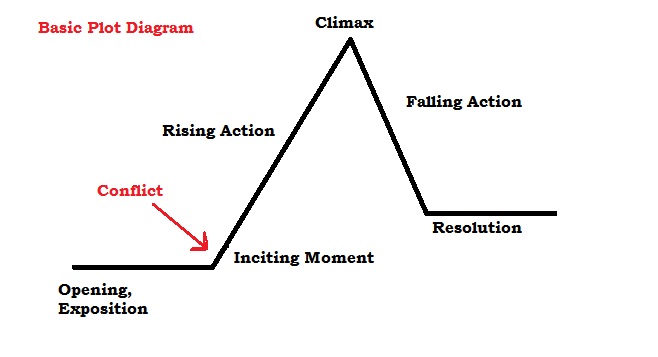
- Plot — the sequence of events and how they're structured
- Character — who the people in the story are and how they change
- Setting — where and when the story takes place
- Point of view — who's telling the story and what they can (or can't) see
- Figurative language — metaphors, similes, and other non-literal uses of language
- Symbolism — objects, characters, or events that represent something beyond themselves
Your job in literary analysis is to show how these elements connect. A symbol only matters because of what it does within the plot, for a specific character, in a specific setting. The elements don't exist in isolation.
Developing Arguments and Critical Thinking Skills
A literary analysis essay isn't a book report. You're presenting an argument about a text and using textual evidence to persuade your reader that your interpretation holds up. This means your essay needs a debatable claim, not just a summary of what happened.
Through this process, you sharpen your critical thinking: you learn to read carefully, weigh evidence, and construct logical arguments. These skills transfer well beyond English class, but within it, they also help you appreciate the craft behind great writing and engage with the universal themes that literature explores.
Components of a Literary Analysis Essay
Introduction and Thesis Statement
Your introduction does three things:
- Provides relevant background on the text and author (just enough to orient your reader).
- Contextualizes the specific aspect of the work you'll analyze.
- Presents a clear thesis statement.
The thesis is the most important sentence in your essay. It should be a concise, arguable claim that tells the reader exactly what you'll prove. A strong thesis doesn't just state a topic ("The novel uses symbolism"); it makes a specific argument ("The recurring image of the green light in The Great Gatsby represents Gatsby's idealized vision of the future, which Fitzgerald ultimately reveals as hollow").
Body Paragraphs and Evidence
Each body paragraph should focus on one main idea that supports your thesis. A solid body paragraph follows this structure:
- Topic sentence — states the paragraph's central claim and connects it to the thesis.
- Evidence — specific details from the text that support the claim.
- Analysis — your explanation of how the evidence proves your point.
When presenting evidence, you have three tools:
- Summarizing condenses a longer passage or sequence of events into a brief overview. Use this when you need to cover a lot of ground quickly.
- Paraphrasing restates a specific detail or passage in your own words. Use this when the idea matters more than the exact wording.
- Quoting uses the author's exact language. Use this when the specific word choice is important to your argument.
A common mistake is dropping in a quote and moving on. Always follow evidence with your own interpretation that explains why it matters.
Conclusion and Implications
Your conclusion should do more than repeat your thesis word for word. Restate your central argument in light of everything you've analyzed, then address the larger implications: What does your interpretation reveal about the text's themes? How does it connect to broader social, historical, or philosophical questions?
Avoid introducing brand-new ideas or evidence in the conclusion. The goal is closure, not a surprise twist.
Close Reading and Textual Evidence
Examining Language and Literary Devices
Close reading means slowing down to examine the specific choices a writer makes at the sentence and word level. Instead of reading for "what happens," you're reading for "how it's written." Pay attention to:
- Word choice (diction) — Why did the author pick this word instead of a synonym? What connotations does it carry?
- Tone — What attitude does the narrator or speaker take toward the subject?
- Syntax and sentence structure — Are the sentences long and flowing, or short and blunt? What effect does that create?
- Literary devices — metaphor, simile, personification, irony, foreshadowing, and others
- Motifs — recurring images, ideas, or symbols that develop a theme over the course of the work
Focusing on the text itself, rather than relying heavily on the author's biography or historical background, keeps your analysis grounded in what you can actually prove with evidence from the page.

Balancing Evidence and Interpretation
The strongest literary analysis essays maintain a balance between showing (evidence) and telling (interpretation). Evidence alone doesn't make an argument; you have to explain what it means.
- Select evidence carefully. Every quote or detail you include should directly support the specific claim you're making in that paragraph.
- Interpret thoroughly. After presenting evidence, analyze its significance. How does this passage illustrate your argument? What does the author's choice reveal about a character, theme, or conflict?
Think of it as a ratio: for every piece of evidence, you should have at least as much (if not more) of your own analysis explaining it.
Strategies for Critical Engagement
Active Reading and Annotation
Don't wait until you've finished reading to start analyzing. Annotate as you go by highlighting important passages, noting your reactions, and commenting on details that seem significant. This turns reading into an active conversation with the text rather than a passive experience.
Ask yourself critical questions while reading:
- Why did this character make that choice?
- Why did the author structure the scene this way?
- What might this image or detail symbolize?
- How does this passage connect to patterns elsewhere in the text?
These questions generate the raw material for your analysis. You won't use every observation, but the habit of questioning builds stronger interpretations.
Organizing and Contextualizing
Before drafting, organize your ideas using an outline or graphic organizer. Charting the relationships between literary elements can reveal patterns you might otherwise miss.
- Character maps show how characters relate to and influence each other.
- Timelines track the sequence of events and identify structural choices like flashbacks.
- Venn diagrams compare characters, themes, or settings to highlight contrasts and similarities.
Historical, cultural, and biographical context can also inform your reading. Knowing when and where a text was written helps you understand the world it's responding to. That said, context should support your analysis of the text, not replace it.
Comparative Analysis and Theoretical Lenses
Comparing a literary work with other texts can sharpen your understanding of what makes it distinctive. For example, comparing two works by the same author can reveal recurring themes or an evolving style, while contrasting a novel with a film adaptation can highlight what's unique about literary storytelling.
You can also examine a text through established theoretical lenses, each of which foregrounds different questions:
- Feminist theory — How does the text portray gender roles and power dynamics between men and women?
- Psychoanalytical theory — What unconscious desires or internal conflicts drive the characters' behavior?
- Marxist theory — How does the text represent socioeconomic class, wealth, and ideology?
- Post-colonial theory — How does the text address colonialism, cultural identity, or the experience of marginalized peoples?
You don't need to master these theories right now. Just know that they exist as tools for generating fresh angles on a text when you're stuck or want to push your analysis further.
See Fiveable more often in Google
Mark Fiveable as a preferred source and Google is more likely to show you our guides in Top Stories, with a "preferred" badge in AI Mode and AI Overviews.