AP Human Geography Unit 2 Cheatsheet: Population and Migration Patterns and Processes

AP Human Geography Unit 2 Cheatsheet: Population and Migration Patterns and Processes

Start with the first 3 sections of the Unit 2 one-page cheatsheet below. The full sheet is a PDF you can print.

Population Distribution & Density Methods

Physical factors: climate, landforms, water bodies

Human factors: culture, economics, history, politics

Scale matters: factors vary by local, regional, or global analysis

Three density calculation methods:

  • Arithmetic: total population ÷ total land area (most common, simplest)
  • Physiological: population ÷ arable land only (shows pressure on farmable land)
  • Agricultural density: number of farmers ÷ arable land (indicates the level of farming intensity and can help compare agricultural efficiency)

Key insight: Method chosen reveals different information about land pressure and resource strain.
Aging Populations & Consequences

Causes: low birth rates + high life expectancy = aging population

Dependency ratio: (young + old dependents) ÷ working-age population

  • High ratio = more non-workers per worker
  • Strains pensions, health care, social services

Consequences:

  • Economic: labor shortages, pension/health-care costs, reduced consumer demand
  • Social: isolation, caregiver burden, intergenerational tension
  • Political: policy shifts toward elderly, immigration debates

Distribution, Density & Environment

Effects on society: population distribution and density affect political, economic, and social processes—especially service provision (medical care, education, infrastructure).

Effects on environment: carrying capacity = maximum population an environment can sustain.

  • High density → resource depletion, pollution, waste management strain
  • Low density → underutilized infrastructure, sprawl
  • Uneven distribution → regional inequality in resource access

Test focus: link density patterns to real-world service gaps and environmental stress.

The rest of the Unit 2 sheet

6 more sections are on the one-page PDF:

  • Population Composition & Pyramids

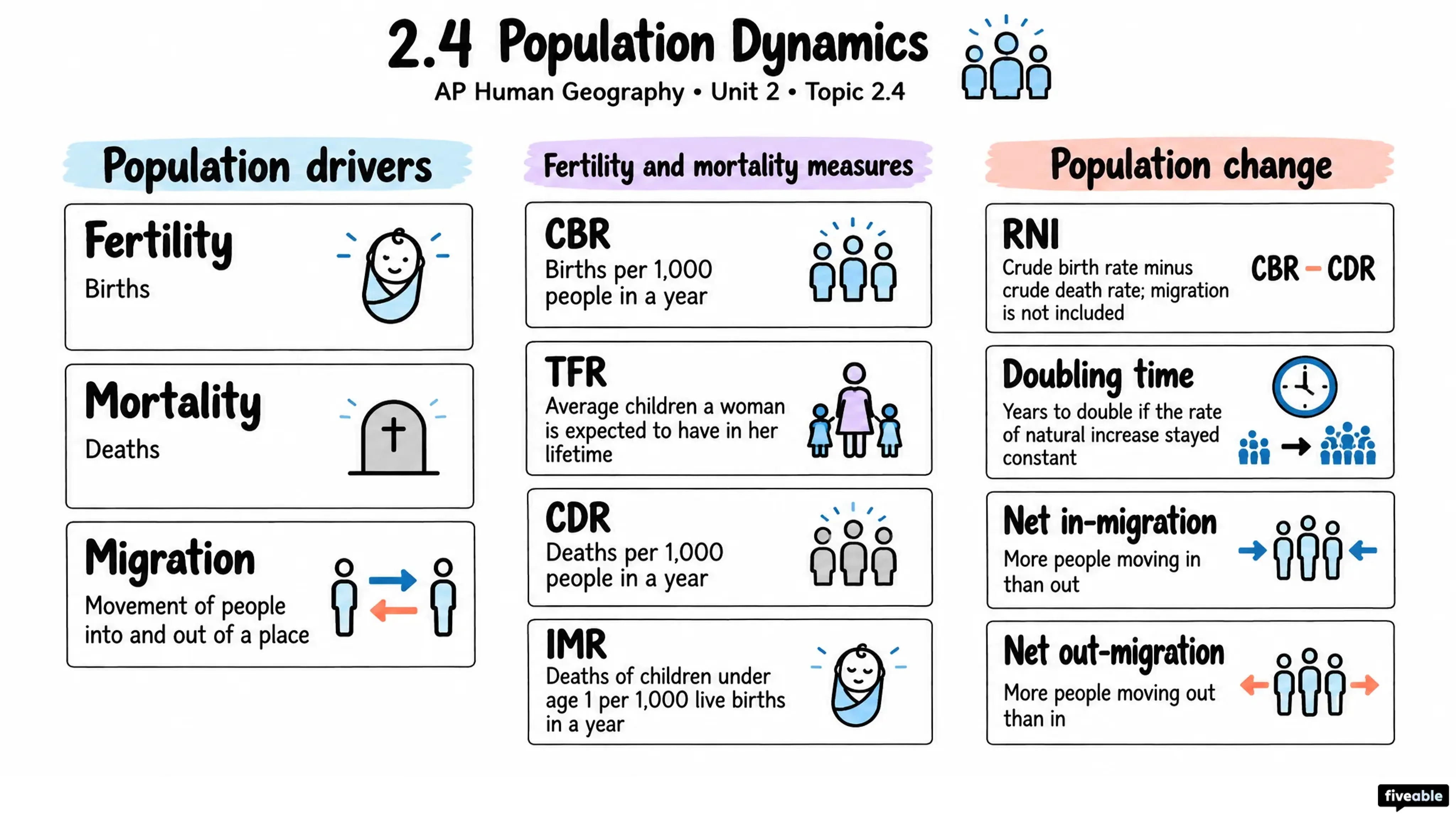
  • Population Dynamics: Growth & Decline

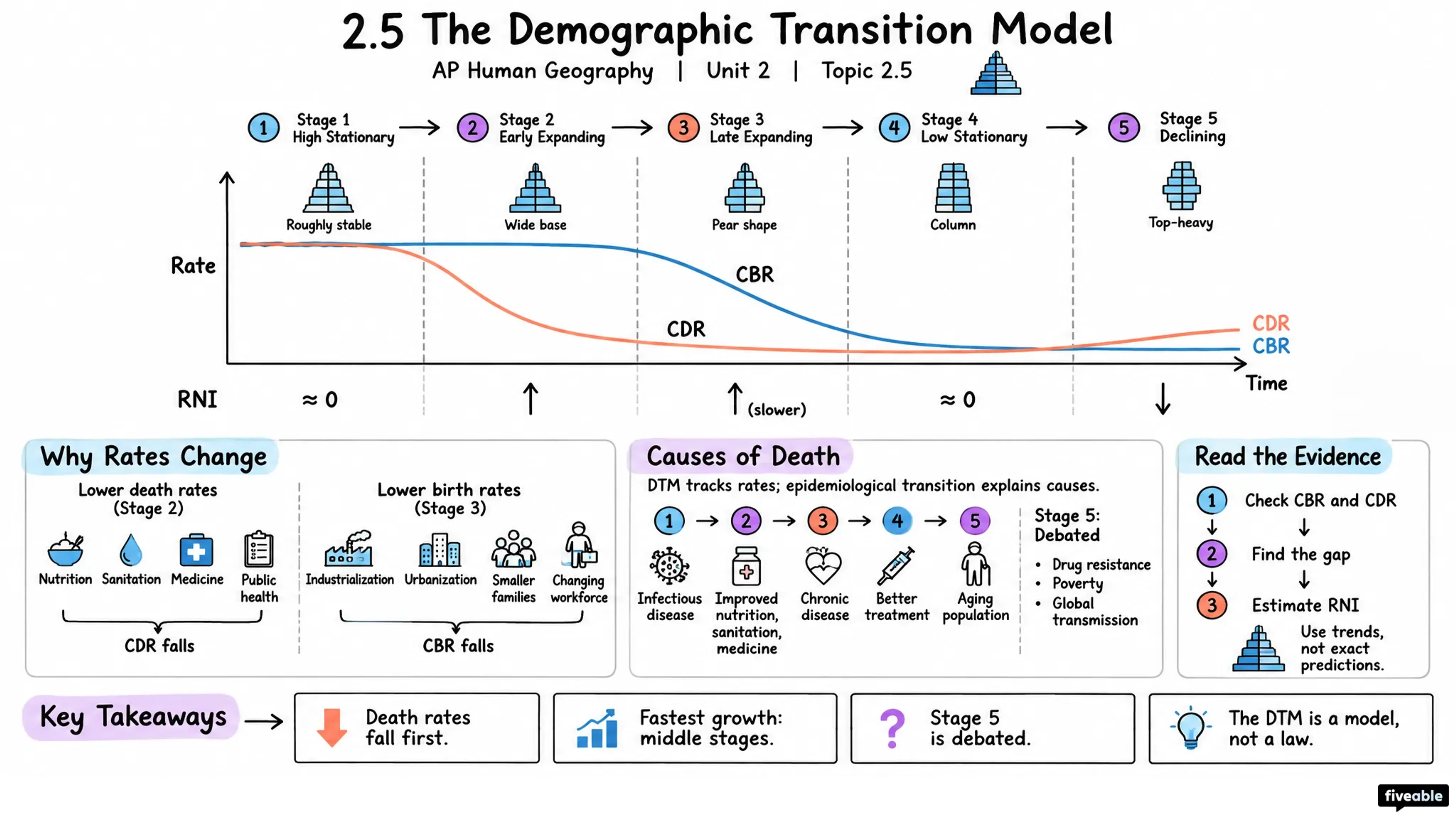
  • Demographic Transition Model (DTM)

  • Malthusian Theory & Critiques

  • Migration: Types & Causes

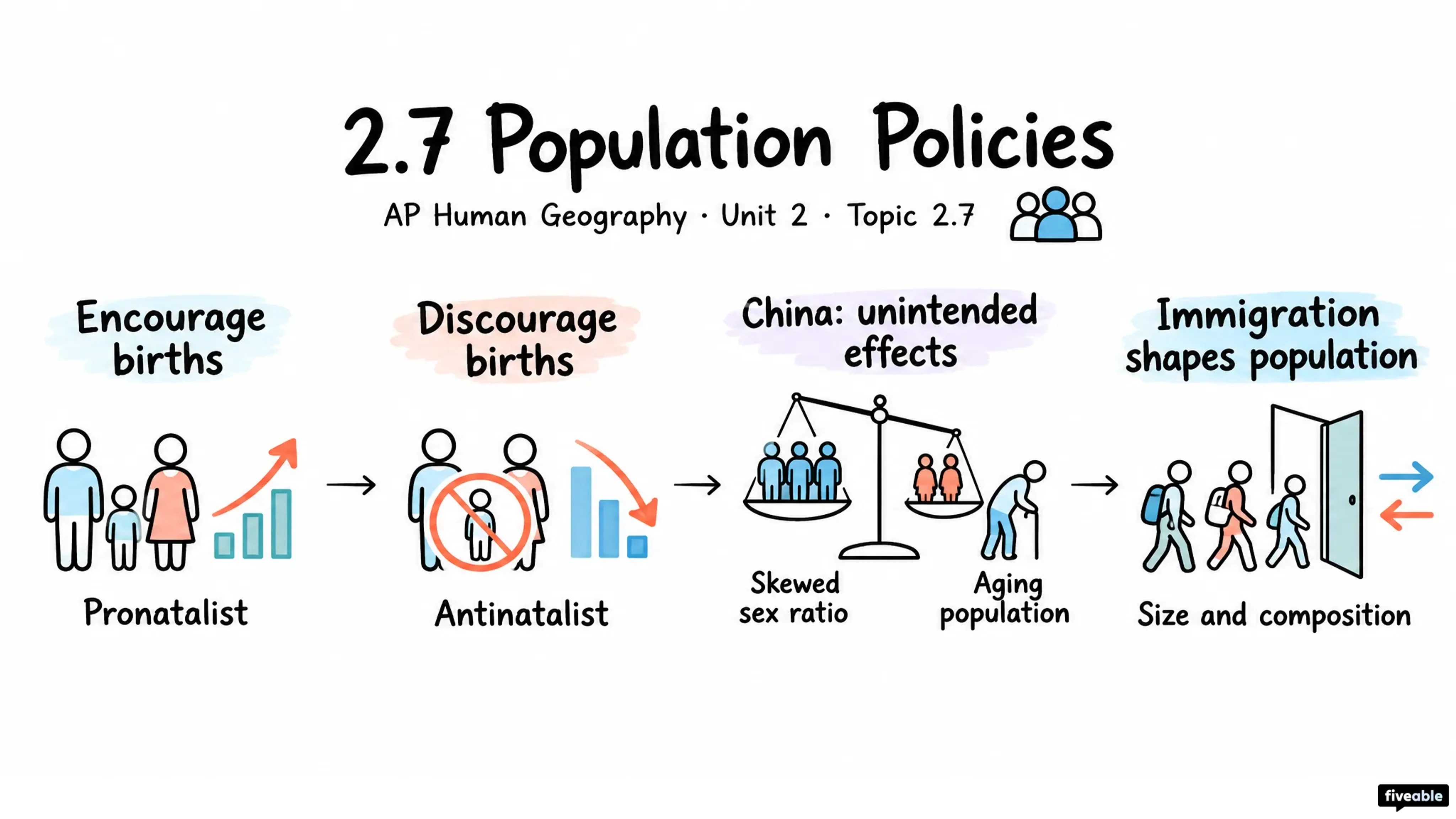
  • Population Policies & Women's Roles

Made by Fiveable

Text-Based Cheatsheet

Unit 2: Population and Migration Patterns and Processes on one page, aligned to the 2026-2027 course. Made and checked by the Fiveable Content Team.

Or get the whole course

Made by you

Visual Cheatsheets

Pick a Unit 2 topic and a format: flowchart, comparison chart, vocab sheet, Cornell notes and more. Ready in about a minute.

Printable PDF · from the Fiveable shop

AP Human Geography Unit 2 Cheatsheet

1 page · Population and Migration Patterns and Processes · PDF

Visual Cheatsheets

One topic, the format you pick, ready in about a minute

Format

Topic

Takes 30–60 seconds

Preview: Standard

Unit 2: Population and Migration, topic by topic

Each topic has a full study guide. See the whole unit.