
Definition of analogical reasoning
Analogical reasoning is the process of solving a new problem or understanding a new concept by drawing parallels to something you already know. You take a familiar situation, notice how its parts relate to each other, and then map those relationships onto the unfamiliar situation to generate insights.
In math, this comes up constantly. When you encounter a problem that feels impossible, often the best move is to ask: where have I seen something like this before? That question is analogical reasoning at work. It helps you transfer knowledge between concrete and abstract domains, and it's one of the main engines behind creative problem-solving.
Components of analogies
Source domain
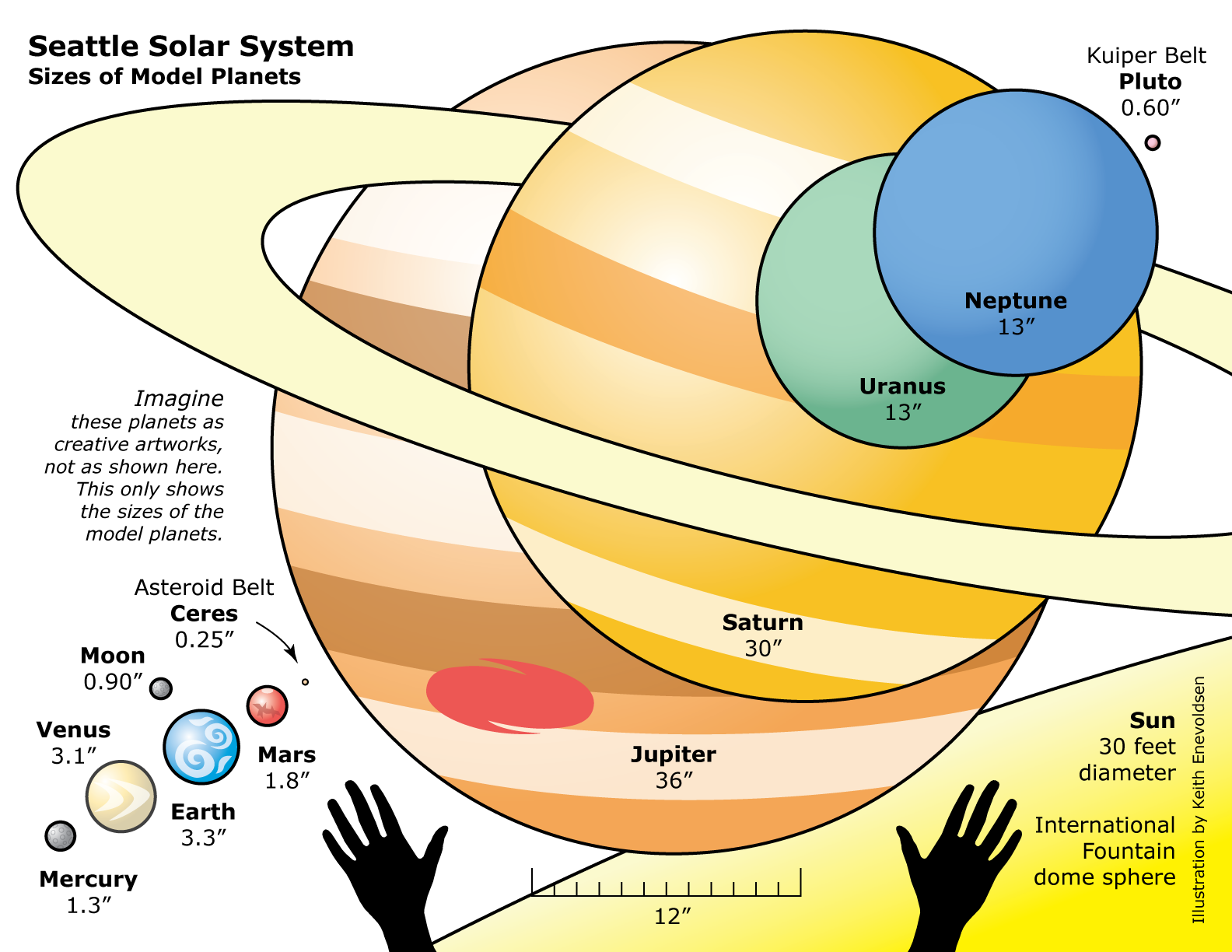
The source domain is the familiar concept you already understand well. It's your reference point. For example, the solar system is a well-known structure with clear relationships (planets orbiting a central sun), so it can serve as a source domain when explaining something less familiar.
Target domain
The target domain is the new or unfamiliar concept you're trying to understand. It's what you're investigating. In the classic example, atomic structure is the target domain: you map the idea of "planets orbiting the sun" onto "electrons orbiting the nucleus" to build initial understanding.
Mapping process
Mapping is where the real work happens. You identify which elements in the source correspond to which elements in the target, then check whether the relationships (not just the surface features) carry over. This step determines whether your analogy actually produces useful insights or just a superficial comparison.
- Identify corresponding elements between the two domains
- Look for structural similarities in how those elements relate
- Transfer relevant information from source to target
- Check that the transferred information makes sense in the new context
Types of analogies
Structural analogies
These focus on how things are organized rather than what they look like on the surface. You're comparing the underlying architecture of two systems. For instance, comparing DNA's double helix to a zipper highlights the structural relationship of interlocking complementary parts, which helps you understand base pairing.
Functional analogies
These compare how things work or what purpose they serve. Describing the heart as a pump is a functional analogy: both move fluid through a system using pressure. These are especially useful when you need to understand a mechanism or design a solution.
Visual analogies
These use spatial or visual representations to make abstract ideas concrete. A Möbius strip, for example, serves as a visual analogy for a surface with only one side, making a counterintuitive topological concept something you can actually hold and examine.
Steps in analogical reasoning
-
Problem identification. Clearly define what you're trying to understand or solve. Pin down the key features and relationships in the target domain, and figure out exactly which aspects need explanation.
-
Source retrieval. Search your memory (or external resources) for situations that share structural similarities with your problem. Consider multiple candidates and evaluate which source domain is the best fit.
-
Mapping between domains. Establish specific correspondences between elements in the source and target. Focus on shared relationships and structural parallels, not just surface-level resemblance.
-
Inference generation. Use the mapping to transfer knowledge from the source to the target. Generate hypotheses, potential solutions, or new questions based on what the analogy suggests.
-
Evaluation of inferences. Test whether the inferences actually hold up. Do the predictions match reality? If not, refine the analogy or look for a better source domain.
Strengths of analogical reasoning
Creative problem-solving. Analogies let you import strategies from completely different fields. A technique that works in geometry might inspire an approach in number theory. This cross-pollination is often where breakthroughs come from.
Knowledge transfer. When you encounter something unfamiliar, analogies let you bootstrap understanding from what you already know. This accelerates learning significantly because you're building on existing mental frameworks rather than starting from scratch.
Conceptual understanding. Abstract ideas become more graspable when you can anchor them to concrete examples. Analogies also improve retention because they give you multiple mental pathways to the same concept.

Limitations of analogical reasoning
False analogies
Not every comparison is valid. Two things can look similar on the surface while being fundamentally different underneath. If you compare the economy to a household budget, for example, you'll miss crucial differences (like the ability to print currency). False analogies can lead to confident but wrong conclusions.
Oversimplification
Every analogy breaks down at some point. The danger is forgetting where it breaks down. The "electrons orbit like planets" analogy, for instance, completely misses quantum mechanical behavior. You need to stay aware of what the analogy doesn't capture.
Bias in source selection
People tend to reach for the most familiar or recent analogy rather than the most appropriate one. This can narrow your thinking. Deliberately considering multiple source domains before committing to one helps counteract this tendency.
Applications in mathematics
Geometric proofs
Visual analogies can make abstract geometric relationships tangible. You might use a known theorem about triangles to prove something about a more complex polygon by seeing the structural parallel. Simpler shapes often serve as analogies for understanding properties of more complex ones.
Abstract algebra concepts
Analogies between different algebraic structures are central to abstract algebra. If you understand how addition works in the integers, you can use that as a source domain for understanding group operations more generally. Concepts like isomorphisms (structure-preserving maps between groups) are themselves formalized analogies: they say "these two structures are essentially the same."
Number theory patterns
Recognizing that one number sequence behaves like another can lead to conjectures and proof strategies. For example, noticing that prime distribution patterns in the integers have analogues in polynomial rings over finite fields has been a productive source of mathematical insight.
Cognitive processes involved
Pattern recognition is the foundation. You need to spot recurring structures across different contexts, which involves both deliberate analysis and intuitive "that reminds me of..." moments.
Relational thinking keeps you focused on how elements interact rather than what they look like individually. This is what separates a useful structural analogy from a misleading surface comparison.
Abstract reasoning lets you work with relationships that don't have concrete representations. In mathematics especially, you're often mapping between two abstract domains, which requires comfort with manipulating ideas purely at the level of structure.
Analogical reasoning vs. deductive reasoning
These two modes of thinking serve different roles and work best together:
- Analogical reasoning explores similarities between domains and generates hypotheses. It's how you come up with ideas and conjectures.
- Deductive reasoning follows logical steps from premises to conclusions. It's how you prove those conjectures are true.
In practice, analogical reasoning often comes first. You notice that a new problem resembles one you've solved before, form a conjecture based on that resemblance, and then use deductive reasoning to verify (or disprove) it rigorously. Neither method replaces the other.
Enhancing analogical reasoning skills
Practice with diverse problems
The broader your experience, the richer your library of potential source domains. Work through problems across different areas of math, try puzzles that require lateral thinking, and deliberately practice asking "what does this remind me of?" when facing new material.
Metacognitive strategies
Pay attention to your own reasoning process. After forming an analogy, ask yourself: Where does this comparison hold? Where does it break down? Am I choosing this source because it's genuinely the best fit, or just because it's the first thing that came to mind?
Interdisciplinary connections
Some of the most powerful mathematical analogies come from outside mathematics. Physics, biology, computer science, and even art can provide source domains that illuminate mathematical structures in unexpected ways. Building broad knowledge gives you more material to draw from.
Historical examples in mathematics
Archimedes' method of exhaustion
Archimedes approximated the areas and volumes of curved figures by comparing them to sequences of straight-lined figures (polygons) that got progressively closer to the curved shape. This analogy between curved and straight-lined geometry allowed him to calculate results that anticipated integral calculus by nearly two millennia.
Galois theory
Évariste Galois drew analogies between algebraic structures and geometric symmetries to understand why some polynomial equations can be solved by radicals and others cannot. His work connected the solvability of equations to the structure of their symmetry groups, founding what became modern abstract algebra.
Riemann's geometric analogies
Bernhard Riemann applied geometric intuition to problems in complex analysis, visualizing complex functions as surfaces (now called Riemann surfaces). This analogy between analysis and geometry led to breakthroughs in the theory of manifolds and reshaped how mathematicians think about higher-dimensional spaces.
Analogical reasoning in AI and machine learning
Analogical reasoning is central to building AI systems that can generalize beyond their training data. Transfer learning, for example, is a direct application: a model trained on one task applies its learned representations to a different but structurally related task.
In natural language processing, understanding metaphor and context depends on the ability to map relationships across domains. Formalizing the kind of flexible, structural comparison that humans do naturally remains one of the harder challenges in AI research.
Ethical considerations in analogical reasoning
Analogies are persuasive, which means they can be misused. A well-chosen analogy can clarify an argument, but a misleading one can make a flawed argument sound convincing. This matters in scientific communication, policy debates, and everyday reasoning.
- Analogies carry cultural and contextual assumptions that may not transfer across audiences
- Cognitive biases (like availability bias) can lead you to favor familiar but inappropriate analogies
- In mathematical and scientific communication, there's a responsibility to flag where an analogy breaks down, not just where it works