10.4 Ecofeminism

🥽Literary Theory and Criticism Unit 10 Review
10.4 Ecofeminism
🥽 Literary Theory and Criticism
Ecofeminism connects environmental issues with feminist concerns, arguing that the exploitation of nature and the oppression of women stem from the same patriarchal structures. This perspective emerged in the 1970s, drawing from both feminist theory and environmental activism. For literary criticism, ecofeminism provides tools to analyze how texts reinforce or resist the linked domination of women and the natural world.
Origins of ecofeminism

Top images from around the web for Emergence in 1970s
National women's strike 1970 - News and Letters Committees View original
Is this image relevant?
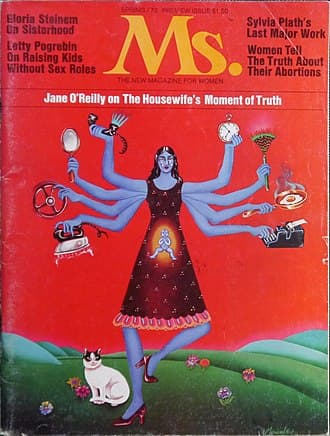
Timeline of second-wave feminism - Wikipedia View original
Is this image relevant?
National women's strike 1970 - News and Letters Committees View original
Is this image relevant?
Timeline of second-wave feminism - Wikipedia View original
Is this image relevant?
Emergence in the 1970s
Ecofeminism took shape during second-wave feminism, when activists began noticing structural parallels between how patriarchal societies treat women and how they treat the environment: both are framed as passive resources to be controlled and exploited. Françoise d'Eaubonne coined the term "ecofeminism" in her 1974 book Le Féminisme ou la Mort (Feminism or Death), arguing that women's liberation and ecological survival were inseparable goals.
Influence of feminism
Ecofeminism built on existing feminist critiques of patriarchy but extended them into environmental territory. It drew from multiple feminist traditions:
- Radical feminism supplied the analysis of patriarchy as a root system of domination
- Socialist feminism contributed attention to how capitalism structures both gender and environmental exploitation
- Cultural feminism offered a revaluation of qualities traditionally coded as "feminine" (care, relationality, embodiment)
The shared thread was insisting that women's lived experiences matter for understanding environmental problems.
Roots in the environmental movement
The broader environmental movement of the 1960s and 70s also fed into ecofeminism. Rachel Carson's Silent Spring (1962) had already demonstrated how industrial practices cause ecological harm, and ecofeminists took this further by asking who benefits from that harm and who suffers most. Environmental degradation wasn't just a technical problem; it was connected to larger systems of domination, including colonialism and corporate capitalism.
Key principles
Interconnectedness of oppression
Ecofeminism's central claim is that the oppression of women and the domination of nature are not separate issues but expressions of the same logic. Patriarchal thinking positions certain categories (male, culture, reason) as superior to others (female, nature, emotion), and this hierarchy justifies exploitation across multiple domains. Ecofeminists therefore argue you can't fully address environmental destruction without also confronting sexism, racism, and classism.
Critique of patriarchy
Patriarchy is identified as a root cause of both women's oppression and ecological crisis. Ecofeminists critique what they see as characteristically patriarchal values: domination, control, and the reduction of living systems to exploitable resources. They advocate instead for values of care, cooperation, and reciprocity as foundations for both social and environmental relationships.
Valuing of nature
Ecofeminism challenges the instrumental view of nature as raw material for human use. Instead, it insists on the intrinsic value of the natural world, meaning nature has worth independent of its usefulness to humans. This principle pushes back against the anthropocentric assumption that the non-human world exists primarily to serve human needs.
Emphasis on diversity
Ecofeminism values biological and cultural diversity alike. It rejects universalizing narratives that flatten differences among women or among ecosystems, and it advocates for an intersectional environmentalism that takes seriously how race, class, geography, and culture shape people's relationships to the natural world.
Theoretical frameworks
Ecofeminism isn't a single unified theory. Several distinct frameworks operate under its umbrella, each with different emphases.
Social ecology
Developed by Murray Bookchin, social ecology argues that environmental problems have social and political roots. Ecological destruction follows from hierarchical social structures, so the solution requires restructuring society along more decentralized, democratic, and ecologically integrated lines. Ecofeminists draw on this framework to connect environmental harm to specific power arrangements.
Deep ecology
Pioneered by Norwegian philosopher Arne Naess, deep ecology emphasizes the intrinsic value of all living beings and challenges anthropocentrism (the assumption that humans are the central or most important species). Deep ecology calls for a biocentric worldview that recognizes ecological interdependence. Ecofeminism shares some of these commitments but diverges in important ways (see the comparison section below).
Spiritual ecofeminism
This strand draws on goddess traditions, indigenous spiritualities, and earth-based religions to emphasize the sacredness of nature. Spiritual ecofeminists critique patriarchal religious traditions that devalue the body, emotion, and the feminine, and they seek to recover or create spiritual practices grounded in ecological connection. This is one of the more controversial strands, as critics worry it risks romanticizing or essentializing women's relationship to nature.
Materialist ecofeminism
Materialist ecofeminism grounds its analysis in the concrete economic and political conditions that shape women's lives. Rather than focusing on spirituality or consciousness, it examines how capitalism, colonialism, and patriarchy together produce both gender oppression and environmental destruction. This framework advocates for structural change: challenging corporate power, land ownership patterns, and global trade systems.
Major theorists
Françoise d'Eaubonne
The French feminist who coined "ecofeminism" in 1974. D'Eaubonne argued that patriarchal control over both women's fertility and agricultural production threatened planetary survival. She called for a "feminine revolution" that would simultaneously challenge gender oppression and ecological destruction.
Carolyn Merchant
An American philosopher and historian of science, Merchant's The Death of Nature (1980) traced how the Scientific Revolution replaced an organic, living view of nature with a mechanistic one. She showed that this shift was deeply gendered: as nature came to be seen as a machine to be mastered, the older association of nature with femininity meant that the domination of nature and the subordination of women reinforced each other.
Vandana Shiva
An Indian scholar and activist, Shiva critiques the impact of globalization, industrial agriculture, and intellectual property regimes on women and the environment in the Global South. Her work, including Staying Alive (1988), argues that Western development models destroy traditional sustainable practices and displace the ecological knowledge held by women in farming communities. She advocates for seed sovereignty and the protection of indigenous knowledge systems.
Val Plumwood
An Australian philosopher whose Feminism and the Mastery of Nature (1993) is one of ecofeminism's most rigorous theoretical texts. Plumwood analyzed how Western thought relies on a set of interlocking dualisms (culture/nature, mind/body, male/female, reason/emotion) that share a common logical structure. In each pair, the first term is valued and the second is devalued, and this "logic of domination" underpins both sexism and environmental exploitation. She called for reconceiving the human-nature relationship around mutuality and ecological embeddedness.
Ecofeminist literary criticism

Challenging anthropocentrism
Ecofeminist critics question the assumption that literature should center exclusively on human characters and concerns. They look for moments where non-human nature is granted agency or subjectivity in a text, and they examine how literary conventions either reinforce or challenge the idea that the natural world is merely a backdrop for human drama.
Critiquing dualistic thinking
A core method of ecofeminist literary analysis involves identifying binary oppositions in texts: culture/nature, male/female, reason/emotion, civilized/wild. The critic then examines how these dualisms function in the narrative. Do they justify domination? Are they destabilized or subverted? Ecofeminist critics advocate for readings that move toward more fluid, non-binary understandings of identity and difference.
Celebrating nature in literature
Ecofeminist critics highlight literary works that depict nature in affirming, non-exploitative ways. They're interested in how literature can cultivate ecological awareness and a sense of connection to the natural world. Nature imagery and metaphor become sites of analysis: when a text uses natural imagery, is it reinforcing patriarchal values (e.g., "virgin" wilderness waiting to be "conquered"), or is it offering an alternative vision?
Analyzing gendered landscapes
Landscapes in literature are often gendered. Wilderness is frequently coded as feminine (mysterious, fertile, in need of taming), while civilization is coded as masculine (ordered, rational, productive). Ecofeminist critics trace how these associations justify the conquest and exploitation of both land and women. They also consider how women characters' relationships to specific landscapes are shaped by their social positions, since a wealthy white woman and an indigenous woman may relate to the same landscape in very different ways.
Ecofeminism vs. deep ecology
Similarities in environmental focus
- Both challenge anthropocentrism and argue for the intrinsic value of nature
- Both call for a fundamental rethinking of the human-nature relationship
- Both critique Western dualistic thinking and advocate for a more holistic, ecological worldview
Differences in social justice emphasis
The key divergence is over social justice. Ecofeminism insists that you can't address environmental destruction without also addressing gender, race, and class oppression, because these systems of domination are structurally linked. Deep ecology tends to prioritize the intrinsic value of nature and can treat social and political concerns as secondary.
Ecofeminists have specifically criticized deep ecology for its potential to erase important differences among people. A call for universal "biocentric equality" can obscure the fact that environmental harm falls disproportionately on women, people of color, and communities in the Global South.
Critiques of ecofeminism
Accusations of essentialism
The most persistent critique is that ecofeminism relies on essentialist notions of gender, meaning it treats women as inherently closer to nature by virtue of their biology. If ecofeminism simply reinforces the woman-nature association, critics argue, it risks trapping women in the very categories patriarchy created. Many ecofeminists have responded by emphasizing that the woman-nature connection is socially constructed, not biologically given, and that their goal is to revalue nature, not to define women by it.
Debates over universality
Can ecofeminism speak to the experiences of all women? Critics point out that women's relationships to the environment vary enormously depending on race, class, culture, and geography. A subsistence farmer in India and a suburban consumer in the United States face very different environmental realities. Ecofeminists have responded by emphasizing local, situated knowledges and the need for diverse voices within the movement.
Intersectional challenges
Black, indigenous, and postcolonial feminists have pushed ecofeminism to more fully address how race, colonialism, and class intersect with gender and environmental issues. Early ecofeminism was criticized for centering white Western women's perspectives. In response, the field has increasingly embraced intersectionality and sought coalitions across social justice movements, though this remains an ongoing area of development.
Applications beyond literature
Ecofeminist activism
Ecofeminist principles have informed a range of activist movements, including anti-nuclear campaigns, environmental justice organizing, and resistance to deforestation and industrial pollution. The Chipko movement in India, where women physically embraced trees to prevent logging, is often cited as an example of ecofeminist activism in practice. Ecofeminists have also worked to build alternative, sustainable communities.
Influence on environmental policy
Ecofeminist ideas have shaped policy debates around climate change, biodiversity conservation, and sustainable development. Ecofeminists advocate for participatory, grassroots approaches to environmental decision-making rather than top-down technocratic solutions. These principles have found expression in international frameworks, including elements of the UN's Convention on Biological Diversity.
Ecofeminist art and spirituality
Ecofeminist artists use painting, sculpture, performance, and land art to celebrate nature and challenge patriarchal culture. Ecofeminist spiritualities draw on goddess traditions, earth-based religions, and indigenous practices to foster ecological connection. Both art and spirituality serve as ways of imagining alternative relationships between humans and the natural world.
Future directions
Integrating queer ecology
Queer ecology examines how sexuality, gender, and the environment intersect. It challenges heteronormativity (the assumption that heterosexuality is the natural default) and questions how "nature" gets invoked to police gender and sexual norms. Ecofeminists are increasingly drawing on queer theory to push beyond binary gender categories and to explore the complexity and fluidity of identity in relation to the natural world.
Engaging with postcolonial theory
Postcolonial ecofeminism highlights how environmental degradation is tied to histories of colonialism and ongoing imperial power structures. This strand centers the experiences of women in the Global South and challenges Western-centric assumptions within both environmentalism and feminism. It draws attention to how colonial resource extraction, land dispossession, and the imposition of Western agricultural models continue to shape environmental and gender politics.
Responding to climate change
Climate change disproportionately impacts women and marginalized communities, particularly in the Global South, where women often bear primary responsibility for food production, water collection, and household survival. Ecofeminists argue that climate responses must be intersectional, addressing gender, race, class, and colonial legacies simultaneously. They emphasize the need for a just transition to a low-carbon economy that prioritizes the needs of the most vulnerable rather than protecting existing power structures.
See Fiveable more often in Google
Mark Fiveable as a preferred source and Google is more likely to show you our guides in Top Stories, with a "preferred" badge in AI Mode and AI Overviews.