5.4 Non-linear and experimental narrative forms

🎥Intro to Film Theory Unit 5 Review
5.4 Non-linear and experimental narrative forms
🎥 Intro to Film Theory
Non-linear Narrative Structures
Non-linear narratives present events out of chronological order, challenging how viewers piece together a story. Instead of following the familiar three-act structure with its clear cause-and-effect chain, these films emphasize thematic connections, psychological states, or the fragmented nature of memory itself.
What Makes a Narrative Non-linear?
A non-linear film disrupts the expected sequence of events. Rather than moving from beginning to middle to end, it might start at the conclusion, jump between time periods, or scramble scenes so that the audience has to actively reconstruct the timeline.
This disruption serves real storytelling purposes. It can:
- Build suspense by withholding key information until the right moment
- Reveal character motivations gradually, forcing you to revise your understanding of a character as new context appears
- Reflect a character's psychological state, such as trauma, memory loss, or obsession
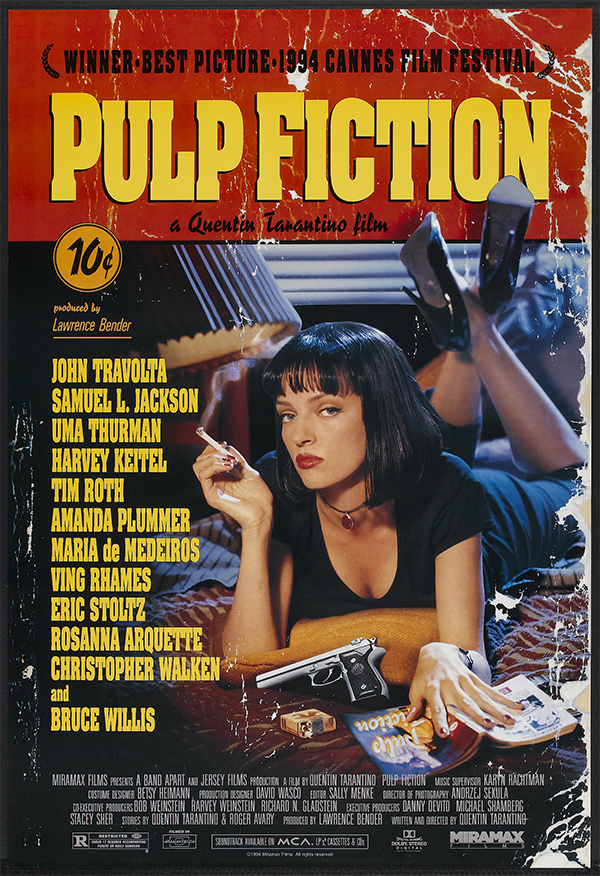
Memento (2000) is a go-to example. The film's scenes run in reverse chronological order, placing you inside the protagonist's short-term memory loss. You experience his confusion directly because you, like him, don't know what just happened. Pulp Fiction (1994) takes a different approach, scrambling its timeline so that thematic echoes between storylines matter more than when events "actually" occur.

Flashbacks, Flash-forwards, and Parallel Storylines
These are the most common tools filmmakers use to break chronology.
- Flashbacks depict events that occurred before the main narrative. They provide backstory, reveal hidden motivations, or create dramatic irony (where the audience knows something a character doesn't). Nearly every film uses brief flashbacks, but some films build their entire structure around them.
- Flash-forwards show events that haven't happened yet in the story's timeline. They foreshadow outcomes, build tension, or explore possible futures. These are less common than flashbacks but can be powerful when used well.
- Parallel storylines present multiple plot threads running simultaneously. The filmmaker integrates them through cross-cutting (editing back and forth between storylines), thematic connections, or convergence at a crucial moment.
The Godfather Part II (1974) interweaves two timelines: Michael Corleone's story in the present and his father Vito's rise decades earlier. The parallel structure invites you to compare father and son, drawing out themes of power and moral decay that a single timeline couldn't achieve as effectively. Inception (2010) layers parallel storylines literally, with action unfolding across multiple dream levels at once.
Characteristics of Experimental Narratives
Experimental narratives push further than simply rearranging a conventional story. They challenge what a "story" even needs to be.
Fragmented structures break the narrative into non-sequential pieces that may not connect in obvious ways. These films require active participation from the viewer to assemble meaning. The fragmentation often mirrors disjointed psychological states or subjective experience. Mulholland Drive (2001) is a prime example, where dream logic replaces narrative logic and the viewer must interpret which scenes are "real" and which aren't.
Episodic structures present loosely connected vignettes rather than a single unified plot. There may be no overarching storyline at all. Instead, thematic unity holds the film together. Think of films that feel more like a collection of related short stories than a novel.
Cyclical structures end where they begin, exploring ideas of repetition, fate, and inevitability. Run Lola Run (1998) literally restarts its story three times, each with small variations that lead to different outcomes. The repetition itself becomes the point, raising questions about chance and choice.
Experimental films also tend to:
- Emphasize visual style and form over plot mechanics
- Integrate non-narrative elements like abstract imagery or soundscapes
- Subvert audience expectations about how stories are "supposed" to work
Effectiveness of Non-linear Storytelling
Non-linear and experimental structures aren't just stylistic choices. They produce specific effects that linear storytelling can't replicate as easily.
Thematic depth. Juxtaposing scenes from different time periods lets a filmmaker draw connections that chronological order would bury. In Eternal Sunshine of the Spotless Mind (2004), the scrambled timeline mirrors the process of memory erasure, making the theme of lost love feel visceral rather than abstract. The risk, though, is thematic obscurity: if the connections are too subtle, viewers may feel lost rather than engaged.
Emotional impact. Unconventional structures can heighten suspense, surprise, or disorientation in ways that a straightforward plot can't. Rashomon (1950) tells the same event from multiple contradictory perspectives, and the emotional effect comes precisely from not knowing which version is true.
Character complexity. Revealing a character's history out of order lets you see them from multiple angles. You might sympathize with a character in one scene and then have that sympathy complicated by a later reveal about their past. The trade-off is that fragmented timelines can make character arcs harder to follow if not handled carefully.
Audience engagement. These films demand active viewing. You're not passively absorbing a story; you're assembling it. This encourages multiple viewings and rewards close attention. However, audiences unfamiliar with experimental forms may find the experience frustrating rather than rewarding, which is worth keeping in mind when analyzing how these films communicate with different viewers.
See Fiveable more often in Google
Mark Fiveable as a preferred source and Google is more likely to show you our guides in Top Stories, with a "preferred" badge in AI Mode and AI Overviews.