6.3 Formal Organizations

👩👩👦Intro to Sociology Unit 6 Review
6.3 Formal Organizations
👩👩👦 Intro to Sociology
Types and Characteristics of Formal Organizations
A formal organization is a large secondary group deliberately organized to achieve specific goals efficiently. You encounter these constantly: your school, your job, the DMV. Sociologist Amitai Etzioni classified them into three types based on why people participate.

Top images from around the web for Types of formal organizations
Organization - Wikipedia View original
Is this image relevant?
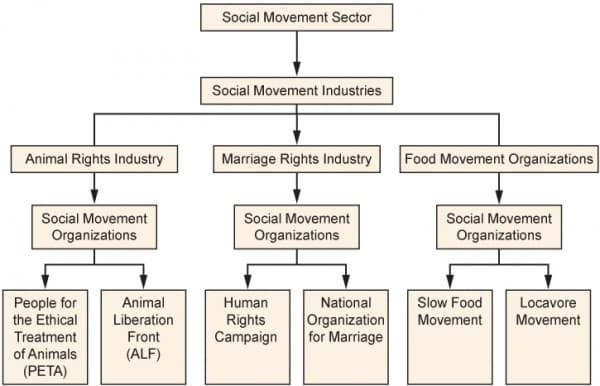
Chapter 21. Social Movements and Social Change – Introduction to Sociology – 2nd Canadian Edition View original
Is this image relevant?
Weighing Stakeholder Claims – Business Ethics View original
Is this image relevant?
Organization - Wikipedia View original
Is this image relevant?
Chapter 21. Social Movements and Social Change – Introduction to Sociology – 2nd Canadian Edition View original
Is this image relevant?
Types of formal organizations
- Utilitarian organizations offer material rewards (usually money) in exchange for participation. You join because you need something tangible. A job at a retail store or a corporation are classic examples. Most people wouldn't show up without a paycheck.
- Normative organizations (also called voluntary organizations) attract members who share common interests, goals, or values. People join because they want to, not because they're paid. Think churches, political parties, the Sierra Club, or a local charity. Motivation here comes from personal fulfillment or a sense of purpose.
- Coercive organizations are ones people are forced into or join with very limited choice. Members face strict rules and major restrictions on personal freedom. Prisons are the clearest example. The military and involuntary psychiatric facilities also fit here, though the degree of coercion varies.
These categories aren't always rigid. The military, for instance, can be coercive (draft) or utilitarian (enlistment for pay and benefits) depending on the circumstances.

Features of bureaucracies
Max Weber identified bureaucracy as the dominant organizational model in modern society. He outlined several defining characteristics:
- Division of labor and specialization: Complex tasks get broken into simpler, specific roles. Each person focuses on a narrow set of responsibilities rather than doing everything.
- Hierarchy of authority: Power flows from the top down through a clear chain of command. Each level supervises the one below it, creating structured accountability.
- Written rules and procedures: Standardized guidelines govern operations and conduct. This ensures consistency so the organization doesn't depend on any single person's judgment.
- Impersonality: Interactions and decisions are supposed to be based on objective criteria, not personal relationships or favoritism. Rules apply equally to everyone.
- Employment based on technical qualifications: People are hired and promoted based on merit and credentials, not connections.
These features allow bureaucracies to coordinate activity on a massive scale, which is why governments, universities, hospitals, and corporations all rely on bureaucratic structures. The tradeoff is that bureaucracies can feel rigid and impersonal. Weber himself called this the "iron cage" of rationality, where efficiency comes at the cost of human flexibility and meaning.

McDonaldization and Its Impact on Organizations
Sociologist George Ritzer coined the term McDonaldization to describe how the principles of fast-food restaurants have spread into other areas of society. It builds on Weber's ideas about rationalization but applies them to contemporary organizations. Ritzer identified four key dimensions:
- Efficiency: Streamlining processes to minimize time and effort. The drive-through window is the iconic example, but you see this in online checkout systems, pre-packaged meals, and standardized medical intake forms too.
- Calculability: Emphasizing quantity over quality. Success gets measured by speed, size, and volume. Think "Big Gulp" sizing or universities that track graduation rates more than learning outcomes.
- Predictability: Standardizing products and experiences so they're the same everywhere. A Big Mac in Tokyo tastes like one in Chicago. Hotel chains, chain pharmacies, and franchise gyms all operate on this principle.
- Control: Replacing human decision-making with technology and rules. Employees follow scripts, automated systems handle tasks that people used to do, and workers have limited discretion. Self-checkout kiosks are a good example.
Ritzer argued that McDonaldization carries a significant downside: the irrationality of rationality. Systems designed to be perfectly rational can produce irrational outcomes. Workers get deskilled and lose autonomy. Social interactions become scripted and transactional. Customers and employees alike can experience a sense of dehumanization, even as the system technically "works" by its own metrics.
Organizational Dynamics and Development
Organizations aren't static. They evolve in response to both internal pressures and external environments.
- Organizational culture refers to the shared values, beliefs, and norms that develop within an organization. Culture shapes how members interact, what behaviors get rewarded, and how decisions get made. Two companies in the same industry can feel completely different to work in because of culture.
- Leadership guides organizational direction and motivates members. Different leadership styles (authoritarian, democratic, laissez-faire) produce different dynamics within the same formal structure.
- Power dynamics affect who actually makes decisions and how resources get distributed. Formal authority (your title) and informal power (your relationships and influence) don't always line up.
- Organizational change happens when organizations adapt to new pressures, whether that's new technology, shifting markets, or internal conflict. Change often requires restructuring roles, updating procedures, or shifting culture, and it frequently meets resistance from members invested in the existing system.
See Fiveable more often in Google
Mark Fiveable as a preferred source and Google is more likely to show you our guides in Top Stories, with a "preferred" badge in AI Mode and AI Overviews.