21.3 Social Change

👩👩👦Intro to Sociology Unit 21 Review
21.3 Social Change
👩👩👦 Intro to Sociology
Social change refers to significant shifts in how societies are organized, how they function, and what they value. Understanding what drives these shifts is central to sociology because it connects everything you've studied so far: institutions, stratification, culture, and collective action all come together here.
Drivers of Social Change

Top images from around the web for Analyze how technology, social institutions, population, and the environment drive social change
Diverging global population trends (GMT 1) — European Environment Agency View original
Is this image relevant?
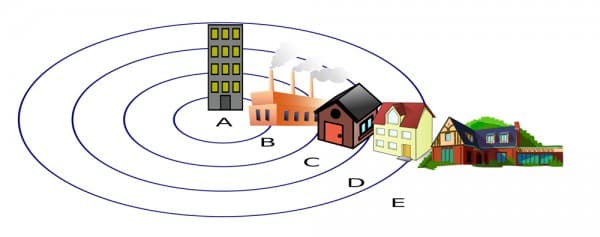
Theoretical Perspectives on Urbanization | Introduction to Sociology View original
Is this image relevant?
Urbanization on the Rise | Introduction to Sociology View original
Is this image relevant?
Diverging global population trends (GMT 1) — European Environment Agency View original
Is this image relevant?
Theoretical Perspectives on Urbanization | Introduction to Sociology View original
Is this image relevant?
Analyze how technology, social institutions, population, and the environment drive social change
Technology is one of the most visible drivers of social change. New innovations don't just give us new tools; they restructure how people work, communicate, and relate to each other. The Industrial Revolution, for example, didn't just change factories. It pulled people into cities, created a new working class, and reshaped family life. More recently, the digital revolution has done something similar: social media has changed how political movements organize, remote work has altered where and how people live, and streaming services have shifted entire entertainment industries.
Social institutions like family, education, religion, and government also drive change as they evolve. When norms within these institutions shift, the ripple effects are broad:
- Secularization (the declining influence of religion in public life) has opened space for more diverse worldviews and reshaped debates around law and morality.
- Changing gender roles have restructured families, labor markets, and political representation. Dual-income households, for instance, became far more common as women entered the workforce in larger numbers.
- Educational reforms expanding access to schooling have enabled greater social mobility, allowing people to move between social classes more easily.
Population changes shape societies in ways that are hard to ignore. Demographic shifts like population growth, aging, migration, and urbanization all create new pressures and possibilities:
- Urbanization concentrates people in cities, producing new forms of social organization but also intensifying inequality (think housing crises in major cities).
- Aging populations in countries like Japan and Germany strain healthcare systems and create labor shortages.
- Refugee crises put pressure on social services and fuel political debates over immigration and integration.
The environment forces adaptation whether societies are ready or not. Climate change, natural disasters, and resource scarcity all push communities to rethink how they live. Green energy initiatives, disaster preparedness programs, and conservation efforts are all responses to environmental pressures that are reshaping policy, economies, and daily life.
These four drivers rarely operate in isolation. Technology changes how we respond to environmental problems; population shifts reshape institutions; institutional changes influence which technologies get developed. The interactions between them are what make social change so complex.

Modernization and Social Movements

Evaluate the impacts of modernization on society and culture
Modernization describes the broad transition from traditional, agrarian societies to industrial and post-industrial ones. It touches nearly every aspect of social life.
Economic impacts: Modernization transforms how goods are produced and consumed. It gives rise to new social classes (particularly the middle class), new consumption patterns (mass-produced goods, consumer culture), and new lifestyles centered on urban living. Globalization has extended this process worldwide through increased trade and cultural exchange, a process sociologists call cultural diffusion. At the same time, income inequality has widened in many modernized societies, fueling social tensions and demands for redistribution.
Political impacts: Modernization often involves the expansion of democratic institutions and civil rights, though this process is uneven. Key examples include:
- Women's suffrage movements that fought for and won the right to vote
- Decolonization in the mid-20th century, which led to the independence of formerly colonized nations and reshaped global power structures
- The Arab Spring (2010-2012), where uprisings across the Middle East and North Africa challenged authoritarian regimes and demanded political freedoms
Cultural impacts: Modernization can erode traditional values and practices, creating tension between old and new ways of life. Individualism, which emphasizes personal autonomy over collective conformity, is a hallmark of modernized cultures. Cultural globalization has spread certain values and practices (often Western ones) worldwide, producing both cultural exchange and backlash. Religious fundamentalism, for instance, has emerged in part as a reaction to perceived threats that modernization poses to traditional beliefs.
Examine the role of collective behavior and social movements in shaping social change
Collective behavior refers to spontaneous, relatively unstructured social actions that arise in response to shared strains or uncertainties. Think of panic buying during the COVID-19 pandemic, flash mobs organized through social media, or the rapid rise and fall of fashion trends. These behaviors can spread quickly and reveal underlying social anxieties, but they tend to be short-lived and lack formal organization.
Social movements are different. They are organized, sustained campaigns aimed at specific social changes. Movements use a range of tactics to achieve their goals:
- Protests and demonstrations to draw public attention
- Lobbying to pressure lawmakers directly
- Public education campaigns to shift cultural attitudes
Major examples include the civil rights movement (which fought racial segregation and led to landmark legislation like the Civil Rights Act of 1964), the environmental movement (which has driven policy changes around pollution and climate), and the LGBTQ+ rights movement (which has challenged discriminatory laws and shifted public attitudes toward greater acceptance).
Outcomes of collective action can be both intended and unintended. Successful movements often produce concrete policy reforms, broader cultural shifts, and the empowerment of participants themselves. The women's suffrage movement led to the 19th Amendment in 1920. The #MeToo movement increased accountability for sexual harassment. The Black Lives Matter movement sparked global conversations about systemic racism and policing. But movements can also produce backlash, internal divisions, or unintended consequences that reshape the political landscape in unexpected ways.
Social Inequality and Power Dynamics
Social change doesn't affect everyone equally, which is why understanding inequality and power is essential to this unit.
Social stratification is the way societies organize people into hierarchical layers based on factors like wealth, power, and prestige. Different societies use different systems: class systems (common in modern capitalist societies), caste systems (like India's traditional system, where status is assigned at birth), and estate systems (like feudal Europe's division into nobility, clergy, and peasants). Whatever the system, stratification shapes who gets access to resources, opportunities, and better life outcomes.
Social capital refers to the networks of relationships and connections that people can draw on for information, opportunities, and support. A student whose parents know professionals in various fields has more social capital than one without those connections. Because social capital is distributed unevenly, it helps perpetuate existing inequalities even when formal barriers are removed.
Intersectionality, a concept developed by legal scholar Kimberlé Crenshaw, recognizes that social categories like race, class, and gender don't operate independently. They overlap and interact. A Black woman, for example, may face forms of discrimination that aren't fully captured by looking at race or gender alone. Intersectionality helps explain why some groups experience compounding disadvantages while others accumulate overlapping privileges.
See Fiveable more often in Google
Mark Fiveable as a preferred source and Google is more likely to show you our guides in Top Stories, with a "preferred" badge in AI Mode and AI Overviews.