5.1 Overview and Key Provisions of the ICESCR

🧍🏼♂️International Human Rights Unit 5 Review
5.1 Overview and Key Provisions of the ICESCR
🧍🏼♂️ International Human Rights
The ICESCR (International Covenant on Economic, Social and Cultural Rights) is one of the foundational treaties in international human rights law. It obligates states to progressively realize rights related to work, social security, living standards, health, education, and cultural participation. Understanding this Covenant is essential because it establishes that economic and social rights carry the same legal weight as civil and political rights, even though enforcement looks quite different in practice.
Economic, Social, and Cultural Rights

Top images from around the web for Core Rights Protected by ICESCR
Frontiers | Impact of Social Determinants of Health on the Emerging COVID-19 Pandemic in the ... View original
Is this image relevant?
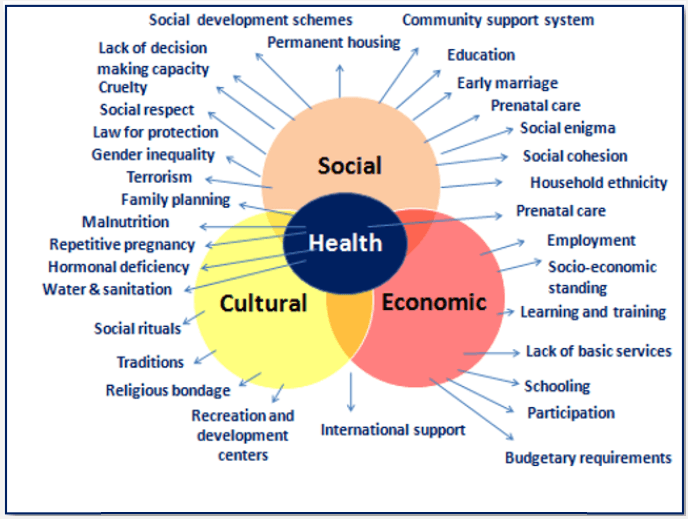
Major Issues Related to Women Health, Social, Cultural and Economic Development View original
Is this image relevant?
Category:Human rights maps - Wikimedia Commons View original
Is this image relevant?
Frontiers | Impact of Social Determinants of Health on the Emerging COVID-19 Pandemic in the ... View original
Is this image relevant?
Major Issues Related to Women Health, Social, Cultural and Economic Development View original
Is this image relevant?
Core Rights Protected by ICESCR
The ICESCR covers a broad set of rights that touch nearly every aspect of daily life. Here are the major categories:
- Right to work (Articles 6–7): This goes beyond just having a job. It includes fair wages, equal pay for equal work, safe and healthy working conditions, and reasonable limits on working hours.
- Freedom of association (Article 8): Workers can form and join trade unions of their choosing. The right to strike is also protected, though states can impose certain legal limitations on it.
- Social security (Article 9): States must provide social insurance systems that protect people against economic hardship from unemployment, illness, old age, or disability.
- Adequate standard of living (Article 11): This covers the essentials: adequate food, clothing, and housing. It also includes the right to continuous improvement of living conditions.
- Right to health (Article 12): Defined as the "highest attainable standard of physical and mental health," this includes access to medical services, preventive healthcare, and the underlying conditions for good health like clean water and sanitation.
- Right to education (Articles 13–14): Primary education must be free and compulsory. Secondary and higher education should be progressively made accessible to all, including through the introduction of free education.
- Cultural rights (Article 15): Everyone has the right to participate in cultural life, enjoy the benefits of scientific progress, and receive protection for their intellectual and creative works.
Additional Protected Rights
The Covenant also addresses rights that are sometimes overlooked:
- Protection of the family unit, recognized as the fundamental group unit of society
- Special protections for mothers during a reasonable period before and after childbirth, including paid leave or leave with adequate social security benefits
- Children and young persons receive protection from economic and social exploitation; employing them in harmful work should be punishable by law
- The right to benefit from scientific progress and its applications, which has become increasingly relevant in debates about access to medicines and technology
Significance of the ICESCR

Role in International Human Rights Framework
The ICESCR is one of three documents that together form the International Bill of Human Rights, alongside the Universal Declaration of Human Rights (UDHR, 1948) and the International Covenant on Civil and Political Rights (ICCPR). While the UDHR is a declaration and not legally binding on its own, both Covenants are binding treaties for the states that ratify them.
A few concepts make the ICESCR distinctive:
- Progressive realization (Article 2(1)): States don't have to guarantee all rights immediately. Instead, they must take steps "to the maximum of available resources" to achieve the full realization of these rights over time. This acknowledges that poorer countries face real resource constraints.
- Minimum core obligations: Despite progressive realization, the Committee on Economic, Social and Cultural Rights (CESCR) has clarified that every state must ensure at least minimum essential levels of each right. A state where a significant number of people lack basic food, primary healthcare, or basic shelter is presumed to be failing its obligations, regardless of resources.
- Non-discrimination and non-retrogression: States must guarantee these rights without discrimination (Article 2(2)), and they generally cannot take deliberate steps backward from protections already achieved.
The CESCR, established in 1985, monitors state compliance. It reviews periodic reports from states and issues General Comments that interpret the Covenant's provisions in detail.
Impact on National and International Systems
- The Optional Protocol (adopted 2008, entered into force 2013) created an individual complaints mechanism, allowing people to bring cases to the CESCR when domestic remedies are exhausted. This was a significant step toward making these rights enforceable at the international level.
- Many countries have incorporated ICESCR rights directly into their constitutions. South Africa's Constitution, for example, includes justiciable rights to housing, healthcare, food, water, and social security.
- The Covenant serves as a benchmark for international development organizations and has influenced the frameworks used by the World Bank, UN agencies, and regional human rights bodies.
- Civil society organizations regularly use ICESCR standards to hold governments accountable through shadow reports, litigation, and public advocacy campaigns.
Interconnectedness of ICESCR Rights

Relationship Between Rights
One of the Covenant's core principles is that human rights are indivisible and interdependent. No single right exists in isolation; they reinforce each other in practical ways:
- The right to education directly affects the right to work: without access to quality education, employment opportunities shrink and wages stay low.
- The right to health depends heavily on an adequate standard of living: proper nutrition, safe housing, and clean water are preconditions for good health outcomes.
- Social security acts as a safety net that supports the realization of multiple other rights during periods of unemployment, illness, or economic crisis.
- Cultural rights and education are intertwined because education is a primary vehicle for preserving and transmitting cultural heritage across generations.
- The right to form trade unions reinforces the right to fair working conditions by giving workers collective bargaining power.
Holistic Approach to Human Dignity
This interconnectedness reflects a holistic vision of what human dignity requires. You can't meaningfully enjoy the right to work if you're too malnourished to function, and you can't access adequate food without income or social support. The Covenant treats these relationships as a web rather than a checklist.
Consider a concrete example: a child who receives free primary education (Article 13) is more likely to secure decent employment (Article 6), earn a living wage that provides an adequate standard of living (Article 11), and access healthcare (Article 12). Denying any one of these rights creates a cascading effect on the others.
Historical Context of the ICESCR
Development and Adoption
The ICESCR was adopted by the United Nations General Assembly on December 16, 1966, and entered into force on January 3, 1976, after receiving the required number of ratifications. As of today, over 170 states are parties to the Covenant.
The treaty emerged from the post-World War II human rights movement. The original plan was to create a single comprehensive covenant covering all the rights in the UDHR. However, Cold War politics split the project in two. Western bloc countries generally prioritized civil and political rights, viewing them as immediately enforceable and justiciable. Socialist states and many developing nations pushed for economic, social, and cultural rights, arguing that freedom from want was just as fundamental as freedom of speech.
This ideological divide shaped the Covenant's structure, particularly the progressive realization framework, which was partly a compromise to get Western states on board.
Key Influences and Debates
The drafting process involved extensive debates about whether economic and social rights could be "real" rights at all. Critics argued they were aspirational goals rather than enforceable legal obligations. Supporters countered that without material security, civil and political freedoms are hollow.
These debates haven't fully resolved. Questions about justiciability persist: Can a court order a government to provide housing or healthcare the way it can order the release of a political prisoner? The Optional Protocol and domestic court decisions (like those in South Africa, India, and Colombia) have moved the needle, but enforcement remains more challenging than for civil and political rights.
The CESCR's General Comments have been crucial in developing the Covenant's meaning over time. For instance, General Comment No. 14 (2000) elaborated extensively on the right to health, and General Comment No. 3 (1990) clarified the nature of state obligations, including minimum core obligations. These interpretive documents have shaped how states, courts, and advocates understand what the ICESCR actually requires.
See Fiveable more often in Google
Mark Fiveable as a preferred source and Google is more likely to show you our guides in Top Stories, with a "preferred" badge in AI Mode and AI Overviews.