14.1 UN Guiding Principles on Business and Human Rights

🧍🏼♂️International Human Rights Unit 14 Review
14.1 UN Guiding Principles on Business and Human Rights
🧍🏼♂️ International Human Rights
UN Guiding Principles on Business and Human Rights
The UN Guiding Principles on Business and Human Rights (UNGPs) provide a framework for states and companies to prevent and address human rights abuses linked to business operations. Endorsed by the UN Human Rights Council in 2011, they represent the first authoritative global standard on this topic, outlining responsibilities for governments and corporations alike while emphasizing human rights due diligence and access to remedy for victims.
These principles have been widely adopted, giving governments, companies, and civil society a common language for tackling human rights in business. Yet their voluntary nature and uneven implementation across countries and sectors remain significant obstacles to meaningful corporate accountability.
Framework and Objectives
The UNGPs rest on three pillars, each addressing a different actor's role:
- State duty to protect human rights from abuse by third parties, including businesses
- Corporate responsibility to respect human rights by avoiding and addressing adverse impacts
- Access to remedy for victims of business-related human rights abuses
The framework contains 31 principles, each with accompanying commentary that offers clarification and practical guidance. These principles apply to all states and business enterprises regardless of size, sector, location, ownership, or structure.
The UNGPs draw their normative authority not from a binding treaty but from the UN Human Rights Council's unanimous endorsement and their subsequent incorporation into national laws, corporate policies, and international frameworks like the OECD Guidelines for Multinational Enterprises.
A central concept running through the framework is human rights due diligence: the ongoing process businesses should use to identify, prevent, mitigate, and account for their human rights impacts.
Key Components and Processes
Human Rights Due Diligence
Due diligence under the UNGPs is not a one-time audit. It's a continuous process with four core steps:
- Identify and assess actual and potential human rights impacts connected to the business's operations, products, or services
- Integrate findings and take action to prevent adverse impacts where possible
- Track the effectiveness of the company's responses over time
- Communicate externally how the business is addressing its human rights impacts (through sustainability reports, impact assessments, etc.)
Businesses are expected to scale these processes to fit their size and circumstances. A small local business won't need the same apparatus as a multinational corporation, but both are expected to take meaningful steps.

Policy Commitment and Remediation
Beyond due diligence, the UNGPs expect businesses to:
- Adopt a policy commitment to respect human rights, approved at the most senior level of the company and communicated internally and externally
- Provide or cooperate in remediation when they identify that they have caused or contributed to adverse impacts
Remediation can take different forms depending on the situation. A company might offer direct compensation, change its practices, or cooperate with legitimate external processes such as mediation, arbitration, or courts.
States and Businesses: Roles in Human Rights
State Responsibilities
States bear the primary duty to protect against human rights abuses by third parties, including businesses. This is grounded in existing international human rights law.
Protection measures include:
- Enforcing laws that require businesses to respect human rights (labor law, environmental regulation, anti-discrimination statutes)
- Providing guidance to business enterprises on how to meet their responsibility to respect human rights
- Encouraging or requiring businesses to communicate publicly about how they address human rights impacts
States face heightened obligations in certain contexts. When the state itself owns or controls a business enterprise, or when a company receives substantial government support (through contracts, export credit agencies, or investment guarantees), the state must take additional steps to ensure human rights are respected. The logic is straightforward: the closer the state's relationship to a business, the greater the state's responsibility for that business's conduct.
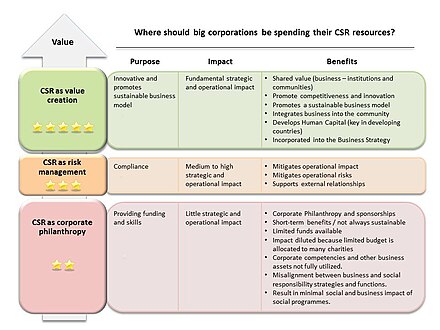
Business Responsibilities
The corporate responsibility to respect human rights exists independently of a state's ability or willingness to enforce human rights law. Even where domestic law is weak, businesses are still expected to respect internationally recognized human rights.
Key actions for businesses:
- Develop a policy commitment that articulates the company's responsibility to respect human rights
- Conduct human rights due diligence (the four-step process described above)
- Provide or cooperate in remediation for adverse impacts the business has caused or contributed to
What does this look like in practice? A technology company collecting user data should assess whether its practices infringe on privacy rights and take steps to protect them. A clothing manufacturer sourcing from factories in multiple countries should audit its supply chain for labor rights violations, such as forced labor, unsafe working conditions, or child labor, and act on what it finds.
Effectiveness of UN Guiding Principles for Corporate Accountability
Positive Impacts and Adoption
The UNGPs have had a measurable influence on how governments and businesses approach human rights:
- National action plans (NAPs) on business and human rights have been adopted by over 25 countries, translating the UNGPs into domestic policy commitments
- Corporate policies and codes of conduct increasingly reference the UNGPs as a baseline standard
- International guidelines, most notably the revised OECD Guidelines for Multinational Enterprises, have aligned with the UNGPs' due diligence framework
- Transparency has increased, with more companies publishing dedicated human rights sections in annual sustainability reports and conducting formal human rights impact assessments
- Due diligence uptake has grown across industries, with human rights considerations increasingly integrated into broader risk management processes
The UNGPs also provided something that didn't exist before: a shared vocabulary. When a company, an NGO, and a government official all talk about "human rights due diligence," they're referencing the same framework. That common language has made cross-sector dialogue more productive.
Limitations and Challenges
Despite these gains, the UNGPs face serious structural limitations:
- Voluntary, not binding. There are no formal sanctions for non-compliance. Companies that ignore the principles face no direct legal consequences under the UNGPs themselves.
- Reliance on corporate self-regulation. Without binding obligations, implementation depends heavily on a company's willingness to act, which varies enormously.
- No robust international monitoring mechanism. There is no body systematically tracking which companies comply and holding them accountable for failures.
- Uneven implementation. Adoption is significantly stronger in developed economies (particularly in Western Europe) than in developing countries. It also varies by industry: extractive industries like mining and oil have faced more pressure to comply than sectors like technology or finance.
- Supply chain complexity. In a globalized economy, a single product may pass through dozens of suppliers across multiple countries. Tracing and addressing human rights impacts throughout these chains remains extremely difficult.
- Cross-border remedy gaps. When a company headquartered in one country causes harm in another, victims often struggle to access effective remedies. Jurisdictional barriers, power imbalances, and cost make legal action difficult.
- Competitive pressures. Companies operating in markets where competitors ignore human rights standards may face economic incentives to cut corners, undermining the voluntary framework.
These limitations have fueled ongoing debate about whether a binding international treaty on business and human rights is needed to supplement the UNGPs. Negotiations on such a treaty have been underway at the UN since 2014, though progress has been slow and contentious.
See Fiveable more often in Google
Mark Fiveable as a preferred source and Google is more likely to show you our guides in Top Stories, with a "preferred" badge in AI Mode and AI Overviews.