5.2 Progressive Realization and State Obligations

🧍🏼♂️International Human Rights Unit 5 Review
5.2 Progressive Realization and State Obligations
🧍🏼♂️ International Human Rights
Progressive Realization in ICESCR

Top images from around the web for Concept and Principles
History of Social Progress | Organizational Behavior and Human Relations View original
Is this image relevant?
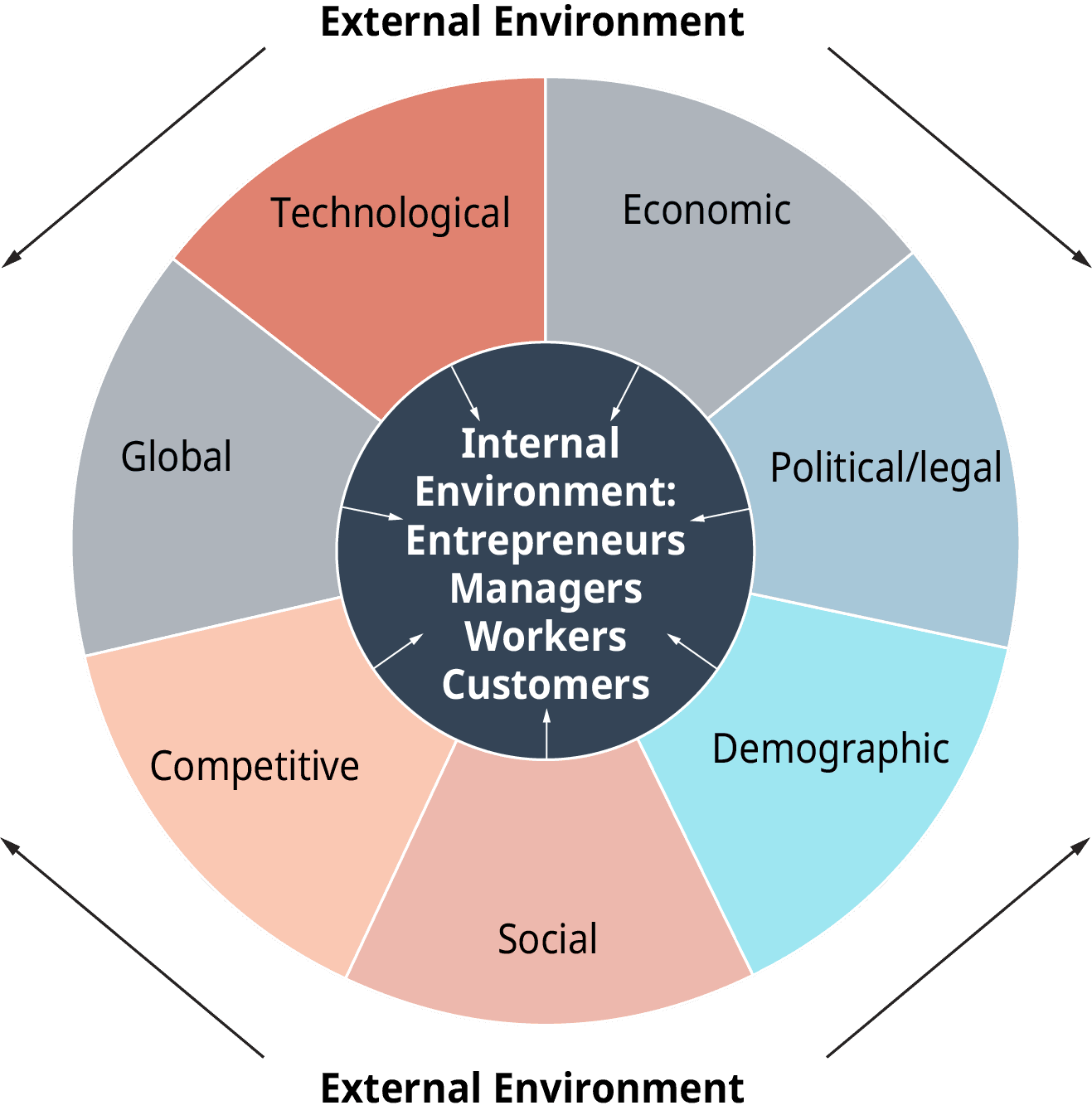
Understanding the Business Environment | OpenStax Intro to Business View original
Is this image relevant?
Major Issues Related to Women Health, Social, Cultural and Economic Development View original
Is this image relevant?
History of Social Progress | Organizational Behavior and Human Relations View original
Is this image relevant?
Understanding the Business Environment | OpenStax Intro to Business View original
Is this image relevant?
Concept and Principles
Article 2(1) of the ICESCR contains the treaty's central implementation clause. It requires each state party to take steps "to the maximum of its available resources, with a view to achieving progressively the full realization of the rights recognized." Progressive realization is the acknowledgment that economic, social, and cultural rights often can't be guaranteed all at once. Unlike civil and political rights (which typically demand immediate compliance), rights like housing, health, and education depend on infrastructure, trained personnel, and funding that take time to build.
That said, progressive realization is not a permission slip for inaction. Several principles constrain how states use this flexibility:
- States must move as expeditiously and effectively as possible toward full realization. Stalling or stagnating violates the obligation.
- Retrogressive measures are presumptively prohibited. If a state rolls back protections it has already achieved (e.g., cutting free primary education it previously provided), it bears the burden of justifying that step.
- Some aspects of ICESCR rights require immediate action, not gradual implementation. Non-discrimination guarantees and the duty to take "deliberate, concrete, and targeted steps" apply from the moment a state ratifies the Covenant.
- Resource limitations are acknowledged, but states must still show they are using maximum available resources toward fulfillment.
Implementation and Challenges
Progressive realization sounds reasonable in theory, but monitoring it is genuinely difficult:
- How do you measure "concrete progress" across countries with vastly different economies? A benchmark that makes sense for Norway won't work for Malawi.
- States must demonstrate improvement over time, but external shocks (global recessions, pandemics, armed conflict) can set back progress through no fault of the government.
- The Committee on Economic, Social and Cultural Rights (CESCR) reviews state reports, but it often lacks reliable, disaggregated data to assess whether a state is truly doing all it can.
- There's an inherent tension between giving states flexibility (since contexts differ enormously) and holding them accountable for measurable results.
State Obligations under ICESCR

Immediate and Ongoing Duties
Even under a framework of progressive realization, certain obligations are immediate from the date of ratification:
- Non-discrimination: States must guarantee that economic, social, and cultural rights are exercised without discrimination on grounds such as race, sex, language, religion, political opinion, national origin, property, or birth.
- Taking deliberate steps: States must adopt concrete measures (legislative, administrative, financial, educational) aimed at fulfilling Covenant rights. A state cannot simply wait for economic growth to deliver results on its own.
- Maximum available resources: This phrase means states must prioritize rights fulfillment in budgetary decisions. It also encompasses resources obtainable through international assistance and cooperation.
- Reporting: States must submit periodic reports to the CESCR detailing the measures they've adopted and the progress they've achieved.
Types of State Obligations
The CESCR's General Comments break state obligations into three categories, often called the respect-protect-fulfill framework:
- Obligation to respect: The state must refrain from directly interfering with the enjoyment of rights. For example, a government cannot carry out forced evictions that leave people homeless, and it cannot arbitrarily shut down schools serving minority communities.
- Obligation to protect: The state must prevent third parties (corporations, landlords, private institutions) from undermining rights. For example, regulating private healthcare providers so they don't deny services to low-income patients, or enforcing labor laws so employers can't exploit workers.
- Obligation to fulfill: The state must take affirmative steps to realize rights. This breaks down further:
- Facilitate: Create conditions for people to provide for themselves (e.g., job training programs, microfinance initiatives)
- Provide: Directly supply goods or services when individuals cannot secure them on their own (e.g., ensuring access to essential medicines for those who can't afford them)
- Promote: Raise awareness and build capacity (e.g., public education campaigns about workers' rights or nutrition)
Minimum Core Obligations of States

Concept and Importance
The concept of minimum core obligations addresses a key worry about progressive realization: that states could use "limited resources" as a permanent excuse for doing nothing. The CESCR established in General Comment No. 3 that every state, regardless of its development level, must ensure at least the minimum essential levels of each Covenant right.
- Failure to meet minimum core obligations is considered a prima facie violation of the Covenant. The state bears the burden of proving it has exhausted every effort, including seeking international assistance, before it can claim inability.
- Core obligations are non-derogable, meaning states cannot suspend them during emergencies or economic crises.
- These obligations guide how states should prioritize resource allocation. When budgets are tight, minimum core obligations come first.
Examples and Implementation
Specific minimum core obligations vary by right. Some key examples from the CESCR's General Comments:
Right to health (General Comment No. 14):
- Ensure non-discriminatory access to health facilities, goods, and services, especially for vulnerable and marginalized groups
- Provide essential drugs as defined by the WHO Action Programme on Essential Drugs
Right to education (General Comment No. 13):
- Ensure free and compulsory primary education for all children
- Adopt and implement a national educational strategy that includes concrete benchmarks and timelines
Right to water (General Comment No. 15):
- Ensure access to a minimum essential amount of water sufficient for personal and domestic uses
- Guarantee physical access to water facilities or sources within a safe distance from each household
In practice, states are expected to demonstrate that they have directed all available resources toward meeting these floors before pursuing other spending priorities. National budgets and development plans should visibly reflect this prioritization.
Measuring and Monitoring Progressive Realization
Indicators and Data Challenges
Tracking whether a state is progressively realizing economic, social, and cultural rights requires indicators, but developing good ones is harder than it sounds:
- Rights like health, education, and adequate housing are multifaceted. No single number captures whether the "right to health" is being realized. You need a mix of quantitative indicators (infant mortality rates, school enrollment percentages, access to clean water) and qualitative assessments (quality of care, relevance of curricula, adequacy of housing conditions).
- Many countries lack reliable, comprehensive, and disaggregated data (broken down by gender, ethnicity, region, income level). Without disaggregation, national averages can mask severe inequalities.
- Participatory approaches matter: affected communities should have input into which indicators are used and how data is interpreted, since top-down metrics can miss what's actually happening on the ground.
Assessment and Evaluation Complexities
Even with good data, evaluating state compliance involves difficult judgment calls:
- Inability vs. unwillingness: A state that genuinely lacks resources to provide universal healthcare is in a different position from one that has resources but diverts them to military spending. Distinguishing between the two requires analyzing budget allocations, policy choices, and whether the state sought international assistance.
- Benchmarks and timelines: The CESCR encourages states to set their own targets, but there's no universal formula for what counts as "sufficient progress." What's adequate for a middle-income country may be unrealistic for a least-developed country.
- Interconnectedness of rights: Progress on one right often depends on progress on others. Improvements in education affect health outcomes; housing conditions affect both. This makes it hard to isolate the impact of any single policy.
- External factors: Global economic downturns, natural disasters, and conflicts can derail progress. The monitoring framework must account for these without letting states use them as blanket excuses.
- The core tension remains: the system needs enough flexibility to accommodate genuine differences in capacity, while maintaining enough accountability that progressive realization doesn't become indefinite postponement.
See Fiveable more often in Google
Mark Fiveable as a preferred source and Google is more likely to show you our guides in Top Stories, with a "preferred" badge in AI Mode and AI Overviews.