9.3 Types of vaccines and their mechanisms

🛡️Immunobiology Unit 9 Review
9.3 Types of vaccines and their mechanisms
🛡️ Immunobiology
Vaccine Types and Mechanisms
Vaccines work by exposing the immune system to antigens from a pathogen (or instructions to make those antigens) without causing the actual disease. This primes both innate and adaptive immunity so the body can mount a faster, stronger response upon real exposure. Different vaccine platforms achieve this through distinct strategies, and each comes with trade-offs in safety, efficacy, manufacturing, and storage.

Top images from around the web for Types of vaccines
Frontiers | Overview of Immune Response During SARS-CoV-2 Infection: Lessons From the Past View original
Is this image relevant?
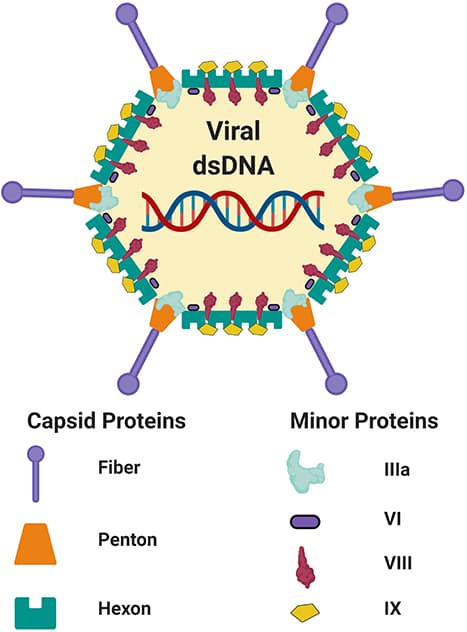
Frontiers | Factors Which Contribute to the Immunogenicity of Non-replicating Adenoviral ... View original
Is this image relevant?
Frontiers | COVID-19: Coronavirus Vaccine Development Updates View original
Is this image relevant?
Frontiers | Overview of Immune Response During SARS-CoV-2 Infection: Lessons From the Past View original
Is this image relevant?
Frontiers | Factors Which Contribute to the Immunogenicity of Non-replicating Adenoviral ... View original
Is this image relevant?
Types of Vaccines
Live attenuated vaccines contain weakened forms of the pathogen that can still replicate in the host but don't cause disease in immunocompetent individuals. Because they mimic natural infection, they tend to stimulate strong, long-lasting immune responses. Examples include MMR (measles, mumps, rubella) and varicella (chickenpox).
Inactivated vaccines use pathogens that have been killed (by heat, chemicals, or radiation) so they cannot replicate. They're safer than live vaccines but generally produce a weaker immune response, which is why they typically require multiple doses or boosters. The inactivated polio vaccine (IPV) and many influenza shots fall into this category.
Subunit vaccines contain only specific components of the pathogen, such as surface proteins, polysaccharides, or inactivated toxins (toxoids). By targeting a precise antigen, they reduce the risk of adverse reactions but often need adjuvants (substances that boost the immune response) to be sufficiently immunogenic. Hepatitis B and HPV vaccines are subunit vaccines that use recombinant viral surface proteins.
Conjugate vaccines address a specific problem: polysaccharide antigens alone are T-independent antigens, meaning they activate B cells without T cell help. This produces a weak response, especially in infants whose immune systems are immature. Conjugate vaccines chemically link the polysaccharide to a carrier protein, converting the response to a T-dependent one. This recruits T follicular helper cells, enabling class switching, affinity maturation, and memory B cell formation. The Hib (Haemophilus influenzae type b) and pneumococcal conjugate vaccines work this way.
Toxoid vaccines contain chemically inactivated bacterial toxins. They induce neutralizing antibodies that block the toxin's activity rather than targeting the bacterium itself. Tetanus and diphtheria vaccines are classic toxoid vaccines. Because they don't prevent bacterial colonization, a vaccinated person can still carry and transmit the organism.
Viral vector vaccines use a harmless or replication-deficient virus (the vector) to deliver genes encoding pathogen antigens into host cells. The host cells then express those antigens, stimulating both humoral and cellular (cytotoxic T cell) immunity. The adenovirus-vectored Ebola vaccine (rVSV-ZEBOV) and some COVID-19 vaccines (e.g., Oxford-AstraZeneca, Johnson & Johnson) use this approach.

Vaccine Mechanisms of Action
Each vaccine type engages the immune system differently:
- Live attenuated vaccines replicate within host cells, so they present antigens via both MHC class I and MHC class II pathways. This activates cytotoxic T cells, helper T cells, and B cells, producing robust cellular and humoral immunity. Innate immune sensors (pattern recognition receptors) also detect the replicating organism, providing a built-in adjuvant effect.
- Inactivated vaccines cannot replicate, so antigen is primarily taken up by APCs and presented on MHC class II. The response is mainly humoral (antibody-driven), with limited T cell activation. Multiple doses are needed to reach protective antibody titers.
- Subunit vaccines deliver defined antigens to APCs. Without the full pathogen context, innate immune activation is minimal, which is why adjuvants (e.g., aluminum salts, AS04) are added to enhance APC activation and co-stimulatory signaling.
- Conjugate vaccines convert a T-independent B cell response into a T-dependent response. The carrier protein is processed and presented on MHC class II, recruiting T cell help. This enables germinal center reactions, producing high-affinity IgG and long-lived memory B cells.
- Toxoid vaccines stimulate B cells to produce antibodies that neutralize the toxin. The immune response targets the toxin rather than the organism itself, so the vaccine prevents disease symptoms but not infection.
- Viral vector vaccines deliver pathogen genes into host cells, where the encoded antigen is synthesized intracellularly. This means antigens are presented on both MHC class I (activating T cells) and MHC class II (activating T cells), while also driving strong antibody responses.

Advantages vs. Disadvantages of Vaccines
- Live attenuated
- Advantages: Strong, long-lasting immunity; often a single dose is sufficient; activates both arms of adaptive immunity
- Disadvantages: Small risk of reversion to virulence (e.g., oral polio vaccine can rarely cause vaccine-derived polio); contraindicated in immunocompromised individuals and during pregnancy; may require cold chain storage
- Inactivated
- Advantages: No risk of reversion; more stable during storage and transport; safer for immunocompromised patients
- Disadvantages: Weaker immune response; multiple doses and boosters typically required; primarily humoral immunity
- Subunit
- Advantages: Highly specific immune targeting; reduced risk of adverse reactions since no live or whole organism is present
- Disadvantages: Often require adjuvants; may have lower immunogenicity compared to whole-pathogen vaccines; can be more expensive to produce
- Conjugate
- Advantages: Effective in infants and young children (where polysaccharide-only vaccines fail); induce immunological memory through T-dependent responses
- Disadvantages: Complex and costly manufacturing; limited to pathogens with polysaccharide capsules
- Toxoid
- Advantages: Prevent toxin-mediated disease effectively; generally safe and chemically stable
- Disadvantages: Do not prevent colonization or transmission of the bacterium; require periodic booster doses to maintain protective antibody levels
Novel Vaccine Platforms
DNA vaccines and mRNA vaccines are nucleic acid-based platforms that deliver genetic instructions rather than preformed antigens.
DNA vaccines work through the following steps:
- A plasmid containing DNA encoding the pathogen antigen is injected (often intramuscularly).
- Host cells take up the plasmid and transcribe the gene into mRNA.
- The mRNA is translated into protein antigen, which is presented on MHC class I and class II molecules.
- Both humoral and cellular immune responses are generated.
DNA vaccines are stable at room temperature (a major logistical advantage), but getting enough plasmid into enough cells remains a challenge. Techniques like electroporation can improve uptake. The theoretical concern about integration into the host genome exists, though evidence suggests this risk is extremely low.
mRNA vaccines follow a related but distinct pathway:
- Synthetic mRNA encoding the pathogen antigen is encapsulated in lipid nanoparticles (LNPs) for delivery.
- LNPs fuse with host cell membranes, releasing mRNA into the cytoplasm.
- Host ribosomes translate the mRNA into antigen protein.
- The antigen is displayed on the cell surface and secreted, triggering both humoral and cellular immunity.
- The mRNA is degraded by normal cellular processes and never enters the nucleus, so there is no risk of genomic integration.
The COVID-19 pandemic demonstrated the speed advantage of mRNA platforms: the Pfizer-BioNTech and Moderna vaccines moved from sequence to clinical trials in weeks. The main challenges are cold chain requirements (some formulations need to storage) and the potential for reactogenic inflammatory responses, partly due to innate immune sensing of the mRNA and lipid components.
Broader directions for nucleic acid vaccines include self-amplifying RNA (saRNA) vaccines, which encode a replicase gene so the mRNA amplifies itself inside the cell, potentially allowing lower doses. Research is also exploring improved delivery systems (thermostable LNPs, microneedle patches), multivalent designs targeting multiple antigens simultaneously, and therapeutic cancer vaccines that encode patient-specific tumor neoantigens.
See Fiveable more often in Google
Mark Fiveable as a preferred source and Google is more likely to show you our guides in Top Stories, with a "preferred" badge in AI Mode and AI Overviews.