6.3 B cell activation and differentiation

🛡️Immunobiology Unit 6 Review
6.3 B cell activation and differentiation
🛡️ Immunobiology
B cell activation is a crucial process in the adaptive immune response. It involves two main pathways: T-dependent and T-independent activation, each triggering different mechanisms to combat pathogens and produce antibodies.
The activation process leads to the formation of germinal centers, where B cells undergo important changes. These include somatic hypermutation for improved antibody affinity and class switching to produce different antibody isotypes, ultimately resulting in diverse effector B cells.
B Cell Activation and Differentiation

Top images from around the web for T-dependent vs T-independent activation
Frontiers | Activation and Regulation of B Cell Responses by Invariant Natural Killer T Cells View original
Is this image relevant?
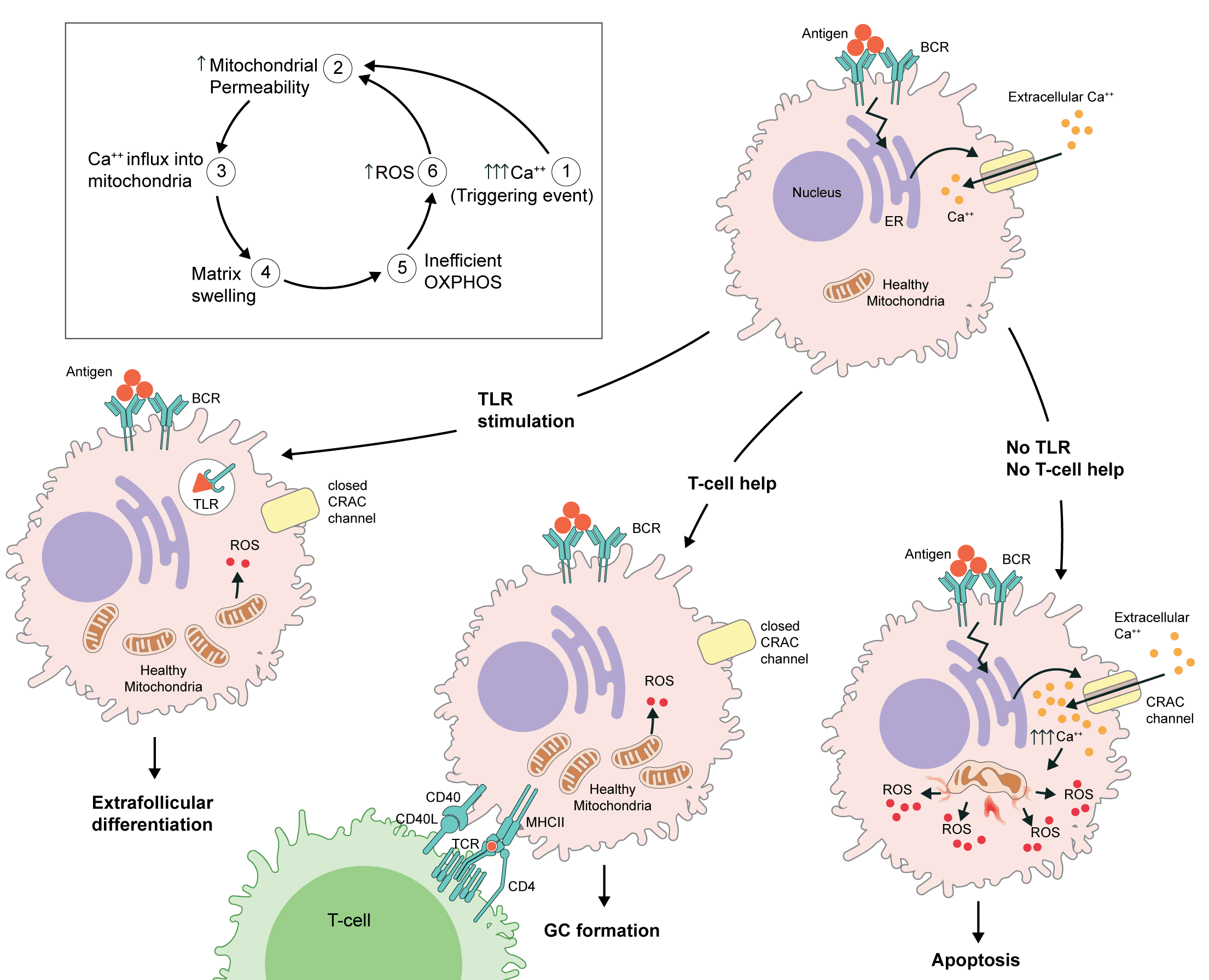
The Metabolic Clock Model of B Cell Activation and Differentiation View original
Is this image relevant?
Adaptive Immune Response | Biology II View original
Is this image relevant?
Frontiers | Activation and Regulation of B Cell Responses by Invariant Natural Killer T Cells View original
Is this image relevant?
The Metabolic Clock Model of B Cell Activation and Differentiation View original
Is this image relevant?
T-dependent vs T-independent activation
- T-dependent activation requires T cell help involving protein antigens occurring in secondary lymphoid organs (lymph nodes, spleen)
- T-independent activation bypasses T cell help with two types: TI-1 and TI-2
- TI-1 antigens like lipopolysaccharides (LPS) activate B cells via Toll-like receptors
- TI-2 antigens such as polysaccharides with repetitive structures crosslink multiple B cell receptors

Role of T helper cells
- T helper cells provide co-stimulatory signals and secrete cytokines
- CD40L-CD40 interaction promotes B cell survival and proliferation
- Cytokines influence B cell fate:
- IL-4 promotes class switching to IgE
- IFN-γ induces class switching to IgG2a
- TGF-β stimulates class switching to IgA
- Cytokines guide differentiation into plasma or memory cells

Germinal center formation
- Structure divided into dark and light zones
- Dark zone: Centroblasts undergo rapid proliferation
- Light zone: Centrocytes interact with follicular dendritic cells and T cells
- Somatic hypermutation in dark zone introduces mutations in antibody variable regions
- Affinity maturation in light zone selects B cells with high-affinity antibodies
- Class switch recombination changes antibody isotype without altering antigen specificity
Types of effector B cells
- Plasma cells secrete large quantities of antibodies
- Short-lived plasma cells reside in secondary lymphoid organs
- Long-lived plasma cells migrate to bone marrow
- Memory B cells provide rapid response upon secondary antigen exposure
- Effector B cells produce antibodies, present antigens to T cells, and secrete cytokines
- Regulatory B cells produce IL-10 and TGF-β suppressing excessive immune responses
See Fiveable more often in Google
Mark Fiveable as a preferred source and Google is more likely to show you our guides in Top Stories, with a "preferred" badge in AI Mode and AI Overviews.