7.3 Mining and Mineral Extraction

🏝️Earth Science Unit 7 Review
7.3 Mining and Mineral Extraction
🏝️ Earth Science
continue practicing 7.3
Multiple choice
Mineral Extraction Methods and Impacts
Mining and mineral extraction are how we obtain the raw materials that modern society depends on. Understanding these methods matters because every extraction technique involves trade-offs between accessing resources and managing environmental damage. This section covers the main mining methods, how ores get processed into usable minerals, and the economic and social factors that determine whether a mine actually gets built.
Surface Mining Techniques
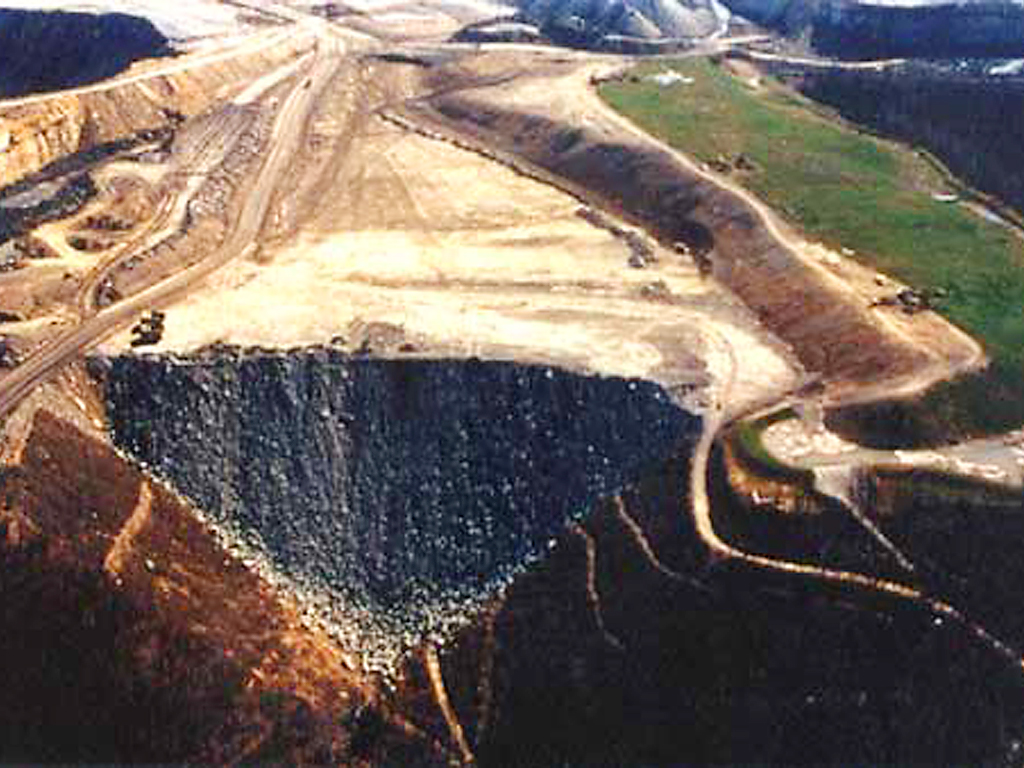
Surface mining removes the layer of soil and rock sitting on top of a mineral deposit (called overburden) to access resources near the Earth's surface. It's generally cheaper than underground mining but causes more visible landscape disruption.
The three main methods are:
- Open-pit mining digs a large, terraced hole into the ground. Used for copper, gold, and iron ore. The Bingham Canyon copper mine in Utah, for example, is over 1.2 km deep.
- Strip mining removes overburden in long strips, one row at a time. Commonly used for coal seams that run horizontally near the surface.
- Mountaintop removal blasts away the tops of mountains to expose coal seams underneath. The waste rock (called spoil) is typically dumped into adjacent valleys.
All surface mining leads to major topographic changes, increased erosion, and ecosystem destruction. Reclamation is legally required in most countries to restore mined land toward a more natural state. This involves backfilling excavated areas, regrading the land surface, and revegetating with native plant species.
Underground Mining Techniques
Underground mining extracts minerals from deep beneath the surface by constructing shafts, tunnels, and chambers. It's used when deposits are too deep for surface mining to be cost-effective.
Common methods include:
- Room-and-pillar mining carves out "rooms" of ore while leaving pillars of rock to support the ceiling. Used for coal and salt deposits.
- Longwall mining uses a mechanical shearer that moves back and forth along a long face of rock, shearing off material. The roof behind the shearer is allowed to collapse in a controlled way. Primarily used for coal.
- Block caving undercuts a large block of ore from below, letting gravity cause it to fracture and collapse into collection points. Used for copper and molybdenum.
Underground mining can cause subsidence, where the ground surface sinks or collapses because the rock below has been removed. It can also contaminate groundwater and release methane gas, which is a potent greenhouse gas (about 80 times more warming potential than over 20 years).
Solution Mining and Environmental Impacts
Solution mining works differently from physical excavation. Instead of digging out rock, a solvent (usually water or a dilute acid) is injected into a mineral deposit through wells. The solvent dissolves the target minerals, and the mineral-rich solution is pumped back to the surface for processing.
This method is commonly used for:
- Soluble salts like potash and trona
- Some metal ores like uranium and copper (often called in-situ leaching for these)
The environmental risks are significant. If the solvent or dissolved minerals leak into surrounding aquifers, groundwater contamination can spread far from the mine site. Solution mining can also cause ground instability and sinkholes, threatening surface infrastructure and ecosystems.
Across all extraction methods, the major environmental impacts include land disturbance, habitat destruction, air and water pollution, and the generation of large volumes of waste rock and tailings (the fine-grained waste left after ore processing).

Mineral Processing Techniques
Once ore is brought to the surface, it needs to be processed to separate the valuable minerals from the worthless surrounding rock (called gangue). This whole process is known as beneficiation or ore dressing.
Size Reduction and Liberation
Before you can separate valuable minerals from gangue, you have to break the ore down until the mineral grains are physically freed from the surrounding rock. This happens in two stages:
- Crushing breaks large ore chunks into smaller pieces. Primary crushing uses jaw or gyratory crushers to handle the biggest rocks. Secondary crushing with cone crushers reduces the pieces further.
- Grinding takes the crushed material and reduces it to a fine powder using ball mills (steel balls tumble inside a rotating drum), rod mills, or autogenous mills (where the ore pieces themselves act as the grinding media). The goal is to grind fine enough that individual mineral grains are liberated from the gangue.
Physical Separation Methods
Once minerals are liberated, several physical properties can be exploited to sort them:
- Gravity separation takes advantage of density differences between minerals and gangue. Equipment like jigs, spirals, and shaking tables force heavier mineral particles to settle or move differently than lighter waste particles. Think of gold panning as a simple version of this principle.
- Magnetic separation uses powerful magnets to pull magnetic minerals (like magnetite and pyrrhotite) away from non-magnetic gangue.
- Electrostatic separation sorts minerals by their electrical conductivity. Particles pass through an electric field; conductors like rutile follow one path while non-conductors like zircon follow another.
Chemical Separation: Froth Flotation
Froth flotation is one of the most widely used separation methods in mining. It works by exploiting differences in surface chemistry between minerals.
Here's how the process works:
- Ground ore is mixed with water to create a slurry.
- Chemical reagents are added: collectors coat target mineral surfaces to make them water-repelling (hydrophobic), frothers create stable bubbles, and modifiers adjust conditions to improve selectivity.
- Air is blown through the slurry. Hydrophobic mineral particles (like sulfides and coal) attach to air bubbles and float to the surface, forming a mineral-rich froth.
- The froth is skimmed off and collected as concentrate.
- Hydrophilic minerals (like silicates and oxides) stay in the water and are discharged as tailings.
This selective process allows engineers to target specific minerals even when multiple valuable minerals are present in the same ore.
Factors Influencing Mineral Development
Whether a mineral deposit actually becomes a working mine depends on much more than geology. Economic, environmental, social, and political factors all determine whether extraction is viable.
Economic Considerations
Market demand drives everything. If nobody needs the mineral, the deposit stays in the ground. Demand shifts with global economic growth, new technologies (like the surge in lithium demand for electric vehicle batteries), and changing consumer preferences.
Production costs must be weighed against expected revenue. These include:
- Exploration and feasibility studies
- Extraction and processing expenses
- Transportation to market
- Ongoing energy, labor, and equipment costs
Fluctuations in energy prices and labor costs can quickly turn a profitable mine into an unprofitable one. A deposit that's uneconomical today might become worth mining if commodity prices rise or new technology lowers extraction costs.
Environmental and Social Factors
Environmental regulations related to air quality, water quality, waste management, and land reclamation impose real costs on mining companies. Compliance isn't optional; failing to meet these standards can shut a project down entirely.
Social factors carry equal weight. Mining companies need what's called a social license to operate, meaning the trust and acceptance of local communities. This involves:
- Engaging with communities about land use and cultural heritage concerns
- Respecting indigenous rights and land claims
- Ensuring economic benefits (jobs, infrastructure development) are shared equitably with the surrounding area
Projects that ignore community concerns often face protests, legal challenges, and costly delays.
Political and Technological Aspects
Political stability and the legal framework of the host country matter enormously for investment decisions. Changes in government policies, taxation rates, or ownership requirements (like mandating partial state ownership) can make or break a mining project's financial outlook.
On the technology side, advancements are steadily improving mining efficiency and reducing environmental damage. Remote-controlled and automated equipment reduces labor costs and improves safety. Satellite-based remote sensing helps identify deposits and monitor environmental conditions. Data analytics and machine learning optimize extraction processes and predict equipment failures before they happen.
These technological improvements don't eliminate mining's environmental footprint, but they can significantly reduce it while lowering costs.
See Fiveable more often in Google
Mark Fiveable as a preferred source and Google is more likely to show you our guides in Top Stories, with a "preferred" badge in AI Mode and AI Overviews.