18.3 Cell-matrix interactions and signaling

🦠Cell Biology Unit 18 Review
18.3 Cell-matrix interactions and signaling
🦠 Cell Biology
Cell Surface Receptors and Focal Adhesions
Cells don't just sit passively in the extracellular matrix. They actively sense it, grip it, and use that information to make decisions about growth, movement, and survival. The receptors that mediate this conversation between cells and the ECM are central to understanding tissue behavior in both health and disease.

Top images from around the web for Cell-matrix interaction receptors
Frontiers | Cell-Matrix Interactions and Matricrine Signaling in the Pathogenesis of Vascular ... View original
Is this image relevant?
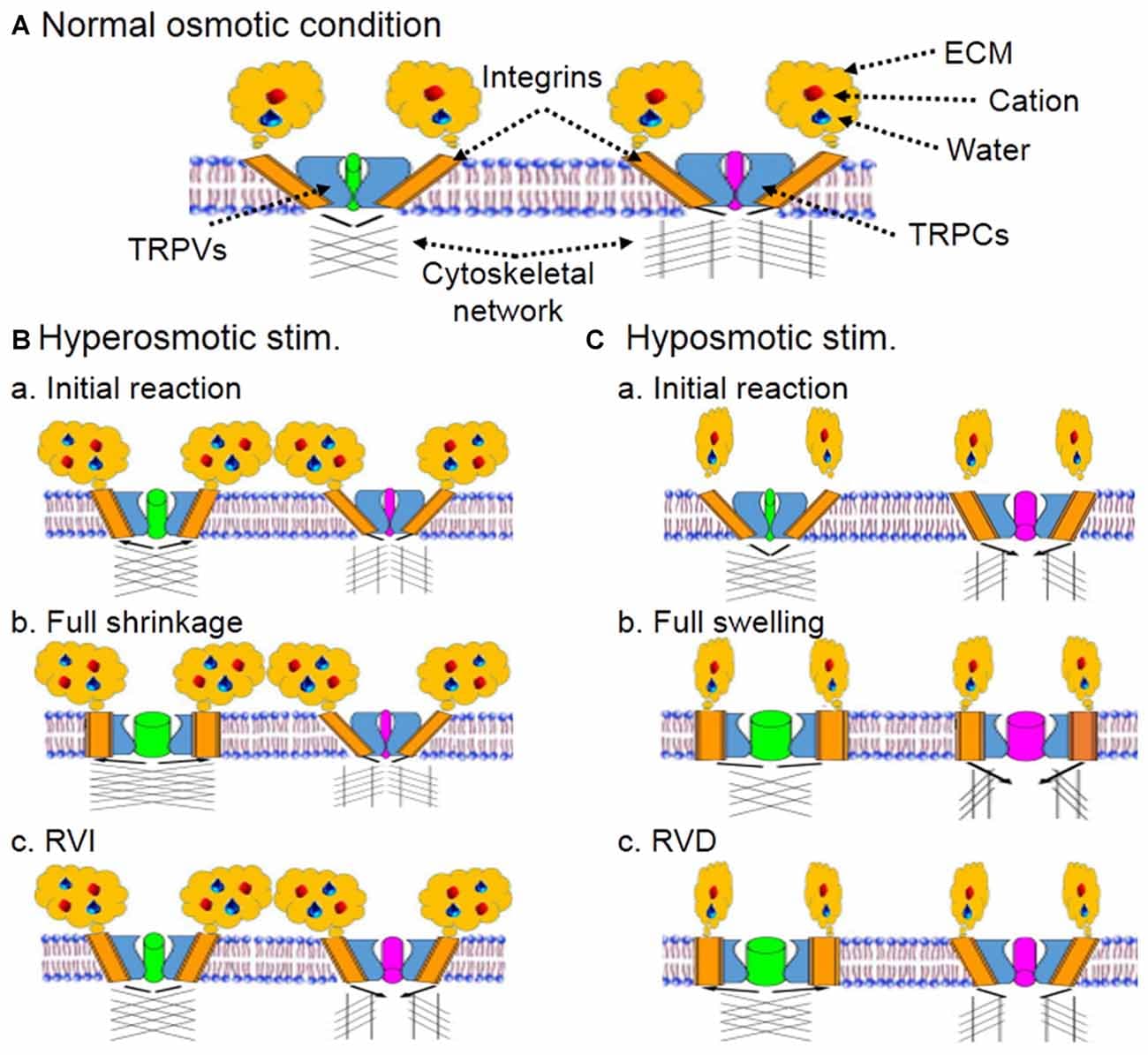
Frontiers | Interactions of the Mechanosensitive Channels with Extracellular Matrix, Integrins ... View original
Is this image relevant?
Propagation of the Cellular Signal | Boundless Biology View original
Is this image relevant?
Frontiers | Cell-Matrix Interactions and Matricrine Signaling in the Pathogenesis of Vascular ... View original
Is this image relevant?
Frontiers | Interactions of the Mechanosensitive Channels with Extracellular Matrix, Integrins ... View original
Is this image relevant?
Cell-Matrix Interaction Receptors
Integrins are the primary ECM receptors. Each integrin is a heterodimer made of one α and one β subunit that together span the membrane. The combination of subunits determines which ECM ligand the integrin recognizes. Many integrins bind to the RGD sequence (Arg-Gly-Asp), a short motif found in ECM proteins like fibronectin and vitronectin.
- 18 α subunits and 8 β subunits combine to form 24 distinct integrin heterodimers, each with different ligand specificity
- Integrins signal in both directions across the membrane:
- Outside-in signaling: ECM binding triggers intracellular signaling cascades
- Inside-out signaling: Intracellular signals change integrin conformation, increasing its affinity for ECM ligands
Syndecans are transmembrane proteoglycans that carry heparan sulfate and chondroitin sulfate glycosaminoglycan chains. These sugar chains allow syndecans to bind a wide range of ECM proteins, growth factors, and cytokines.
- The syndecan family has four members (syndecan-1 through -4)
- They often function as co-receptors alongside integrins, helping to fine-tune adhesion, migration, and signaling responses
Focal Adhesion Formation Process
When integrins bind ECM ligands, they don't just stick. They recruit a complex of intracellular proteins that physically links the matrix to the actin cytoskeleton and simultaneously activates signaling. This structure is the focal adhesion.
- Integrins cluster at sites of ECM contact
- Talin and kindlin bind to integrin β-subunit cytoplasmic tails, stabilizing the active conformation
- Activated integrins recruit focal adhesion kinase (FAK) and paxillin to the adhesion site
- FAK autophosphorylates (at residue Y397), creating docking sites for Src kinase and other signaling molecules
- Additional structural proteins like vinculin and α-actinin are recruited, strengthening the mechanical link between integrins and the actin cytoskeleton
Focal adhesions serve a dual role: they're both a mechanical anchor and a signaling hub. They're also highly dynamic. During cell migration, nascent adhesions form at the leading edge while mature adhesions disassemble at the trailing edge. This coordinated turnover, coupled with actin polymerization, is what drives directional movement.

Cell-Matrix Interaction Signaling and Regulation
Signaling Pathways in Cell-Matrix Interactions
FAK Signaling Pathway
FAK is the central kinase in integrin-mediated signaling. Here's how the cascade unfolds:
- FAK autophosphorylates at Y397 upon integrin clustering
- The phosphorylated Y397 site recruits Src and PI3K
- Src phosphorylates additional tyrosine residues on FAK, further boosting its kinase activity
- The FAK-Src complex activates downstream pathways, notably MAPK/ERK (promoting proliferation) and PI3K/Akt (promoting survival)
Rho GTPase Signaling Pathway
Rho GTPases are molecular switches that cycle between an active (GTP-bound) state and an inactive (GDP-bound) state. GEFs (guanine nucleotide exchange factors) activate them; GAPs (GTPase-activating proteins) inactivate them. Three family members play distinct roles in cytoskeletal organization:
- RhoA: Promotes stress fiber formation and focal adhesion maturation
- Rac1: Stimulates lamellipodia formation and membrane ruffling at the leading edge
- Cdc42: Induces filopodia formation and establishes cell polarity
Together, these GTPases coordinate the actin dynamics required for cell shape changes and migration.

Regulation of Cell Behavior
Proliferation: Integrin-ECM binding activates MAPK/ERK and PI3K/Akt pathways, which promote cell cycle progression. This is why most normal cells require anchorage-dependent growth: without matrix attachment, they won't divide.
Differentiation: Both ECM composition and mechanical stiffness influence cell fate. For example, mesenchymal stem cells differentiate into different lineages depending on substrate rigidity. Specific integrin heterodimers can promote or inhibit differentiation, and cell-matrix interactions regulate transcription factors that drive lineage commitment.
Survival: The PI3K/Akt pathway activated by integrin signaling provides critical anti-apoptotic signals. When anchorage-dependent cells detach from the ECM, they lose these survival signals and undergo a specific form of apoptosis called anoikis. This mechanism normally prevents detached cells from surviving in inappropriate locations.
Dysregulation in Disease States
Cancer
Tumor cells frequently alter their integrin expression and remodel the surrounding ECM to support invasion and metastasis.
- Increased integrin signaling can enhance cancer cell survival and proliferation even in abnormal environments
- Cancer cells that resist anoikis gain the ability to survive detachment and colonize distant tissues
- ECM remodeling by tumor-associated enzymes (like matrix metalloproteinases) creates a microenvironment permissive for progression. For example, overexpression of αvβ3 integrin in melanoma cells promotes metastatic spread.
Fibrosis
In fibrotic diseases, excessive ECM deposition and crosslinking cause progressive tissue stiffening.
- Altered cell-matrix interactions activate fibroblasts, driving their differentiation into myofibroblasts
- Myofibroblasts secrete large amounts of ECM proteins, creating a positive feedback loop that perpetuates fibrosis
- In idiopathic pulmonary fibrosis (IPF), aberrant integrin signaling and uncontrolled ECM deposition lead to lung scarring and severely impaired respiratory function
See Fiveable more often in Google
Mark Fiveable as a preferred source and Google is more likely to show you our guides in Top Stories, with a "preferred" badge in AI Mode and AI Overviews.