3.4 Protein Synthesis

💀Anatomy and Physiology I Unit 3 Review
3.4 Protein Synthesis
💀 Anatomy and Physiology I
Genetic Code and Protein Synthesis
DNA holds the instructions for building proteins, which carry out most of the work in your cells. Those instructions get read and converted into proteins through two major processes: transcription (copying DNA into RNA) and translation (using that RNA to build a protein). Understanding how this works is central to everything else in cell biology.
DNA Code for Protein Structure
DNA contains genes, which are specific nucleotide sequences that code for proteins. Each gene includes exons (the coding regions that actually get used) and introns (non-coding regions that get removed before the protein is made).
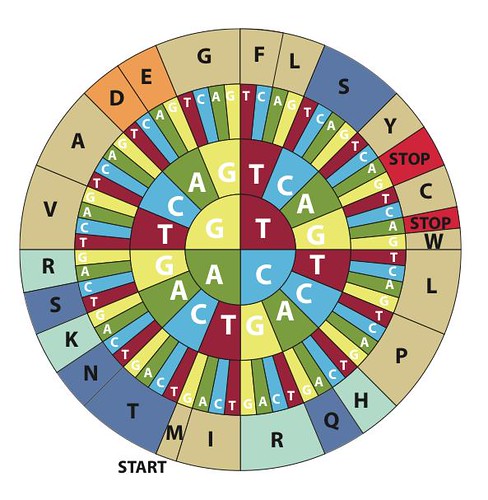
The genetic code is the set of rules that determines how a nucleotide sequence translates into an amino acid sequence. It's based on codons, which are three-nucleotide "words."
- Each codon specifies a particular amino acid (for example, AUG codes for methionine) or a stop signal (UAA, UAG, or UGA).
- The order of codons in a gene determines the order of amino acids in the resulting protein.
- That amino acid order is the protein's primary structure, which drives how the protein folds into its final 3D shape. Shape determines function, whether the protein acts as an enzyme, a structural component, or something else entirely.
Components of Transcription
Transcription is the process of building an RNA copy from a DNA template. In eukaryotic cells, this happens inside the nucleus.
The main components involved:
- DNA template strand provides the genetic information to be copied
- RNA polymerase is the enzyme that catalyzes RNA synthesis
- Ribonucleoside triphosphates (ATP, GTP, CTP, UTP) are the nucleotide building blocks used to construct the RNA strand
Transcription proceeds in three stages:
- Initiation: RNA polymerase binds to a promoter region on the DNA and separates the two DNA strands, exposing the template.
- Elongation: RNA polymerase moves along the template strand, reading it 3' to 5' and synthesizing a complementary RNA strand in the 5' to 3' direction. Note that RNA uses uracil (U) instead of thymine (T), so wherever the DNA template has adenine, the RNA gets a uracil.
- Termination: RNA polymerase reaches a terminator sequence, and the newly synthesized RNA is released from the DNA template.
The product of transcription is a pre-mRNA molecule. Before it can be used, pre-mRNA undergoes processing:
- Splicing removes introns and joins exons together
- A 5' cap is added to protect the molecule and help with ribosome recognition
- A poly-A tail is added to the 3' end for stability
After processing, the mature mRNA is ready to leave the nucleus and head to the cytoplasm for translation.

Translation and RNA Roles
Translation is the process of reading the mRNA and assembling a protein from it. This takes place in the cytoplasm, on ribosomes (which can be free in the cytoplasm or attached to the rough ER).
Two types of RNA are especially important here:
- mRNA (messenger RNA) carries the genetic instructions from the nucleus to the ribosome. Its codon sequence dictates the amino acid order in the protein.
- tRNA (transfer RNA) acts as the translator. Each tRNA molecule has an anticodon on one end that is complementary to a specific mRNA codon, and it carries the matching amino acid on the other end. For example, the tRNA with the anticodon UAC pairs with the mRNA codon AUG and delivers methionine.
Translation also has three stages:
- Initiation: The small ribosomal subunit binds to the mRNA and locates the start codon (AUG). A special initiator tRNA carrying methionine pairs with this codon. Then the large ribosomal subunit joins to form the complete ribosome.
- Elongation: tRNA molecules bring amino acids to the ribosome one at a time, matching their anticodons to the mRNA codons. As each amino acid arrives, a peptide bond forms between it and the growing chain. The ribosome shifts along the mRNA, reading the next codon.
- Termination: When the ribosome reaches a stop codon (UAA, UAG, or UGA), no tRNA binds. Instead, release factors cause the ribosome to release the completed polypeptide chain and dissociate from the mRNA.
Ribosomes in Protein Synthesis
Ribosomes are the cellular machines where translation physically happens. They're composed of ribosomal RNA (rRNA) and proteins, organized into two subunits: a large subunit (60S) and a small subunit (40S) in eukaryotes.
Each ribosome has three internal sites that manage the flow of tRNAs during translation:
- A site (aminoacyl): where the incoming tRNA carrying the next amino acid binds
- P site (peptidyl): where the tRNA holding the growing polypeptide chain sits
- E site (exit): where the now-empty tRNA is held briefly before it detaches from the ribosome
The peptidyl transferase center, located in the large subunit, catalyzes peptide bond formation between the amino acid at the A site and the polypeptide chain at the P site. The ribosome then shifts along the mRNA in the 5' to 3' direction, moving each tRNA from A → P → E. This cycle repeats until a stop codon is reached and the finished polypeptide is released.
From Gene to Functional Protein
The overall flow of genetic information follows the central dogma of molecular biology: DNA → RNA → Protein. DNA is transcribed into mRNA, and mRNA is translated into a polypeptide chain made of amino acids.
But a freshly made polypeptide isn't necessarily a finished protein. Two more things need to happen:
- Protein folding: The polypeptide chain folds into a specific 3D structure based on its amino acid sequence and interactions with the cellular environment. This shape is what gives the protein its function.
- Post-translational modifications: The protein may be chemically modified (for example, by adding sugar groups or phosphate groups, or by being cleaved into a shorter form) before it reaches its final, functional state.
If folding goes wrong, the protein typically can't do its job. This is why the amino acid sequence, and therefore the DNA code, matters so much.
See Fiveable more often in Google
Mark Fiveable as a preferred source and Google is more likely to show you our guides in Top Stories, with a "preferred" badge in AI Mode and AI Overviews.