1.4 An Overview of Contemporary Philosophy

🤔Intro to Philosophy Unit 1 Review
1.4 An Overview of Contemporary Philosophy
🤔 Intro to Philosophy
Key Characteristics and Focus Areas of Contemporary Academic Philosophy
Contemporary academic philosophy is a rigorous field built around careful argumentation and precise use of language. Rather than offering grand pronouncements about life's meaning, professional philosophers today tend to work within specialized subfields, tackling focused questions about reality, knowledge, morality, and reasoning. This section maps out those subfields and the major movements shaping philosophical work right now.

Top images from around the web for Characteristics of contemporary academic philosophy
Course Learning Outcomes | Introduction to Psychology View original
Is this image relevant?
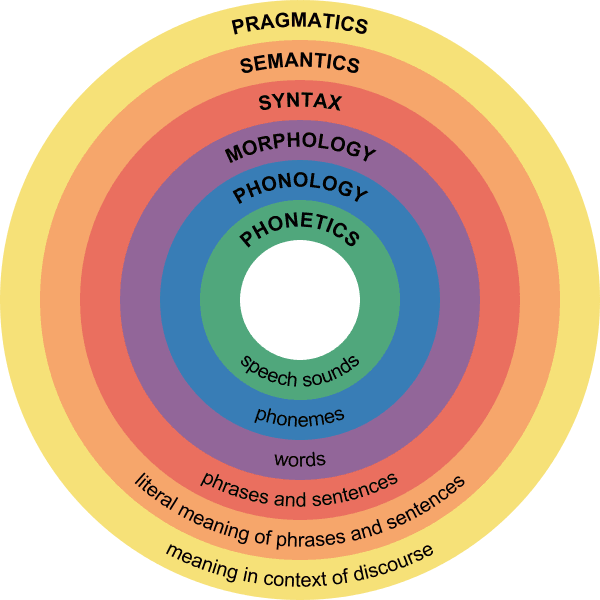
Introduction to Language | Boundless Psychology View original
Is this image relevant?
Subfields within Psychology | Introduction to Psychology View original
Is this image relevant?
Course Learning Outcomes | Introduction to Psychology View original
Is this image relevant?
Introduction to Language | Boundless Psychology View original
Is this image relevant?
Characteristics of Contemporary Academic Philosophy
What sets contemporary philosophy apart from, say, reading ancient Greek dialogues?
- Rigorous analysis and argumentation. Philosophers carefully examine claims, evidence, and chains of reasoning. The goal is to reach conclusions that are well-supported, not just persuasive-sounding.
- Clarity and precision in language. Philosophical writing today aims to minimize ambiguity. If a key term can be read two ways, a philosopher will define exactly which meaning they intend.
- Specialization. The field has branched into distinct subfields (metaphysics, epistemology, ethics, logic, and others). This allows for deep, focused inquiry rather than trying to address everything at once.
Major Focus Areas in Contemporary Academic Philosophy
Metaphysics is the study of the fundamental nature of reality. It asks questions like What kinds of things exist? and What is the relationship between mind and body?
- Ontology investigates what exists. Do abstract objects like numbers exist in the same way that chairs do? What about properties, events, or possible worlds?
- Philosophy of mind explores how the mental relates to the physical. Dualism holds that mind and body are fundamentally different substances, while physicalism argues that everything, including consciousness, is ultimately physical.
- Phenomenology is a related approach that examines the structure of conscious experience: how we perceive, interpret, and make sense of the world from a first-person perspective.
Epistemology is the study of knowledge, justification, and truth. It asks What can we know? and What makes a belief justified?
- Skepticism questions whether genuine knowledge or certainty is possible at all. Even if you feel confident about something, a skeptic asks what grounds that confidence.
- Theories of justification offer different accounts of what makes a belief justified:
- Foundationalism says justified beliefs rest on a foundation of basic, self-evident beliefs.
- Coherentism says a belief is justified if it fits coherently within your overall system of beliefs.
- Reliabilism says a belief is justified if it was produced by a reliable cognitive process (like perception under normal conditions).
Ethics is the study of moral principles, values, and right and wrong conduct.
- Normative ethics develops theories about how you ought to act:
- Deontology emphasizes duties and rules (e.g., Kant's idea that some actions are wrong regardless of their consequences).
- Consequentialism judges actions by their outcomes (e.g., utilitarianism says the right action produces the greatest overall well-being).
- Virtue ethics focuses on character traits, asking what kind of person you should be rather than what specific action you should take.
- Applied ethics brings these frameworks to bear on real-world moral problems. Bioethics tackles issues like genetic engineering and end-of-life care. Environmental ethics asks what obligations we have to the natural world. Business ethics examines fairness, responsibility, and honesty in commercial settings.
Logic is the study of valid reasoning and inference.
- Formal logic uses symbolic systems to represent argument structures. Propositional logic and predicate logic let you test whether a conclusion follows from its premises with mathematical precision.
- Informal logic examines arguments as they appear in everyday language. A major focus here is identifying common fallacies: ad hominem attacks (attacking the person instead of the argument), straw man arguments (misrepresenting someone's position), and appeals to emotion (substituting feelings for evidence).
Philosophy of language investigates meaning, reference, and communication. How does a word refer to a thing in the world? How does context shape what a sentence means? What does it take for a statement to be true?
Philosophy of science examines the foundations and methods of scientific inquiry. It addresses questions like: What counts as a good scientific explanation? How does evidence support one theory over another? And where exactly is the line between science and non-science (the "demarcation problem")?

Contemporary Philosophical Movements
These are broad traditions that shape how philosophers approach their work:
- Analytic philosophy emphasizes logical analysis, linguistic clarity, and step-by-step argumentation. It dominates most English-speaking philosophy departments.
- Continental philosophy focuses on historical and cultural context, often engaging with existential, social, and political questions. It's more prominent in European traditions.
- Pragmatism evaluates philosophical ideas by their practical consequences and relevance to lived human experience.
- Existentialism centers on individual existence, freedom, choice, and the responsibility that comes with them.
- Postmodernism challenges grand narratives and claims to universal truth, emphasizing how language, power structures, and cultural context shape what counts as knowledge.
Career Prospects and Critical Thinking Skills
Philosophy might seem abstract, but the skills it builds are concrete and highly transferable. This matters because employers across many fields value people who can analyze complex problems, build clear arguments, and communicate precisely.

Career Prospects for Philosophy Majors
Within academia:
- Teaching at the university level typically requires a Ph.D. in philosophy. It involves conducting original research, publishing scholarly work, and presenting at academic conferences.
- Research positions in philosophy departments or interdisciplinary programs focus on advancing philosophical knowledge through publication and collaboration.
Outside academia:
- Law. Philosophy majors consistently perform well on the LSAT (the law school admissions test), which heavily tests analytical reasoning and argument evaluation. The skills overlap is significant.
- Business. Roles in management, consulting, and entrepreneurship draw on the critical thinking, problem-solving, and communication abilities that philosophical training develops.
- Writing and journalism. The emphasis on clarity, precision, and persuasive argumentation translates directly to professional writing.
- Government and public policy. Policy analysts and advisors need to analyze complex issues from multiple angles and construct well-reasoned recommendations, which is exactly what philosophy trains you to do.
Critical Thinking Skills from Philosophy
Studying philosophy builds critical thinking through a specific set of practices:
- Examining assumptions and biases in your own reasoning, which promotes intellectual honesty and self-awareness.
- Analyzing arguments for logical consistency and soundness, making sure conclusions actually follow from their premises.
- Constructing and evaluating arguments from multiple perspectives, including seriously engaging with objections and counterarguments.
- Fostering intellectual humility, recognizing that many philosophical questions are genuinely complex and that reasonable people can disagree.
These skills transfer across disciplines in concrete ways:
- Scientific research benefits from questioning assumptions, formulating testable hypotheses, and rigorously evaluating evidence.
- Literary analysis involves interpreting texts, weighing multiple meanings, and building arguments about themes and authorial intent.
- Historical inquiry requires assessing source reliability, considering context, and constructing narratives from incomplete evidence.
- Professional problem-solving often means breaking down complex issues, weighing alternative solutions, and making well-reasoned decisions under uncertainty.
Even within philosophy itself, debates like the free will vs. determinism question show these skills in action: you have to define terms precisely, consider competing positions fairly, and trace out the implications of each view for human agency and moral responsibility.
See Fiveable more often in Google
Mark Fiveable as a preferred source and Google is more likely to show you our guides in Top Stories, with a "preferred" badge in AI Mode and AI Overviews.