6.5 Time allocation and strategic concessions

💬Speech and Debate Unit 6 Review
6.5 Time allocation and strategic concessions
💬 Speech and Debate
continue practicing 6.5
Multiple choice
Importance of Time Allocation
Time allocation directly shapes how persuasive you are in a round. Every debate format gives you a fixed number of minutes, and how you divide those minutes across your arguments determines whether the judge walks away remembering your strongest points or your weakest ones.
Proper time management lets you present your best arguments fully, respond to your opponent's key claims, and still have room to adapt as the round unfolds. Without a plan for your time, you'll end up rushing through your most important contentions or, worse, running out of time before you get to them.

Top images from around the web for Key factors in allocation
Video: The Toulmin Model | Basic Reading and Writing View original
Is this image relevant?
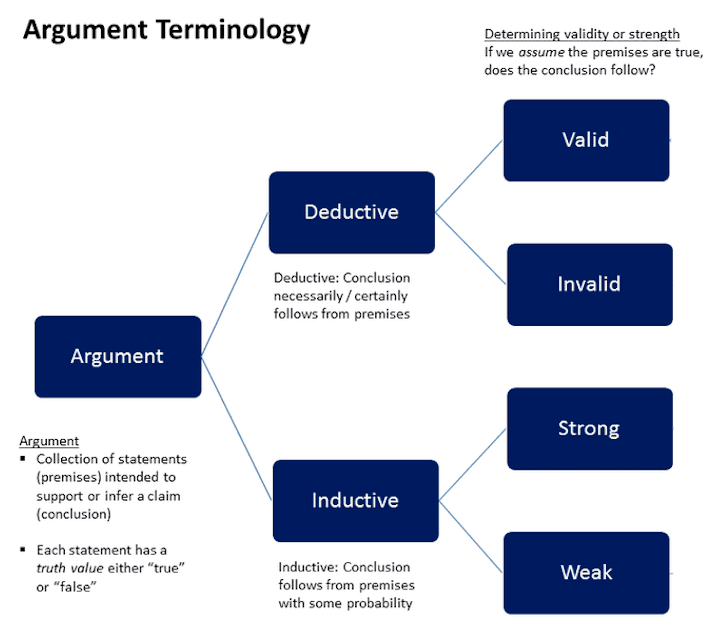
9.7: Inductive and Deductive Reasoning - Humanities LibreTexts View original
Is this image relevant?
Argument - Wikipedia View original
Is this image relevant?
Video: The Toulmin Model | Basic Reading and Writing View original
Is this image relevant?
9.7: Inductive and Deductive Reasoning - Humanities LibreTexts View original
Is this image relevant?
Key Factors in Allocation
Before you step up to speak, think about what deserves the most time:
- Complexity and relevance of each argument to the resolution. A nuanced argument that sits at the heart of the debate deserves more time than a peripheral point.
- Strength of your evidence. If you have strong cards on a particular contention, spend time developing it. If your evidence is thin, don't linger there.
- Anticipated opponent responses. If you know your opponent will hammer a specific argument, budget time to preempt or respond to that attack.
- Format-specific constraints. Policy Debate gives you more total speaking time than Public Forum or Lincoln-Douglas, so your allocation strategy should reflect the format you're in.
Balancing Offense and Defense
Offense means advancing your own arguments to affirm or negate the resolution. Defense means responding to and refuting what the other side has said.
You need both, and the balance shifts as the round progresses. In constructive speeches, you'll lean more offensive. In rebuttals, you'll spend more time on defense and impact comparison. The trap to avoid: spending so much time attacking your opponent's case that you neglect to extend and develop your own, or vice versa. Either imbalance leaves you vulnerable.
A useful rule of thumb for rebuttals is to spend roughly 60% of your time on your strongest offensive arguments and 40% on defensive responses, then adjust based on what's actually happening in the round.
Strategic Concession Basics
A strategic concession is an intentional decision to acknowledge or partially agree with an opponent's argument so you can minimize its impact and redirect the judge's attention to where you're winning. It's not giving up. It's choosing your battles.
Concessions can be narrow (conceding a single piece of evidence or a sub-point) or broad (acknowledging the general validity of an opponent's framing while arguing it doesn't matter as much as your own).
Benefits of Strategic Concessions
- Builds credibility. Judges notice when a debater can honestly engage with the other side rather than denying everything. It signals confidence and a nuanced understanding of the topic.
- Controls the narrative. By conceding a minor point yourself, you get to frame how much it matters. If you ignore it and your opponent keeps pushing it, the judge may think it's more significant than it actually is.
- Creates pivot opportunities. A concession gives you a natural transition: "Even if we grant that X is true, it doesn't outweigh Y because..." This lets you steer the debate toward your strongest ground.
- Saves time. Spending two minutes poorly refuting a strong argument is often worse than spending fifteen seconds conceding it and using the remaining time on arguments you can actually win.
Risks of Strategic Concessions
- Overuse weakens your position. If you concede too many points, the judge may conclude you don't have a strong case.
- Poor execution backfires. A concession that isn't clearly tied back to your own arguments can look like you're just losing the point. You need to always explain why the concession doesn't matter for the overall round.
- Timing matters. A badly timed concession can give your opponent ammunition for their next speech with no opportunity for you to respond.
Identifying Areas for Concession
Not every argument your opponent makes deserves the same level of response. Part of being strategic is recognizing which points to fight and which to let go.
Evaluating Argument Strength
Ask yourself three questions about your opponent's argument:
- How strong is their evidence? If they've cited multiple credible sources and the data clearly supports their claim, a direct refutation may not be convincing.
- How central is this point to the round? An argument that's tangential to the core voting issues is a good candidate for concession. An argument that goes to the heart of the resolution is not.
- Can you win even if you concede this? If giving up this point still leaves you ahead on the most important issues, conceding is smart. If it undermines your entire case, fight it.
Assessing Judge Receptiveness
Pay attention to the judge during your opponent's speech. Are they nodding? Writing extensively? These cues can tell you which arguments are landing. If the judge seems persuaded by a particular point, trying to flatly deny it may hurt your credibility more than conceding it gracefully.
Also consider the judge's background. A judge who values technical precision may respect a well-executed concession. A lay judge might interpret any concession as losing. Adapt accordingly.
.svg.png)
Considering Your Opponent's Strategy
Think about what your opponent wants you to do. If they're clearly trying to bait you into spending time on a weak argument so you neglect stronger ones, don't take the bait. Concede the minor point and move on. Conversely, if your opponent has built their entire case around one key contention, conceding that contention would be devastating.
Techniques for Effective Concessions
The difference between a concession that helps you and one that hurts you comes down to execution.
Acknowledging Valid Points
When you concede, do it cleanly and without hedging. Saying something like "Our opponents are right that the policy would increase short-term costs" sounds confident. Mumbling through a half-denial sounds weak. The goal is to show the judge you're engaging honestly.
Minimizing Damage to Your Case
Immediately after conceding, contextualize. Explain why the conceded point has limited scope or why it's outweighed by other factors. For example: "Even granting that short-term costs rise, the long-term economic benefits we've demonstrated are three times larger in magnitude."
Three steps for a clean concession:
- Acknowledge the point directly and briefly.
- Contextualize by explaining its limited impact on the overall debate.
- Pivot to your strongest argument that outweighs or supersedes the conceded point.
Redirecting Focus to Strengths
Use the concession as a springboard. The phrase "even if" is your best friend here: "Even if we accept their claim about X, the debate still comes down to Y, where we've shown..." This reframes the round on your terms and tells the judge where to focus their decision.
Timing of Strategic Concessions
When you concede matters almost as much as what you concede.
Early vs. Late Concessions
Early concessions (in your first rebuttal or even constructive) establish credibility from the start and let you frame the round around the issues you want to debate. The risk is that your opponent has more speeches left to exploit the concession.
Late concessions (in final rebuttal) can effectively take an argument off the table right before the judge makes their decision. The risk is that a late concession can look reactive, as if you're conceding because you failed to refute the point rather than because you're being strategic.
In general, concede earlier when the point is clearly minor, and later when you need to see how the round develops before deciding what to give up.
Responding to Your Opponent's Concessions
When your opponent concedes something, don't let it slide by unnoticed:
- Highlight it for the judge. Say explicitly: "They've conceded that..." Judges are tracking a lot of arguments, and you want to make sure this one is clearly marked in their notes.
- Extend its implications. Show how the concession undermines other parts of their case or strengthens yours.
- Adjust your time allocation. You no longer need to spend time on an argument they've dropped. Reallocate those minutes to other areas.

Adapting to Judge Feedback
Throughout the round, watch how the judge reacts to concessions from both sides. If the judge seems to respond well to your concessions (nodding, noting them down), you can be slightly more willing to concede on marginal points. If the judge seems to count concessions against the person making them, be more conservative.
Impact of Concessions on Rebuttal
Concessions reshape the landscape of the debate, and your rebuttal strategy needs to reflect that.
Prioritizing Remaining Arguments
After concessions have been made by both sides, step back and identify which arguments are still live and which matter most. Your rebuttal should focus on the two or three strongest contentions that haven't been undermined. Don't waste time re-litigating points that have already been conceded by either side.
Adjusting Time Allocation
Concessions free up time. If you've conceded a point, you no longer need to defend against it. If your opponent has conceded a point, you don't need to keep attacking it (though a brief reminder to the judge is worthwhile). Redistribute that time toward:
- Extending your strongest remaining arguments with additional analysis
- Doing thorough impact comparison to show the judge why your remaining arguments outweigh theirs
- Addressing any new vulnerabilities that concessions may have created in your case
Capitalizing on Your Opponent's Concessions
This is where concessions become a weapon. In your rebuttal, weave your opponent's concessions into your narrative:
- Point out contradictions between what they've conceded and what they're still arguing.
- Use their concessions to support your own framework. If they've admitted a harm exists, use that admission to bolster your solvency argument.
- Frame the round for the judge: "They've agreed with us on A and B. The only remaining question is C, and here's why we win on C."
Practicing Strategic Concessions
Like any debate skill, concessions get better with deliberate practice.
Anticipating Potential Concessions
Before a tournament, review your own case critically:
- Where is your evidence weakest?
- Which arguments are most vulnerable to strong counterarguments?
- What could you give up without losing the round?
Prepare concession language in advance for your most likely vulnerabilities. Having a ready-made pivot ("Even if they win X, we still win because...") keeps you from fumbling in the moment.
Developing Contingency Plans
Build flexibility into your case strategy. For each major argument, know what your backup plan looks like if you have to concede it. This means:
- Having alternative arguments or impact scenarios prepared
- Knowing which of your remaining contentions can absorb the loss of a conceded point
- Practicing transitions so you can pivot smoothly under time pressure
Conducting Mock Debates
The best way to sharpen concession skills is in practice rounds where you intentionally focus on them:
- Run drills where you're required to concede at least one argument per speech, forcing you to practice the acknowledge-contextualize-pivot sequence.
- After each practice round, discuss with your coach or partner: Was the concession timed well? Did it help or hurt? How could the framing be improved?
- Watch recordings of skilled debaters making concessions and study how they transition from the concession back to their own case.
See Fiveable more often in Google
Mark Fiveable as a preferred source and Google is more likely to show you our guides in Top Stories, with a "preferred" badge in AI Mode and AI Overviews.